
All Articles

Storm Debris Dumpster Rental After Severe Weather

Published · Guide by WTR Services
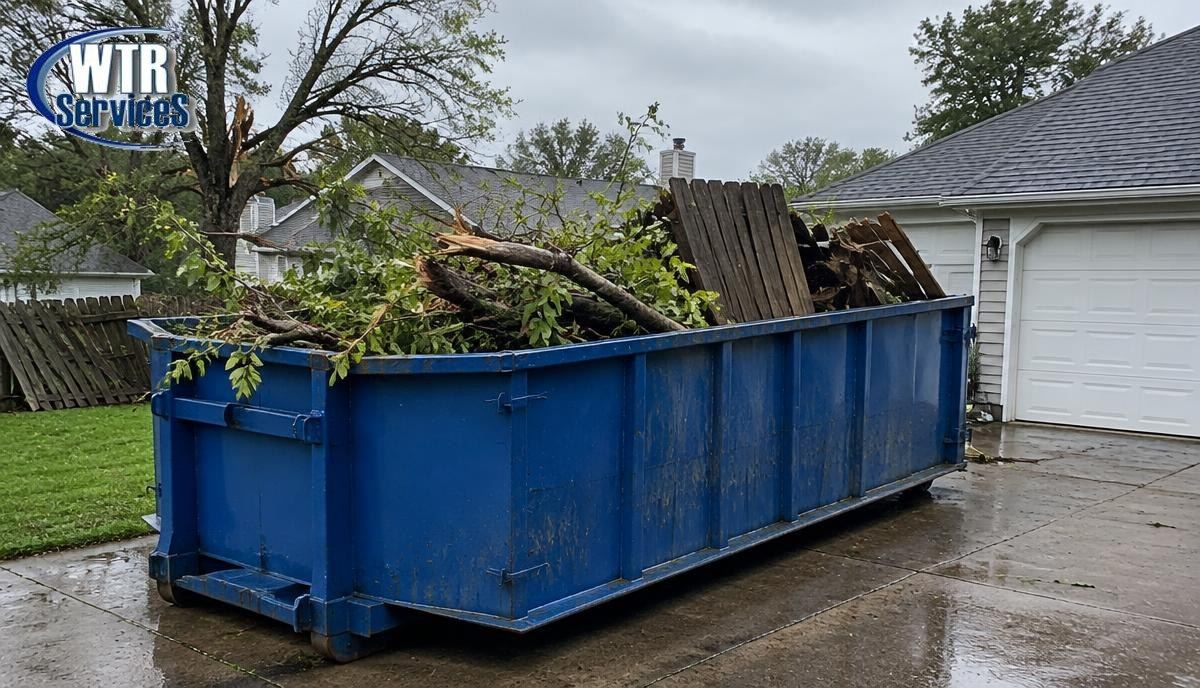
Blue WTR Services roll-off dumpster in a residential driveway loaded with fallen tree branches and storm-damaged fencing after severe weather

Big storms can leave your yard a mess: fallen trees, broken branches, wrecked furniture, damaged fencing, and all kinds of debris that needs to go. When the cleanup is more than your regular curbside pickup can handle, a storm debris dumpster rental is a simple way to get it all contained and hauled off. Before you book one, it's worth figuring out exactly what you're dealing with. According to FEMA, storm debris often falls into different categories like vegetative, construction, and hazardous waste. The dumpster size you need really comes down to the type, amount, and weight of your debris. WTR Services can help homeowners figure out the right solution for their storm cleanup.

What Should You Do First When Storm Debris Is Left Behind?

Check the area for hazards before you touch anything. That's the first step, always. Stay clear of downed power lines, shaky structures, and damaged trees, especially if there's been flooding or strong winds. Once you know the area is safe, figure out whether you're looking at ordinary yard and household debris or materials that need to be handled separately. Fallen trees, large branches, and flood-damaged items can pile up fast — more than curbside collection can really deal with. If the cleanup is a big one, an emergency dumpster rental gives you a solid place to contain everything while you work. Get a rough idea of how much waste you're dealing with before you arrange removal, but save the detailed sorting and dumpster-size decisions for later.

What Storm Debris Can You Put in a Dumpster?

Most dumpsters for storm cleanup can take the usual stuff: tree branches, limbs, leaves, brush, damaged fencing, furniture, roofing materials, and drywall. If your mess is mostly branches and yard waste, you're probably better off with a yard waste dumpster rental instead. And if storm damage affects your home itself, residential dumpster rentals can offer additional space for household waste. But not everything can go in. Fuel, chemicals, batteries, paint, asbestos materials, and flood debris that might be contaminated all need to be kept out and disposed of on their own — our Ohio prohibited items guide has the details. Don't just toss these in with the rest of your storm debris; follow your local rules for that stuff separately. And since every provider has its own list of what's allowed, it's smart to check before you start filling the dumpster up.

How Do You Choose the Right Dumpster Size for Storm Cleanup?

The right dumpster size really comes down to the type and amount of debris you're dealing with. Branches and brush are bulky but light, so they fill space fast without adding much weight. Roofing materials, drywall, and waterlogged furniture are the opposite — heavy fast, and they can push you past the included weight allowance before the container looks full. A smaller cleanup — a few limbs, some fencing, a damaged shed — can often fit a 10-yard container. Bigger jobs with multiple downed trees or structural damage usually call for a 20 or 30-yard container. When in doubt, describe the debris over the phone and let the rental team recommend a size — it beats paying for a second haul.

How Should You Prepare Storm Debris Before the Dumpster Arrives?

Sort your debris first, and keep the drop-off spot clear so the dumpster is easy to get to. That one step makes everything else go faster. Break down big items when it's safe. If you're using a tree cleanup dumpster, get your branches and limbs ready to load ahead of time. When you load the dumpster, spread things out evenly and don't fill it past the line; overfilling just causes problems later. Keep anything restricted, like chemicals or paint, off to the side instead of tossing it in. Hauling services can help with larger debris. A little prep before the dumpster shows up goes a long way — it makes the whole cleanup faster, safer, and just easier to deal with.

When Should You Rent a Dumpster After a Severe Storm?

Once the area's safe and you've got a rough idea of how much debris you're dealing with, go ahead and book your dumpster as soon as you can. After a big storm, a lot of homeowners are all trying to clear fallen trees and damaged property around the same time, so emergency dumpster rentals tend to get booked up fast. Disaster debris removal can also become more difficult to arrange when local cleanup services are dealing with high demand. Booking early just gives you more room to work with on delivery and pickup times and keeps your cleanup from getting held up.

How Much Does Storm Debris Dumpster Rental Cost?

Cost really comes down to a handful of things: how big a dumpster you need, how long you're keeping it, what kind of debris you've got, how much it weighs, and then delivery, pickup, and disposal fees on top of that. If your debris is on the heavier side, you could end up paying more once you go past the included weight allowance. Before you book, it's worth asking exactly what's included in the quote so nothing catches you off guard later.

Ready to Clear the Storm Debris? Here's What to Do Next

After a severe storm, safety comes first, always. Once that's sorted, separate out anything that needs different disposal, take a rough estimate of your debris, and pick a dumpster that actually fits the job. Booking early helps too, since demand tends to climb after major storms. Got a smaller yard cleanup? A yard waste dumpster rental should do the trick. Dealing with something bigger? Residential dumpster rentals or hauling services can take that off your hands. WTR Services is a local, family-owned company serving Northeast Ohio since 2006 — including Trumbull, Mahoning, Columbiana, Portage, Ashtabula, and Mercer counties. Call (330) 399-3817 or get a free quote to schedule your rental.

Frequently Asked Questions

Keep Reading: Related Guides

  • Moving Dumpster Rental: Simplify Your Home Relocation

    Decluttering before a move cuts hauling costs and makes packing easier. A moving dumpster rental gives you one place for unwanted furniture, boxes, and junk — sizing and planning tips for Northeast Ohio moves.

  • Hoarder House Cleanout Dumpster Rental Guide

    Cleaning out a hoarded home? A hoarder house cleanout dumpster rental gives you one central place for years of accumulated furniture, boxes, and junk — sizing, planning, and loading tips for Northeast Ohio cleanouts.

  • Yard Waste Dumpster Rental: Landscaping Cleanup Made Easy

    Tree removal, landscaping overhaul, or seasonal yard cleanup? A yard waste dumpster rental keeps branches, brush, and debris contained while you work — sizing tips and rental advice for Northeast Ohio homeowners and crews.

  • Concrete Disposal Dumpster Rental Guide

    Renting a dumpster for concrete, brick, or asphalt? Learn how to prep, load, and size a concrete dumpster rental so heavy debris doesn't turn into overweight fees — a practical guide for Northeast Ohio projects.