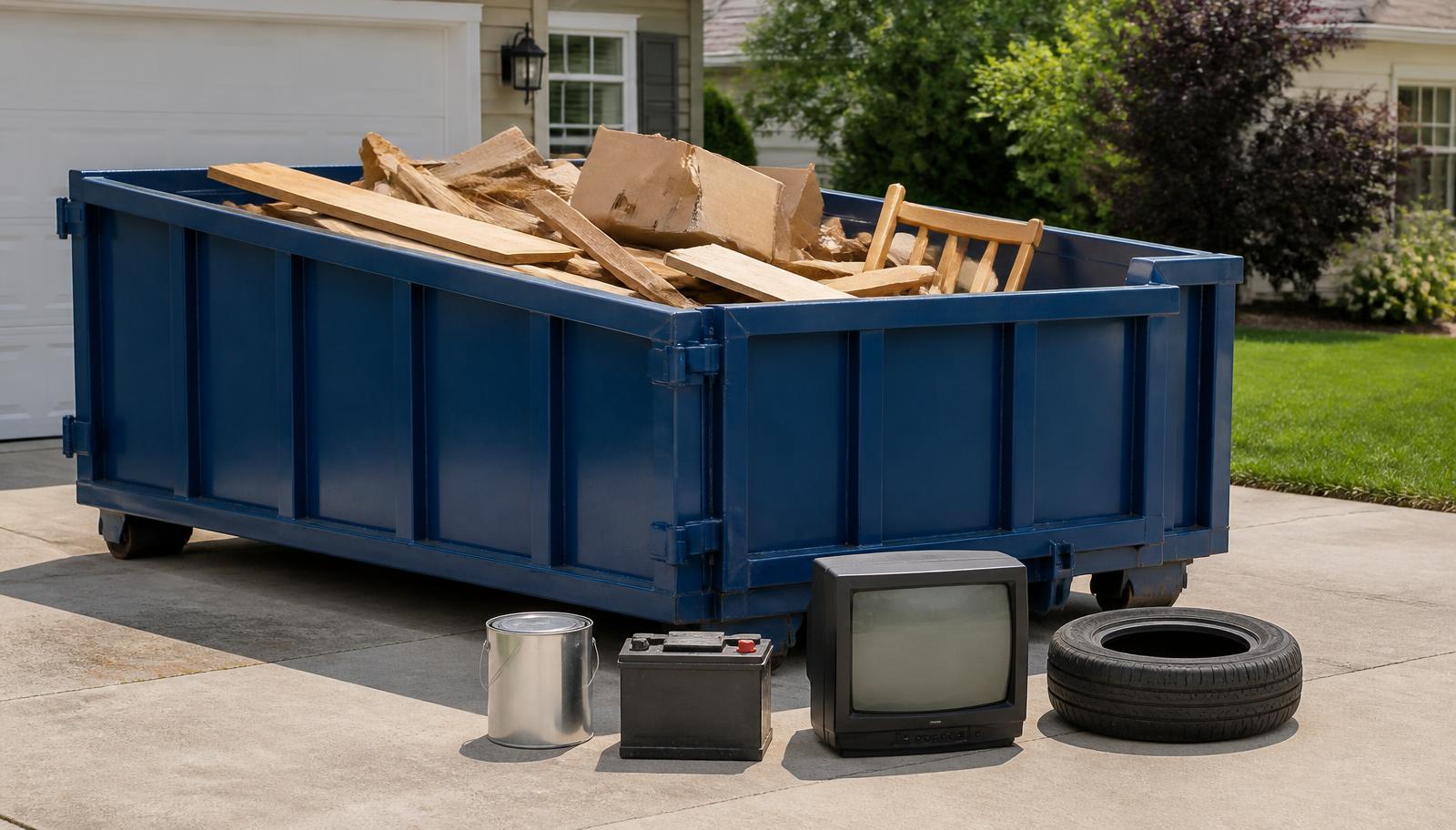
A roll-off dumpster can handle much of the waste from a home cleanout, remodel, roofing job, or construction project, but it is not the right destination for every item. Chemicals, liquid paint, automotive fluids, batteries, some electronics, tires, and other regulated materials may need a separate collection or recycling option. Identifying those items before delivery keeps restricted waste out of the container and prevents interruptions when the dumpster is collected.
This guide has a narrower purpose than our general article about what you can put in a dumpster. That guide covers commonly accepted household and construction debris. Here, the focus is on dumpster prohibited items in Ohio, why certain materials need special handling, and what to ask before loading uncertain items.
The Ohio Environmental Protection Agency oversees solid-waste and materials-management programs in the state. Exact acceptance rules can still vary by disposal facility, material condition, and local program, so confirm questionable items with WTR Services before placing them in a rental.
Key Takeaways
- Keep hazardous chemicals, liquid paint, solvents, automotive fluids, and similar substances out of a standard roll-off dumpster unless specifically approved.
- Batteries, electronics, tires, appliances with refrigerants, and mattresses may have separate facility rules or fees.
- An empty, dry container may be treated differently from one that still contains liquid or residue.
- Sort uncertain items before loading so they can be checked without unloading the dumpster.
- WTR Services can review your item list before delivery for projects throughout Northeast Ohio.
Why Are Some Items Prohibited From Dumpsters?
Dumpster restrictions are generally based on safety, environmental requirements, transportation rules, and the policies of the receiving facility. A material that can leak, ignite, react with other waste, release refrigerant, or contain regulated components cannot always travel with ordinary household or construction debris.
The condition of an item matters too. Dry building material is different from a can of liquid solvent. An empty appliance without refrigerant may be handled differently from a refrigerator or air conditioner that still contains it. Because these details affect acceptance, a simple description or photo of an uncertain item can help WTR Services identify the right next step before loading begins.
Hazardous Chemicals, Paint, and Solvents
Hazardous waste should not be mixed with general cleanout or construction debris. Products that may need a designated household hazardous-waste program include pesticides, pool chemicals, strong cleaners, solvents, fuels, and unidentified liquids. Never combine chemicals or pour them into another container to make disposal easier; mixed or unlabeled substances can create additional risk.
Liquid paint and stain are also common sources of confusion. Acceptance may depend on whether the product is water-based or oil-based, whether any liquid remains, and the rules of the receiving facility. Keep paint cans, thinners, adhesives, and solvents separate until their disposal method is confirmed. Northeast Ohio residents can check their county or local solid-waste district for collection events and permanent drop-off information.
Batteries and Automotive Fluids
Car batteries, rechargeable batteries, and some other battery types contain materials that should be recovered through an appropriate recycling or collection program. Even small batteries can be damaged when waste is compacted or shifted, which is one reason they should be identified before a cleanup begins.
Used motor oil, gasoline, antifreeze, brake fluid, transmission fluid, and other automotive liquids should not go into a standard dumpster. Keep these products in compatible, closed containers and use a local recycling or hazardous-waste option that specifically accepts them. Auto-parts retailers and community programs may accept certain products, but policies vary, so contact the location before making a trip.
Can Electronics Go in a Dumpster?
Televisions, computers, monitors, printers, and other electronic devices may be subject to facility-specific restrictions. Electronics can contain batteries, circuit boards, glass, and components that are better directed to an electronics recycler. A device with a removable battery may also require more than one disposal step.
Before placing electronics in a dumpster, list the type and quantity of devices and ask whether they are accepted. For computers and phones, remove personal data before recycling or disposal. Working devices may be suitable for donation, while obsolete or damaged equipment may need an approved electronics collection site.
Are Mattresses and Upholstered Furniture Allowed?
Mattress acceptance varies by disposal facility and may involve an additional handling requirement. If your cleanout includes a mattress, box spring, sleeper sofa, or several large upholstered items, mention them when requesting the dumpster. Confirming them in advance is easier than discovering a restriction after the container is full.
Ordinary furniture is often accepted when it is free of hazardous components, but size still matters. Break down approved bulky furniture only when it can be done safely, and distribute the pieces so nothing projects above the dumpster's fill line. For a room-by-room sorting plan, see our garage cleanout guide or estate cleanout checklist.
Tires, Refrigerated Appliances, and Pressurized Containers
Tires are commonly managed separately because disposal facilities and recyclers have specific processes for them. Refrigerators, freezers, air conditioners, and dehumidifiers may contain refrigerants that must be recovered by an appropriate professional before disposal. Propane cylinders, compressed-gas tanks, and similar pressurized containers also require confirmation and should never be hidden inside a load.
Tell WTR Services about these items before delivery, even when they appear empty or no longer work. The team can explain whether an item is accepted, requires preparation, or should go to a separate local program.
Ohio Dumpster Rental Do's and Don'ts
**Do:**
- Make a list of unusual items before ordering.
- Separate chemicals, liquids, batteries, electronics, tires, and pressurized containers.
- Keep product labels intact when possible.
- Ask about mattresses and appliances in advance.
- Load only approved materials and keep debris below the fill line.
**Don't:**
- Mix hazardous products with household or construction debris.
- Pour liquids into the dumpster or onto the ground.
- Assume an empty container is acceptable when residue remains.
- conceal restricted items beneath approved debris.
- Rely on another city or provider's rules without confirming local acceptance.
How to Prepare an Item List Before Delivery
Walk through the cleanup area and group materials into three categories: clearly accepted debris, reusable or recyclable items, and materials that need confirmation. Photograph labels on chemicals, count mattresses and tires, note appliances that may contain refrigerant, and identify electronics with built-in batteries. This short inventory helps determine whether the project needs a dumpster plus one or more separate disposal stops.
Once restricted materials are set aside, estimate the remaining debris and compare container options in our dumpster size guide. If the cleanup will continue for several days, keep a clearly marked holding area so other people do not accidentally place prohibited items in the dumpster.
Plan a Compliant Northeast Ohio Cleanup
The safest rule is simple: if an item can leak, burn, explode, contain refrigerant, or require recycling, confirm it before loading. Disposal requirements can change by material and receiving facility, so asking about uncertain items protects your schedule and makes the cleanup easier to manage.
WTR Services provides residential dumpster rentals, construction dumpsters, roofing containers, and commercial solutions throughout Northeast Ohio. Call (330) 399-3817 or request a free quote with your project details and item list, and the team will help you choose an appropriate dumpster while identifying materials that need separate disposal.
Learn how to choose the right dumpster rental company in Northeast Ohio by comparing project fit, dumpster sizes, scheduling, delivery options, and service areas.
Compare junk hauling vs. dumpster rental for cleanouts, renovations, and construction — learn which waste removal option fits your project size, timeline, and debris type.
Learn how to choose a construction dumpster rental — estimating debris, matching container size to the project, and avoiding the seven booking mistakes that slow jobs down.