
All Articles

Garage Cleanout Dumpster Rental: Plan Your Container, Delivery, and Loading

Published · Guide by WTR Services
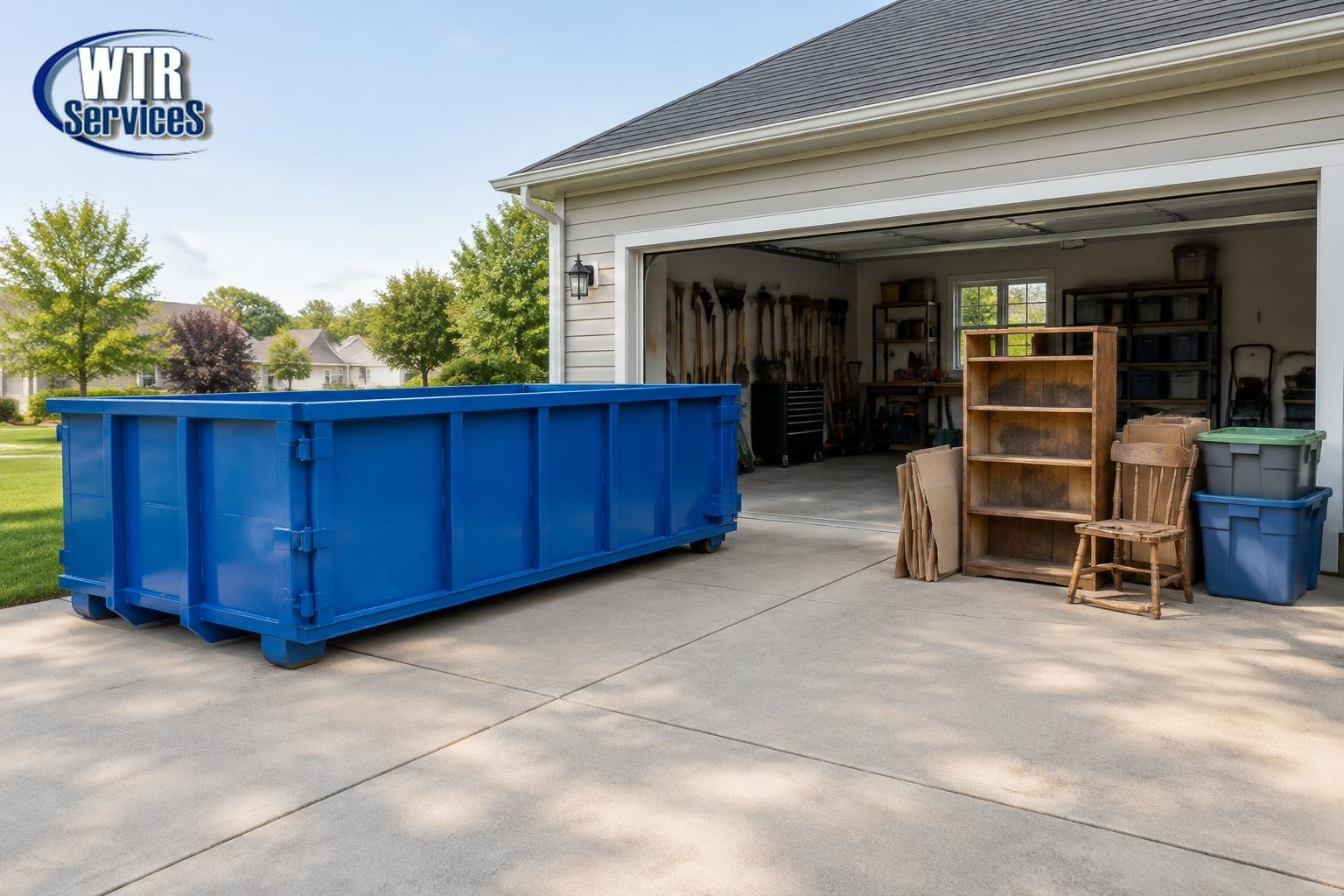
Illustrative blue roll-off dumpster beside an open garage with wooden shelving, a chair, boxes, and storage bins, with the actual WTR Services logo in the upper-left

Garages often become storage spaces for everything that no longer has a place inside the house. Old furniture, broken tools, cardboard boxes, unused sports equipment, holiday decorations, and forgotten household items can gradually take over the space intended for parking, storage, or hobbies. When clutter builds up over several years, cleaning out the garage can feel like a major project. You need to sort through belongings, decide what to keep, identify items that require special disposal, and find a practical way to remove the accumulated waste. A dumpster for garage cleanout can make the process more manageable by giving you a designated place to put accepted unwanted items as you work. Instead of making repeated trips to disposal facilities, you can organize the cleanup into stages and load the container throughout your rental period. However, successful garage cleanouts require more than renting a dumpster. You also need to estimate the amount of waste, choose a suitable container, understand loading rules, and determine how to handle items such as paint, batteries, electronics, and old appliances. In this guide, WTR Services explains how to plan a garage cleanout from start to finish, choose the right dumpster, manage bulky junk, and avoid common mistakes that can increase costs or delay your project. This guide focuses on arranging a temporary dumpster: inventory, material approval, container choice, delivery access, and loading. For a shorter sorting checklist, start with the existing garage decluttering guide. For building work rather than stored belongings, use the garage renovation guide.

Why Garage Cleanouts Become Overwhelming

Garages are convenient places to store belongings that are not needed every day. Unfortunately, this can make them easy to clutter because items are frequently placed there without a plan for when they will be used again. Over time, the garage may become difficult to navigate, and finding the things you actually need can become frustrating. Years of accumulated household junk A typical garage cleanout may involve:
  • Old cardboard boxes and packaging
  • Broken furniture and shelving
  • Unused tools and hardware
  • Outdated sports and recreational equipment
  • Holiday decorations
  • Old rugs and carpets
  • Unwanted household goods
  • Broken storage containers
  • Damaged outdoor furniture
  • Exercise equipment
  • Scrap materials from previous projects
Some belongings may still be useful, while others may be damaged, outdated, or no longer worth storing. The first challenge is separating items worth keeping or donating from those that need to be discarded. Bulky items take up valuable space Furniture, workbenches, cabinets, and large storage units can occupy a significant amount of space. Even a garage that does not look particularly full may produce a substantial waste volume once large items are removed and smaller clutter is sorted. This is why estimating the total amount of waste before renting a container can help you avoid choosing one that is too small or unnecessarily large. Garage waste can include restricted materials Unlike a simple household decluttering project, a garage cleanout may uncover leftover paint, solvents, pesticides, automotive fluids, batteries, fuel containers, and other potentially hazardous materials. These items should not automatically be placed in a standard dumpster. Some require specialized collection or disposal arrangements. Identifying these materials before loading begins can prevent problems later in the project.

When Should You Rent a Dumpster for a Garage Cleanout?

A dumpster rental can be useful when your garage contains more accepted waste than regular household garbage collection can reasonably handle. It is particularly worth considering when you want to remove multiple bulky items or complete a larger cleanup over several days. When the garage has years of clutter If you have accumulated boxes, broken shelving, old furniture, and miscellaneous household junk, a garage cleanout dumpster can provide a convenient place to consolidate accepted waste. Instead of stacking discarded belongings around the driveway or moving them into another room, you can load the dumpster as you work. When you're preparing to move Moving is a good opportunity to reduce the number of items you need to pack and transport. Clearing the garage before moving can help you identify what is worth keeping and eliminate belongings that have not been used for years. A dumpster may be useful if the project involves a substantial quantity of accepted household waste. When you're selling your home A cluttered garage can make it harder to demonstrate how much usable storage space a property offers. Removing unwanted items can help make the garage easier to clean, inspect, and present to prospective buyers. If the rest of the property also needs decluttering, a home clean out dumpster may be worth considering for the combined project, provided the planned materials are accepted. When you're clearing an estate or rental property Estate cleanouts and tenant turnovers can involve large amounts of stored household goods. A dumpster can help consolidate accepted waste from the garage and other areas of the property. However, belongings should be checked carefully for valuables, personal documents, and items that need to be returned to their owners. When you're reclaiming garage space You may simply want enough room to park your vehicle, organize tools, store bicycles, or create a usable workshop. A structured garage cleanout can help you reclaim the space without beginning a renovation project. For a move, see pre-move sorting. If other rooms are included, review the basement cleanout guide.

What Can You Put in a Garage Cleanout Dumpster?

Many ordinary household items may be suitable for dumpster disposal, but acceptance varies by rental provider and disposal facility. Before loading, confirm that the materials you plan to discard are permitted under your rental agreement.
Garage itemGeneral disposal consideration
Cardboard boxes and packagingOften accepted when free of prohibited contents
Broken wooden furnitureOften accepted, subject to provider rules
Old shelving and cabinetsOften accepted; check for glass or specialized components
Household clutterOften accepted if individual items are permitted
Plastic storage binsOften accepted, depending on contents
Old rugs and carpetingMay be accepted; confirm material restrictions
Broken toys and sports equipmentOften accepted, subject to material and size limits
Exercise equipmentCheck size, weight, and component restrictions
Scrap metalAsk whether it is accepted and whether separate handling is available
TiresMay require a separate disposal arrangement
Batteries and electronicsMay require specialized recycling or collection
Paints, solvents, and automotive fluidsMay be prohibited from standard dumpsters
Fuel cylinders and pressurized containersRequire specific safety and disposal guidance
This table is general guidance, not a confirmed list of items accepted by WTR Services. Furniture and storage units Old desks, tables, chairs, cabinets, and shelving are common during garage cleanouts. If accepted, these items can be loaded after loose contents have been removed. Dismantling suitable furniture may make it easier to handle and help use the available space more efficiently. Cardboard and general household clutter Boxes, packaging, plastic containers, and broken household goods can form a large portion of garage waste. Inspect boxes before disposal so you do not accidentally discard important documents, valuable items, or materials requiring separate handling. Old tools and hardware Broken tools and miscellaneous hardware may be suitable for disposal, depending on their materials and the provider's requirements. Separate batteries, fuel-powered equipment, oils, solvents, and other potentially restricted components. Ask about unusual items before placing them in the dumpster. Outdoor and recreational equipment Bicycles, sports equipment, damaged patio furniture, and other bulky belongings may be encountered during a garage cleanout. Check the material, size, and condition of each item. Equipment containing batteries, motors, or other specialized components may require separate disposal. Check furniture disposal and the Ohio prohibited-items guide before loading uncertain items.

How to Plan Your Garage Cleanout Step by Step

A clear plan can turn a cluttered garage into a manageable project. Instead of trying to clean everything at once, divide the work into stages. Step 1: Assess the garage Walk through the entire garage and identify the main categories of clutter. Look for:
  • Large furniture and shelving
  • Boxes and storage bins
  • Broken household items
  • Tools and hardware
  • Potentially hazardous materials
  • Items suitable for donation
  • Areas that are difficult to access
If clutter is blocking the walking path, start by creating a safe route before moving heavy belongings. Step 2: Set a cleanup goal Decide what you want to achieve. Your goal might be to:
  • Make room for a vehicle
  • Clear the garage floor
  • Create an organized workshop
  • Reduce stored belongings
  • Prepare the property for sale
  • Clear out a garage before moving
  • Remove accumulated junk from an estate or rental property
Having a clear outcome makes it easier to decide what should stay and what can go. Step 3: Sort items into four categories Create four groups before loading the dumpster. Keep: Items you use, need, or intentionally want to store. Donate or sell: Usable items that someone else may benefit from. Dispose: Unwanted items that are accepted by the selected waste disposal service. Special handling: Hazardous, electronic, automotive, or otherwise restricted materials. Do not place uncertain items into the dumpster until their acceptance has been confirmed. Step 4: Inspect boxes and containers Open old boxes and storage bins before discarding them. Look for personal documents, photographs, tools, valuables, and potentially hazardous materials. Check containers carefully for leftover liquids or chemicals. Never assume that a container is empty simply because it has been stored for a long time. Step 5: Estimate the amount of waste Once you've sorted the garage, estimate how much material will need to be removed. Pay particular attention to bulky objects such as workbenches, cabinets, sofas, exercise machines, and large shelving units. Also consider whether heavy items could affect the dumpster's weight allowance. Step 6: Choose your disposal method For a large quantity of accepted garage waste, a dumpster rental may be practical. For only a few large items, or if you cannot safely move them yourself, a professional junk removal or hauling service may be more suitable. If the cleanout includes hazardous materials, arrange the appropriate disposal method separately. Step 7: Prepare the loading area Choose a suitable location for the container and make sure the access route is clear. Follow the provider's placement instructions, including any requirements for vehicle access, overhead clearance, and the surface where the dumpster will sit. Step 8: Load accepted items in stages Begin with larger items that can be positioned safely, then add smaller accepted materials as appropriate. Keep the load below the permitted fill line and follow any instructions about weight distribution. Do not climb onto unstable debris or use unsafe methods to compress waste. Step 9: Inspect the garage again After the unwanted items have been removed, check for remaining clutter, damaged storage containers, and potential maintenance issues. Sweep or clean the space as appropriate, then organize the belongings you plan to keep. Step 10: Create a storage system Use labeled bins, designated shelving, and clearly defined storage zones. Keep frequently used items accessible and avoid placing belongings directly in walkways. A simple storage plan can help prevent the garage from becoming cluttered again.

How to Choose the Right Dumpster Size

Selecting a suitable dumpster is one of the most important decisions in planning a garage cleanout. A container that is too small may fill before the project is finished. A container that is unnecessarily large may not be the most economical option. Estimate the total volume Consider the number and size of the items you plan to discard. A small garage decluttering project may produce a few boxes and broken household items. A full garage cleanout may involve multiple furniture pieces, shelving units, exercise equipment, and years of accumulated belongings. Measure major items and estimate how much space the smaller items will occupy. Understand common dumpster sizes Dumpster capacity is generally measured in cubic yards. The following examples are intended to help with early planning; actual container availability and suitability should be confirmed with the provider.
Common dumpster sizePotential cleanout useWhat to consider
10-yardSmaller garage cleanouts with limited bulky wasteMay fill quickly if large furniture is included
15-yardModerate cleanouts with boxes and several larger itemsEstimate bulky-item volume carefully
20-yardLarger garage cleanouts involving substantial household clutterCheck weight limits and placement space
30-yardExtensive cleanouts or combined garage and household projectsConfirm that the property can accommodate delivery
40-yardLarge-scale cleanouts with substantial accepted wasteMay be unnecessary for a typical single-garage project
These are common industry examples, not a guarantee that WTR Services offers every listed size. Consider bulky items Large cabinets, workbenches, couches, shelving, and exercise equipment can consume considerable space. A garage may appear only moderately cluttered but still generate a large amount of waste once these items are removed. If you have several bulky objects, share their approximate dimensions with the provider when requesting a recommendation. Account for weight restrictions Garage waste is often a mixture of lightweight boxes and heavier objects such as solid wood furniture, metal shelving, and exercise equipment. The container must accommodate both the volume and the weight of the accepted waste. Ask about the included weight allowance, any restrictions on heavy materials, and the cost of exceeding the allowance. Consider the space available for delivery Before booking, check where the dumpster can be placed. Consider driveway dimensions, overhead clearance, the distance from the garage, and whether the hauling vehicle can access the intended location. A residential dumpster rental should suit the waste volume as well as the property's access conditions. Compare the dumpster sizing guide and 10–40 yard comparison. Review weight limits separately from volume. Use the delivery preparation guide to check access, and the Ohio placement guide if public-space placement is being considered.

Garage Decluttering Tips That Make Cleanup Easier

Garage decluttering can be physically demanding, but the process becomes more manageable when you make decisions systematically. Start with obvious junk Begin with broken items, empty packaging, and belongings you clearly no longer need. This creates visible progress and can free up space for sorting the remaining items. Work in small zones Divide the garage into manageable sections, such as one wall, one shelving unit, or one corner. Complete each section before moving to the next. This prevents the entire garage from becoming a collection of half-sorted piles. Avoid moving clutter from one place to another Moving unwanted belongings into the driveway, basement, or spare room does not solve the underlying problem. Sort items into their final categories and move them directly to the appropriate destination whenever practical. Keep donation items separate Place usable belongings in a clearly marked area away from the dumpster. Check donation requirements before arranging collection, as organizations may have restrictions on item condition, size, and type. Review stored tools and equipment Garages often contain duplicate tools, damaged equipment, and items from projects completed years ago. Decide which items you genuinely need, which can be repaired, and which should be disposed of or recycled through an appropriate channel. Avoid keeping everything for hypothetical future use If an item has remained unused for years, consider whether it is likely to be useful again. You do not need to discard everything that has not been used recently, but setting a realistic storage limit can help reduce unnecessary clutter. Create a permanent storage plan After the cleanout, assign specific places for tools, sports equipment, seasonal decorations, and frequently used household items. Use labeled bins and keep the floor as clear as practical. This makes future cleaning easier and reduces the likelihood of another major garage cleanout.

How to Load a Garage Cleanout Dumpster Safely

Correct loading helps you use the container efficiently and reduces the risk of collection problems. Load larger items carefully Place larger furniture and bulky items in a stable arrangement according to the provider's loading instructions. Avoid leaving objects balanced precariously on top of other materials. Remove detachable components when safe and practical. Break down suitable items Where appropriate, disassemble furniture and flatten cardboard boxes to reduce wasted space. Do not dismantle equipment containing hazardous components or use unsafe methods to break apart items. Distribute debris appropriately Follow the provider's instructions for weight distribution. Avoid concentrating heavy materials in one area if the loading requirements call for a more even load. Keep the waste below the fill line Do not stack items above the rim or allow materials to protrude from the container. A dumpster that looks full is not necessarily overweight, and a partially filled dumpster can still exceed its weight allowance. Both volume and weight matter. Monitor the load as you work Check the fill level regularly rather than waiting until the project is complete. If the container is approaching its permitted level or you suspect it may be overweight, stop loading and contact the provider for guidance. Keep prohibited items out Do not place chemicals, fuel, batteries, or other restricted materials in the dumpster without explicit confirmation that they are accepted. Separating these items before loading helps prevent disposal problems later. Follow the roll-off loading guide and overfilling guidance. Keep delivery and pickup access clear throughout the rental.

What Garage Items Require Special Disposal?

Garages often contain materials that should not be mixed with ordinary household junk. Identifying these items early helps you plan the appropriate disposal method.
ItemWhy you should check first
Paint and solventsMay require household hazardous waste disposal
Automotive fluids and used oilMay require a dedicated collection or recycling program
Gasoline and other fuelsCan present serious fire and handling hazards
Pesticides and chemicalsMay be hazardous and require specialized disposal
BatteriesSome types require separate handling or recycling
ElectronicsMay need electronic waste recycling
TiresOften subject to separate disposal requirements
Refrigerators and air conditionersMay contain refrigerants requiring special handling
Gas cylinders and pressurized containersCan create safety risks
Fluorescent bulbs and certain lampsMay contain materials requiring special disposal
This is a general guide, not an exhaustive list. Local requirements and provider policies can differ. Paint and chemicals Do not pour paint, solvents, pesticides, or other chemicals into the dumpster. Keep them in their original labeled containers when safe to do so, and follow local disposal guidance. If a container is leaking, damaged, or unidentified, avoid handling it unnecessarily and seek appropriate guidance. Automotive fluids and fuel Old motor oil, gasoline, antifreeze, and other automotive fluids may require specialized collection. Never place loose liquids into a dumpster or attempt to dispose of fuel by pouring it into drains or onto the ground. Batteries and electronics Batteries and electronics may contain components that require separate handling. Check local recycling options and confirm whether the waste provider accepts the particular items. Tires and appliances Tires, refrigerators, air conditioners, and some other appliances may have separate acceptance requirements. Confirm the appropriate disposal method before loading these items into a rental container.

Dumpster Rental vs. Professional Garage Junk Removal

A dumpster rental is not the only way to clean out a garage. Professional junk removal or hauling services may be useful when you have a small number of large items or need help moving things from the garage. The best choice depends on the amount of waste, your available time, your physical ability to load the items, and the space available for a dumpster. Comparing the options
ConsiderationDumpster rentalProfessional junk removal
Loading responsibilityCustomer generally loads accepted wasteProvider may handle loading and removal
Best suited forLarger cleanouts completed over timeSelected items or cleanouts requiring lifting assistance
FlexibilityLoad items throughout the rental periodCollection occurs according to the agreed appointment
Space requirementsRequires suitable placement spaceDepends on vehicle access and collection arrangements
PricingMay depend on container size, rental duration, weight, and disposalMay depend on item volume, labor, access, and disposal
Physical effortGenerally higher if you load the container yourselfMay be lower if labor is included
Actual service details and pricing vary by provider. When a dumpster rental is the better choice Consider a dumpster when:
  • You have a large volume of accepted garage waste.
  • You want to work through the cleanout over several days.
  • You are also clearing other areas of the house.
  • You can safely move and load the items.
  • You have suitable space for container placement.
A garage cleanout dumpster rental may be practical for a large decluttering project because it provides a central place to consolidate accepted waste as you work. When junk removal may be better A hauling service may be more convenient if:
  • You have only a few bulky items.
  • You cannot lift or carry the items safely.
  • Your property does not have suitable dumpster placement space.
  • You need assistance removing furniture or equipment.
  • You want a provider to handle the agreed loading work.
If the garage contains hazardous materials, confirm how they should be handled separately. Do not assume every junk removal provider accepts them. See hauling services and junk removal dumpster rental for WTR service information. In-home removal and lifting labor are not promised here; confirm the exact service scope before booking.

Common Garage Cleanout Mistakes to Avoid

Even a straightforward garage cleanout can become more expensive or time-consuming if you begin without a plan. Mistake 1: Renting a dumpster before estimating the waste Choosing a container without assessing the clutter can lead to insufficient capacity or unnecessary expense. How to avoid it: Sort major categories of belongings and estimate the volume before booking. Mistake 2: Throwing away items without checking them Old boxes and storage containers may hold important documents, valuables, or useful tools. How to avoid it: Inspect stored belongings before placing them in the disposal pile. Mistake 3: Mixing hazardous materials with household junk Paints, automotive fluids, batteries, and chemicals may require separate disposal. How to avoid it: Identify restricted items before loading and follow local disposal requirements. Mistake 4: Underestimating bulky items Large cabinets, workbenches, and exercise equipment can consume more container space than expected. How to avoid it: Measure major objects and include them in your estimate. Mistake 5: Ignoring weight limits Dense furniture and equipment can increase the total load even when the container is not full. How to avoid it: Confirm the weight allowance and monitor heavy items during loading. Mistake 6: Filling the dumpster above the rim Protruding items can make transportation unsafe or delay collection. How to avoid it: Keep all debris within the permitted fill line. Mistake 7: Trying to do all the heavy lifting alone Large or awkward items can be difficult to control, particularly when moving through narrow spaces. How to avoid it: Clear the route, use appropriate lifting practices, and arrange suitable assistance when necessary. Mistake 8: Forgetting to plan for what stays A cleanout may remove waste but leave the garage difficult to organize if the remaining belongings have no designated storage areas. How to avoid it: Create a storage plan before putting items back into the garage.

How Much Does a Garage Cleanout Dumpster Rental Cost?

The cost of a garage cleanout dumpster rental depends on the container size, rental duration, amount and type of waste, and the provider's pricing structure. There is no single price that applies to every garage cleanout. Factors that affect the price Dumpster size: Larger containers may have different rental rates than smaller ones. Rental period: The length of time you keep the container can affect the total cost. Included weight allowance: Some rentals include a specified weight allowance, with additional charges possible if that allowance is exceeded. Material type: Certain materials may have special acceptance or disposal requirements. Delivery and pickup terms: Confirm the transportation arrangements and any applicable charges. Additional services: If you need loading assistance or another service, verify whether it is available and how it is priced. How to keep costs manageable
  • Sort the garage before booking.
  • Donate or sell usable belongings when practical.
  • Measure bulky items to estimate the required space.
  • Confirm accepted materials and weight restrictions.
  • Choose a rental period that fits the cleanup schedule.
  • Ask about additional fees before confirming the rental.
  • Compare dumpster rental with hauling services if you have only a few items.
The most economical option depends on the entire project, not just the starting rental price. Confirm the included rental period and pickup arrangements using the rental-duration guide. No standard price or allowance is assumed; request terms for your inventory and address.

How WTR Services Can Help With Your Garage Cleanout

A successful garage cleanout starts with understanding how much waste you have, which items can be accepted, and what type of container suits your property. WTR Services can be contacted to discuss your cleanout requirements and clarify the dumpster rental options that may be available for your project. Before requesting a quote, prepare the following details:
  • Project size: Describe whether you're clearing a few shelves or an entire garage filled with years of clutter.
  • Waste materials: List furniture, boxes, shelving, household junk, and other items.
  • Bulky belongings: Mention workbenches, cabinets, exercise equipment, and other large objects.
  • Potentially restricted items: Identify paint, automotive fluids, batteries, electronics, tires, and appliances.
  • Estimated waste volume: Provide an approximate quantity or measurements of the largest items.
  • Placement space: Explain where a container could be positioned and whether the hauling vehicle can access it.
  • Project timeline: Share when you expect to start and how long the cleanup may take.
If you are clearing more than the garage, ask whether a home clean out dumpster may be suitable for the combined volume of accepted waste. For a residential project, a residential dumpster rental may provide a practical solution when you have enough accepted waste to justify a container and can load the items yourself. WTR Services can help clarify available options, rental terms, accepted materials, loading requirements, and weight restrictions before you proceed. Contact WTR Services to discuss your garage cleanout project and confirm the rental arrangements that fit your needs. WTR Services is a family-owned company based in Warren, serving Northeast Ohio and Western Pennsylvania since 2006. See residential dumpster rental or Warren dumpster rentals. Call (330) 399-3817 or get a free quote with your item list, placement details, and dates. You can also visit WTR Services for company information.

Conclusion

A garage cleanout can restore valuable space, make household belongings easier to manage, and help prepare a property for moving or sale. The key is to approach the project systematically. Start by assessing the clutter, sorting items into clear categories, identifying restricted materials, and estimating the total waste volume. Choose a dumpster that suits both the size of the project and the weight of the accepted materials, then follow the provider's loading requirements. A dumpster for garage cleanout can be particularly useful when you're removing a substantial amount of accepted household junk and want to work through the cleanup in stages. If you have only a few bulky items or need loading assistance, compare the rental with a suitable hauling service. With the right plan, you can clear years of accumulated clutter without creating unnecessary disposal problems. Ready to reclaim your garage? Contact WTR Services to discuss your cleanout, confirm accepted materials, and explore suitable dumpster rental options for your project.

Frequently Asked Questions

Keep Reading: Related Guides