
All Articles

Dumpster Rental for Moving: What to Throw Away Before You Move

Published · Guide by WTR Services
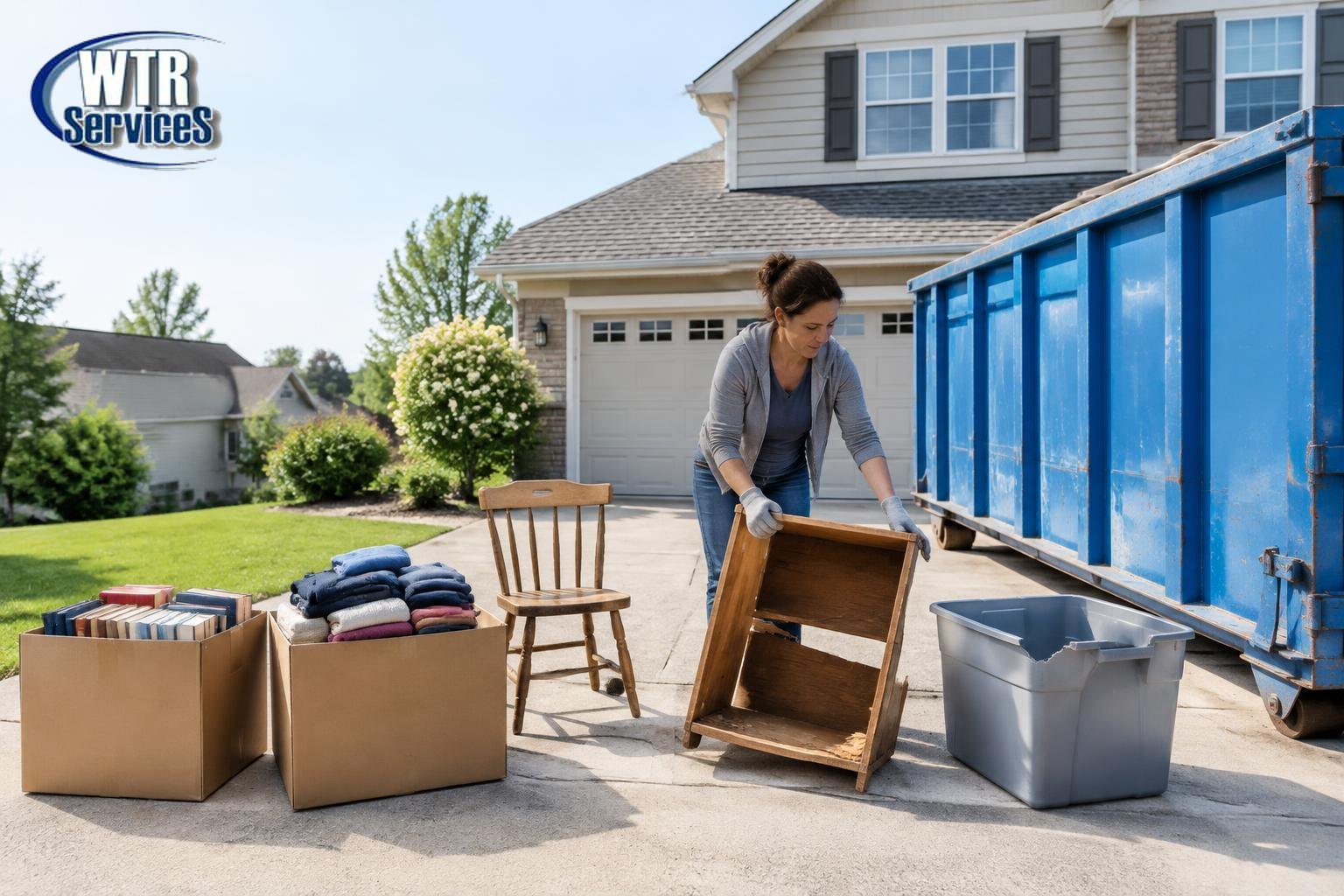
WTR Services moving cleanup guide showing household items separated for donation and disposal beside a blue roll-off dumpster

Packing reveals how much has collected in closets, garages, and basements. Before paying to transport every box, decide which belongings deserve a place in your next home. A dumpster for moving cleanup provides a collection point for approved waste, but useful items should be separated for donation, sale, or recycling first. WTR Services is a family-owned company serving Northeast Ohio and Western Pennsylvania since 2006. This guide focuses on the decisions before packing: what to discard, what to save, and how to clear unwanted belongings without mixing everything together.

Key Takeaways

  • Sort belongings before packing them into moving boxes.
  • Keep separate groups for keeping, selling, donating, recycling, and disposal.
  • Make decisions about furniture and other bulky items early.
  • Confirm accepted materials before loading a moving cleanup dumpster.
  • Schedule waste removal around your move-out deadline, not just moving day.

Why Declutter Before Moving?

Every unwanted item you pack must be carried, transported, and unpacked again. Reducing that load can save effort and truck space, although any savings depend on your mover's charges. Start with storage areas where rarely used belongings accumulate. Work through one space at a time rather than emptying every cupboard at once. Ask whether you use the item, whether it fits your new home, and whether its condition makes it worth keeping. Set sentimental items aside for a considered decision instead of discarding them under deadline pressure.

What Should You Throw Away Before You Move?

Begin with items that are broken, worn out, or no longer usable. Do not assume an unwanted item is automatically trash: clean, working belongings may have a second life. Candidates for disposal, subject to the provider's rules, include:
  • Broken furniture and damaged shelving
  • Unusable decorations and household goods
  • Worn-out rugs and carpeting
  • Damaged storage containers
  • Packing materials that cannot be reused or recycled
Check drawers and pockets before discarding furniture. Remove personal documents, keys, valuables, and anything another household member needs. Shred sensitive paperwork separately rather than leaving readable records in an open container.

What Should You Donate, Sell, or Give Away?

Clean furniture, clothing, books, toys, kitchenware, and working household goods may be useful to someone else. Check a donation organization's acceptance rules and collection availability before setting items aside. Not every organization accepts upholstered furniture, mattresses, or appliances. Arrange sales and donations early enough to allow collection before your departure. Keep these belongings away from the disposal pile so helpers do not load them by mistake. If an item does not sell, decide whether to keep it, donate it, or arrange an approved disposal route rather than leaving it behind.

How Should You Handle Bulky Items?

Measure furniture against the rooms and entrances at your new property. A usable table that will not fit might be better sold or donated than transported. For damaged cabinets, shelving, and other approved waste, safe disassembly can reduce the space needed. Confirm mattresses and appliances individually with WTR Services; they may involve restrictions or separate arrangements. Do not break apart equipment containing refrigerants, batteries, or other potentially hazardous components. Use help for heavy lifting and keep children and pets away from the loading area.

What Can Go in a Moving Cleanup Dumpster?

Acceptance depends on the waste, disposal facility, and rental agreement. Household clutter, furniture, cardboard, and some renovation debris may be accepted, but confirmation comes before loading. Tires, paint, chemicals, batteries, propane tanks, and certain electronics need separate guidance. Use the Ohio prohibited items guide as a starting point, then describe your specific materials when booking. Keep liquids and unknown containers out until you have instructions. A dumpster collects approved waste; it is not a substitute for a household hazardous-waste program.

How Do You Choose a Container After Sorting?

Estimate what remains after donations, sales, and recycling—not everything currently in the house. Count bulky pieces and identify the rooms still needing cleanup. Photos and an item list can help WTR Services understand the volume and material mix. A residential dumpster rental can suit a household move, but size also depends on weight and available placement space. Review the moving dumpster rental guide for container comparisons and the home cleanout guide for larger room-by-room projects. Do not choose solely by the number of bedrooms.

A Practical Pre-Move Cleanup Timeline

One to two weeks before moving: Begin sorting closets, garages, basements, and storage rooms. These are planning suggestions, not a guaranteed rental period. Large homes or limited weekend availability may require an earlier start. Several days before moving: Complete donations and sales, then load approved disposal items. Confirm delivery and pickup dates with your provider and allow time for a final check. Before moving day: Walk through every room, attic access, garage, and outdoor storage area. Check that only intended waste remains and that the container can be collected without blocking the movers. Agree on any changed pickup arrangements before the original collection date.

Keep Your Cleanup Organized and Accessible

Label sorting areas clearly and give helpers the same instructions. Keep boxes going to your new home inside a separate packing area. Work from one room to the next, handling bulky pieces before loose clutter. Break down empty cardboard where recycling or disposal rules allow. Keep waste within the container's fill line and follow the provider's loading and weight instructions. Leave the truck's access route clear. For homes in Warren, Youngstown, or nearby communities, discuss narrow driveways, overhead obstacles, or possible street placement before delivery. Our delivery preparation guide covers those checks.

What Should You Confirm Before Booking?

Ask about the container size, accepted household materials, included rental duration, weight allowance, placement, and pickup arrangements. Explain your move-out date and whether the moving truck needs the same driveway space. Check local requirements before any public-street placement. For a few small items, donation collection or a permitted disposal trip may be enough. A larger cleanup spread over several days may benefit from a container on site. Request a free quote or call WTR Services at (330) 399-3817 to discuss the belongings you need removed and your schedule.

Frequently Asked Questions

Keep Reading: Related Guides