
Managing Waste Collection for Retail Stores, Offices and Warehouses
Published · Guide by WTR Services
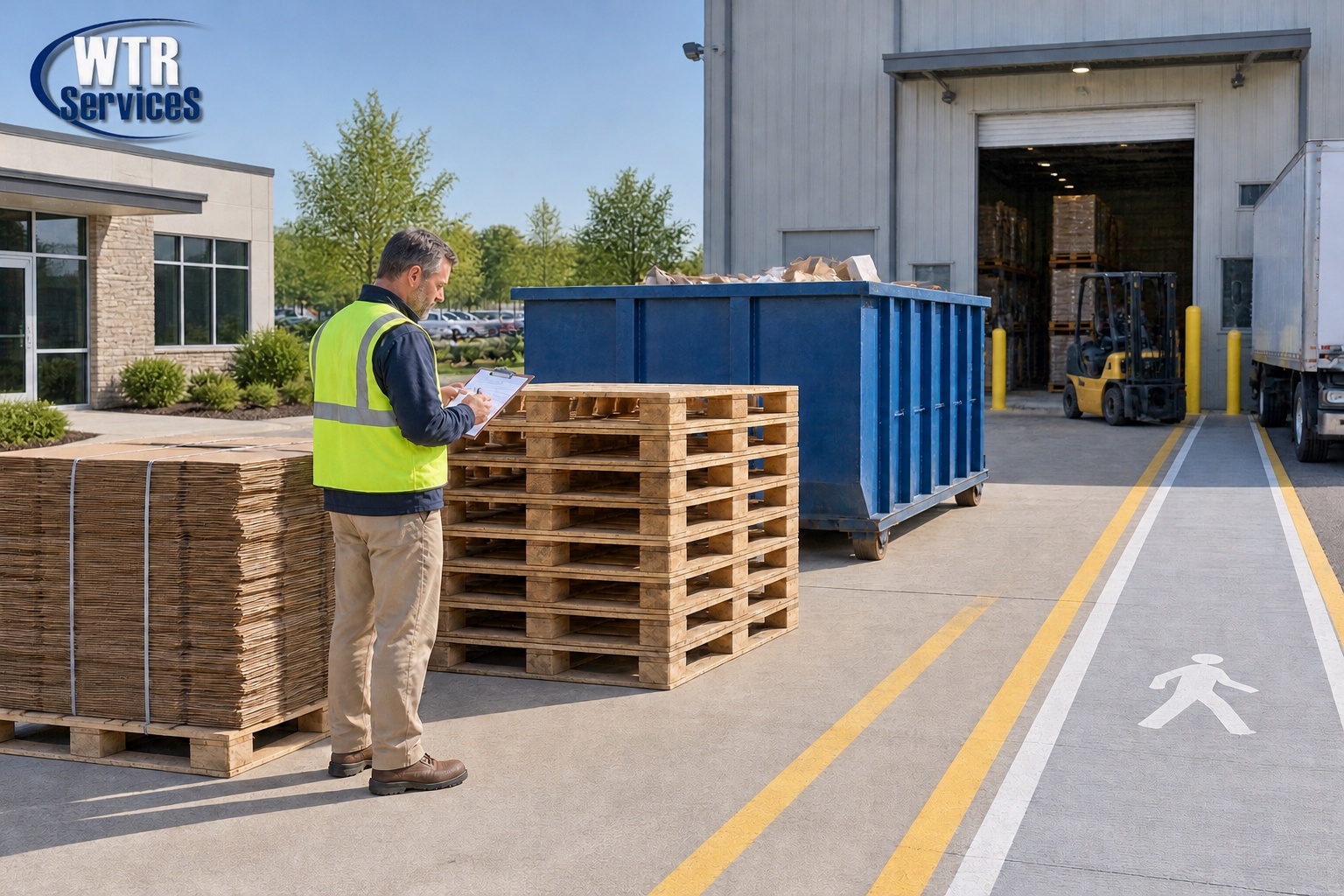
Retail stores, offices and warehouses all produce waste every day, but not the same kind, at the same pace or on the same schedule. A store fills up with cardboard after a delivery, an office collects paper and food packaging, and a warehouse piles up pallets and stretch wrap around the dock. Good commercial waste collection planning connects how fast waste builds up with how much storage you have and when it gets picked up.
This guide explains how to map your waste streams, estimate volume, set pickup frequency, schedule collection around business hours and decide when everyday service, a roll-off dumpster or hauling makes more sense. It focuses on ongoing operations. If you're planning a refit, see where businesses should dispose of renovation and facility waste instead.
Why Do Businesses Need a Waste Collection Plan?
- Prevent overflow: Match pickups to how fast containers actually fill.
- Keep access safe: Stop cardboard, pallets and debris from blocking walkways, docks, fire exits and equipment routes.
- Reduce disruption: Keep collection trucks away from busy store hours, office arrivals and dock appointments.
- Control costs: Avoid paying for half-empty pickups or emergency extra service.
- Improve sorting: Give employees clear rules for general waste, cardboard, metal, electronics and other materials.
How Does Waste Differ Between Business Properties?
| Property type | Common waste | Main collection considerations |
|---|---|---|
| Retail stores | Cardboard, plastic packaging, damaged displays, general trash | Customer access, delivery days, stock movement and seasonal sales |
| Offices | Paper, food packaging, old furniture, electronics | Occupancy, shared facilities and secure disposal of documents and devices |
| Warehouses | Pallets, stretch wrap, cardboard, damaged packaging | Loading docks, forklift routes, inventory movement and shift patterns |
| Restaurants | Food waste, packaging, disposable supplies | Hygiene, frequent pickups and separate waste streams |
| Commercial facilities | Maintenance debris, fixtures, equipment, general waste | Contractor schedules, access, storage space and special disposal |
How Do You Plan Commercial Waste Collection?
- Step 1, list your waste streams: General trash, cardboard and paper, plastic wrap, pallets, metal, furniture, electronics, renovation debris, heavy material and restricted items. Not all of these belong in one container.
- Step 2, map where waste is created: A store's stockroom, sales floor and fitting rooms; an office's kitchens, workspaces and storage rooms; a warehouse's receiving and dispatch areas. Put collection points near the source.
- Step 3, estimate the volume: Look at employees or customers, deliveries, packaging, damaged inventory, seasonal changes and maintenance work. The goal is how quickly waste builds up, not just the monthly total.
- Step 4, set the collection frequency: Base it on the rate of buildup and the storage you have.
- Step 5, choose the equipment: Standard containers, recycling bins, cardboard equipment, roll-off containers for bigger volumes or separate arrangements for bulky and restricted items.
- Step 6, coordinate with providers: Confirm pickup days, access instructions, container placement, accepted materials and a single point of contact.
How Do You Schedule Pickups Around Business Operations?
- Know your busy hours: Stores are busiest in afternoons, evenings, weekends and sales events; offices at arrival and departure; warehouses around shift changes and dock appointments.
- Avoid delivery conflicts: Keep collection trucks from arriving when the loading area is in use.
- Collect before peaks: Empty storage areas before big deliveries, seasonal rushes or inventory counts.
- Keep the route clear: Make sure trucks can reach containers without moving vehicles, stock or equipment.
- Plan for closures and holidays: Adjust pickups when the business is closed or the provider's schedule changes.
What Should Retail Stores, Offices and Warehouses Each Focus On?
Retail stores
Offices
Warehouses
How Do You Estimate Waste Volume and Collection Frequency?
| Waste stream | What to watch | Scheduling consideration |
|---|---|---|
| General business waste | Daily buildup and storage space | Adjust pickups to prevent overflow |
| Cardboard and packaging | Delivery volume and packaging peaks | Time pickups to follow receiving days |
| Office paper | Occupancy and printing | Match collection to actual use |
| Pallets | Reusable and damaged pallet counts | Arrange separate return or removal |
| Bulky fixtures | Replacement or project schedule | Book a dedicated pickup or container |
| Renovation debris | Project stages and estimated volume | Use a roll-off dumpster or hauling |
| Restricted waste | Material type and amount | Use an approved specialist route |
Should You Use Regular Collection, a Roll-Off Dumpster or Hauling?
| Option | Best suited to | Main considerations |
|---|---|---|
| Regular commercial trash service | Predictable everyday waste | Pickup frequency, container size, accepted streams |
| Roll-off dumpster rental | Larger volumes over a set period, cleanouts and remodels | Size, weight allowance, rental period, placement |
| Scheduled roll-off swap-outs | Steady, high-volume operational or project waste | Fill rate, access for the truck, swap timing |
| Hauling | Gathered debris, bulky items or no room for a container | Who loads, vehicle capacity, disposal |
| Recycling collection | Clean cardboard, metal and other accepted materials | Sorting rules and contamination limits |
| Specialist disposal | Electronics, batteries, chemicals and other restricted items | Approved handling and facilities |
How Do You Coordinate Collection With Employees and Providers?
- Assign a coordinator: One facility manager or supervisor watches container levels, talks to providers and changes the schedule when needed.
- Give clear sorting instructions: Label each area and tell employees what goes where, what stays separate, how to prepare cardboard, where bulky items wait and what needs approval first.
- Share the schedule: Make pickup days and access instructions available to every shift and contractor.
- Confirm access: Share gate codes, dock instructions, container location and time windows before pickup.
- Review service: Check regularly for missed pickups, overflow or access problems and adjust with the provider.
What Are Common Commercial Waste Collection Problems?
- Pickups too far apart: Containers overflow before the next visit. Check fill levels and adjust.
- Pickups too frequent: Collecting near-empty containers wastes money.
- Poor container placement: Containers block deliveries, parking, customers or equipment.
- Mixed waste streams: Contaminated recycling or rejected loads.
- Underestimated project waste: A refit produces far more debris than daily operations.
- Trucks clashing with deliveries: Common at shared docks and retail loading areas.
- No one in charge: Problems go unreported when a container fills early or a pickup is missed.
- Overfilled containers: Material above the rim may not be picked up safely. Read what happens if you overfill a dumpster.
Get Help With Larger Business Waste From WTR Services
Key Takeaways
- Plan collection around how fast waste builds up, how much storage you have and when trucks can reach it.
- Retail, office and warehouse waste each peak at different times.
- Track container fill levels for a few weeks before changing pickup frequency.
- Keep pickups away from busy hours, deliveries and shift changes.
- Use regular trash service for daily waste and a roll-off dumpster or hauling for larger volumes and projects.
- Restricted materials such as electronics, batteries and chemicals need separate disposal.
- Assign one person to manage collection and communicate with providers.
Frequently Asked Questions
Keep Reading: Related Guides
- How to Organize Large-Scale Property Cleanups Without Delays
Run a whole-property cleanout without delays: assess every area, sort belongings, prepare furniture, book collection, follow a sample schedule and assign roles for estate, rental and pre-sale cleanups in Northeast Ohio.
- Where Should Businesses Dispose of Renovation and Facility Waste?
Where office, retail, warehouse and facility renovation waste should go: dumpsters, hauling, recycling, donation and specialist disposal, plus how to plan collection around business operations in Northeast Ohio.
- Dumpster Rental vs Full-Service Junk Removal: Which Is Better for Your Project?
Dumpster rental vs full-service junk removal comes down to who does the lifting. Compare labor, time, cost drivers and project fit, with a quick self-check to see if loading it yourself makes sense.
- What Determines the Cost of Professional Junk and Debris Removal?
The main junk removal cost factors explained: load volume, weight, material type, labor, access, travel and disposal fees, plus what to tell a provider so your quote matches the job in Northeast Ohio.