
All Articles

Retail Renovation Dumpster Rental: How to Manage Store Remodeling Waste Efficiently

Published · Guide by WTR Services
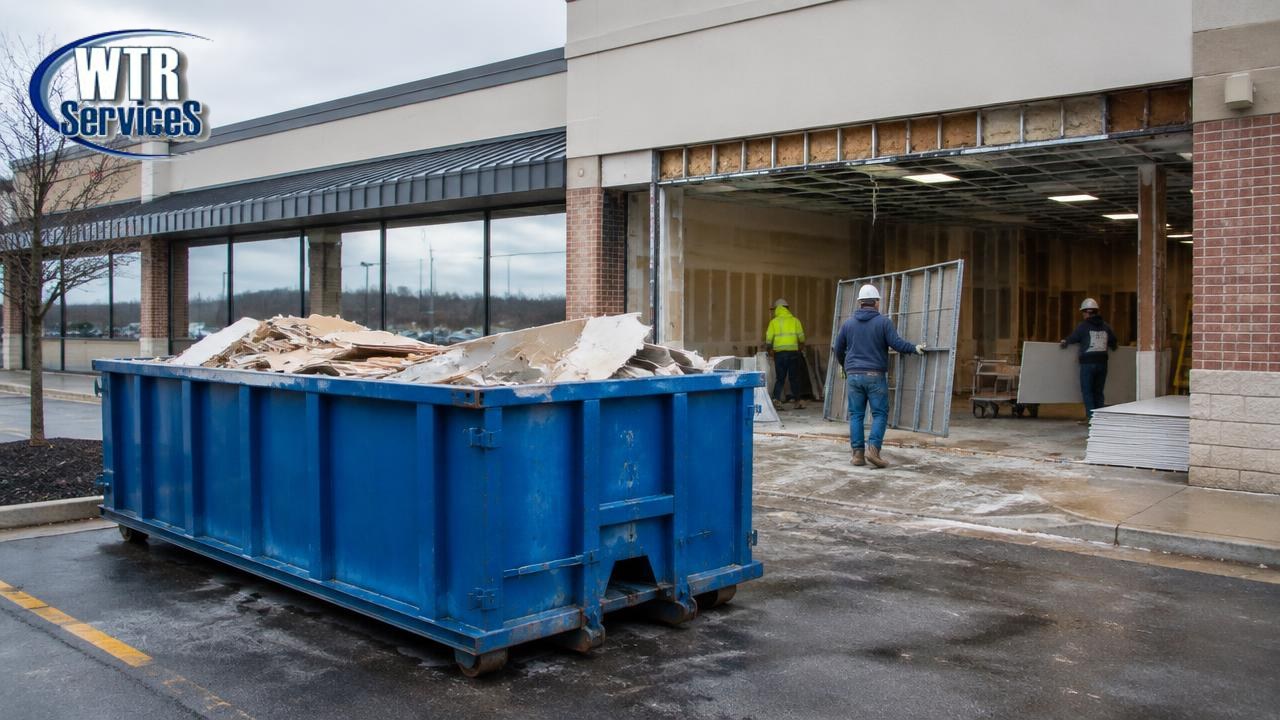
Blue WTR Services roll-off dumpster behind a retail store during a renovation, with workers carrying out shelving and drywall debris

A retail renovation dumpster rental gives your crew one place to put demolition debris instead of stacking it against the loading dock or the stockroom. That one decision keeps a remodel organized from day one.

Store renovations move fast. Shelving comes down, flooring gets ripped up, drywall gets cut, and packaging piles up before lunch. Without a dedicated container, that commercial renovation waste ends up scattered across back rooms, parking areas, or sidewalks. A properly sized dumpster solves that directly and shapes how smoothly contractors, property managers, and store staff work around each other.

Why Do Retail Renovations Need a Dedicated Dumpster?

Regular commercial trash service is built for daily operational waste: cardboard, food packaging, office trash. It's not sized for what a store remodeling dumpster needs to hold in a single week. Containers used for day-to-day operations fill fast once demolition starts, and crews end up stacking debris outside or letting waste sit somewhere the store actually needs. A dedicated container changes that, giving the renovation its own disposal system separate from the store's day-to-day commercial dumpster rental.

What Waste Does a Store Renovation Generate?

The debris mix shifts through the project. Early demolition typically produces old shelving, display fixtures, flooring, and carpet. Mid-project work adds drywall, ceiling tile, wood framing, and sections of cabinetry. Toward the end, it's packaging from new fixtures and general cleanup debris — which is worth planning for rather than reacting to.

How Does a Dumpster Keep the Project Moving?

Centralized collection cuts down on wasted motion. Crews aren't hauling materials across the property, and fewer disposal runs mean less traffic near the entrance. Coordination gets easier too: contractors know where the retail construction dumpster sits, and property managers know what to expect near the loading area.

How Do You Choose the Right Retail Renovation Dumpster Rental?

The right choice starts with understanding the renovation itself, since the size and scope of the work determine how much debris you need to manage. Consider the scope of the renovation. Dumpster needs track the scope of the job. A partial fixture swap generates far less debris than a full gut renovation. Square footage, demolition amount, flooring replacement, and the number of fixtures coming out all factor into choosing the right container. A store remodeling dumpster for a two-week fixture update may have very different requirements from one supporting an eight-week remodel. Match capacity to debris volume. A front load dumpster rental is generally set up for routine, ongoing commercial waste rather than renovation debris — it's usually not the right fit once demolition or flooring removal starts. A commercial roll off dumpster rental is often better suited to this volume, particularly for larger or multi-phase renovations. With larger renovations, multiple pickups or a mid-project container swap can be more practical than relying on one load. Weight matters just as much as volume: dense materials such as tile or drywall can reach a weight limit before the container looks full. Choosing the right retail renovation dumpster rental means accounting for both. Our commercial dumpster sizes guide walks through the options.

What Should You Consider When Placing a Dumpster at a Retail Site?

Once you've chosen the right container, where it goes can be just as important — particularly when the renovation is taking place at an active retail property. Coordinate with property management. Shopping centers and commercial landlords often set specific rules about where a dumpster can sit and which loading zones are off-limits during business hours. Delivery access, parking, and traffic flow matter more at a retail property than at an isolated job site. Confirm placement rules beforehand, since requirements can vary by municipality — our Ohio dumpster permit guide covers the basics. Keep crews and customers moving safely. Pedestrian routes should remain clear, particularly around entrances customers use. Where the site allows, keep the container away from customer-facing areas so the renovation disrupts the storefront as little as possible. An accessible spot matters for the crew loading it daily, since spilled debris around the container creates a hazard. Scheduling delivery and pickup around store hours also reduces disruption for customers, employees, and contractors.

How Do You Handle Commercial Renovation Waste During the Project?

Remove debris as work progresses. Inside the work zone, establish a designated collection area so debris doesn't spread throughout the store. Crews should load the dumpster consistently rather than letting materials pile up and require handling twice. Breaking down bulky items creates more usable space, while keeping debris below the fill line helps with safe transport. Sorting materials that require recycling or special handling during the retail cleanup can also save time later. Know what can't go in the dumpster. What can be accepted varies by provider and local rules. Paints, solvents, and other chemicals are often banned, as are some electronics and batteries. If the status of a material isn't clear, check our Ohio prohibited items guide before loading it.

When Should You Schedule Delivery and Pickup?

Delivery should happen before major demolition starts, not after debris has piled up somewhere it shouldn't. Pickup timing depends on the project: some crews schedule it once the container is full, others tie it to the end of a phase. Longer, multi-phase renovations often benefit from a mid-project swap rather than letting one dumpster sit full and block access. Coordinating that timing with the provider and property manager keeps access open throughout.

Why Choose WTR Services for Retail Renovation Dumpster Rental?

WTR Services is locally owned and family operated, serving Northeast Ohio since 2006 from our headquarters at 2421 W Market St in Warren. That local experience is useful when coordinating placement, access, scheduling, and pickup around an active retail property — whether your store is in Trumbull, Mahoning, Columbiana, Portage, Ashtabula, or Mercer county. Our commercial and industrial dumpster services cover retail renovations and business remodeling, with flexible rental terms and pickup coordinated around an active job site. Share the project location, renovation scope, expected debris, and timeline, and we'll help you land on an appropriate container and pickup schedule. Call (330) 399-3817 or get a free quote.

Final Takeaway

A successful store renovation needs a debris-management plan alongside the construction plan. Choosing the right retail renovation dumpster rental, confirming placement, knowing what materials are accepted, and coordinating pickup around project phases keeps the work organized. When you're planning disposal for an upcoming remodel, WTR Services can talk through your site, timeline, and debris volume to help you land on the right setup.

Frequently Asked Questions

Keep Reading: Related Guides