Warehouse Cleanup Dumpster Rental: Best Solutions for Large Facilities
Published · Guide by WTR Services
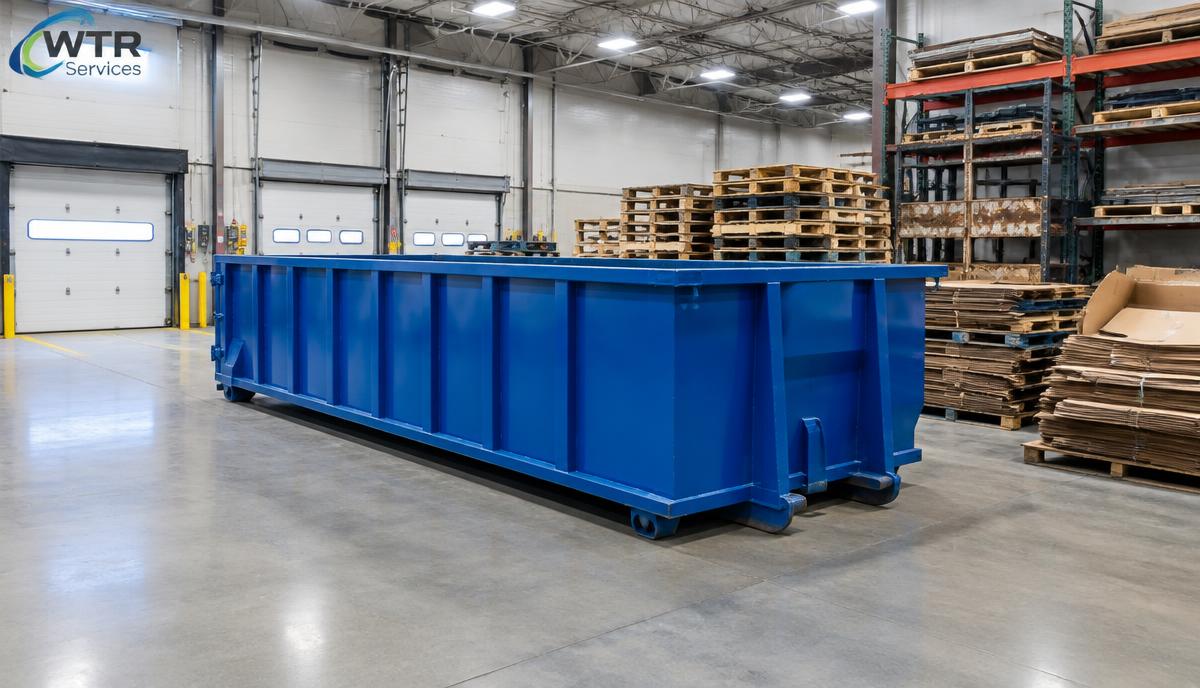
If you manage a warehouse, you already know that cleanouts get messy fast: pallets piling up, old shelving nobody wants, and boxes of inventory that should've been cleared out months ago. A warehouse cleanup dumpster rental is often the simplest way to deal with all of it at once, giving you one spot to toss everything instead of letting junk pile up in corners.
The EPA actually has a solid resource for this kind of thing; their Guide for Industrial Waste Management walks facility managers through how to handle non-hazardous industrial waste responsibly. It's worth a look before you start any big cleanout, since having a plan for how waste gets collected and hauled away saves a lot of headaches later.
Whatever you're dealing with — old inventory, shelving, storage, or a move — the right dumpster size and type makes the process smoother. Get that right, and you'll spend less time on logistics and more time getting your space back.
What Makes Warehouse Cleanups Difficult for Large Facilities?
What Are the Best Dumpster Solutions for a Warehouse Cleanup?
- General warehouse waste: a standard commercial dumpster handles day-to-day packaging, wrap, and light debris.
- Larger-volume cleanouts: an industrial dumpster gives you the capacity for bigger warehouse waste removal jobs.
- Pallets and bulky shelving: a larger roll-off dumpster has the open top and floor space these awkward items need.
- Major inventory cleanouts: a higher-capacity roll-off dumpster keeps a full-facility clear-out moving without swap-outs.
How Should You Sort Warehouse Waste Before Loading?
- Pallets: Stack and count them first. Once you can see how many you've actually got, sizing the dumpster gets a lot easier.
- Shelving and Fixtures: Break it down into sections before hauling it out if you can; full units are awkward to lift and load. Just make sure the dumpster has room for the longer, heavier pieces, or loading turns into a two-person struggle.
- Packaging Materials: Cardboard, shrink wrap, and plastic strapping — keep this stuff away from the bulkier items. Flatten what you can. Boxes take up way less room broken down, and that alone can buy you extra space in the dumpster.
- Bulk Inventory: Pull out anything outdated, damaged, or not needed anymore before the cleanup starts. Knowing how much there is ahead of time keeps you from running out of room halfway through.
How Do You Choose the Right Dumpster Size?
- Estimate the waste: Get a rough idea of how much you'll actually be hauling out over the course of the cleanup.
- Think about the waste type: Pallets, shelving, packaging, and inventory don't all take up space the same way.
- Match it to the project size: Clearing out one storage area is nothing like tackling a full warehouse cleanup, so the size should reflect that.
- Not sure? Just ask: A rental provider can point you toward the right size once they know what you're dealing with.
How Can a Dumpster Make a Large Warehouse Cleanup More Efficient?
- There will be only one place where all your waste can be accumulated.
- Fewer trips hauling stuff to the disposal facility yourself.
- Pallets, shelving, packaging, and inventory stay sorted instead of a jumble.
- Your team spends time actually clearing the space, not shuttling waste around.
- The work area stays cleaner the whole way through.
How Does Warehouse Dumpster Rental Work?
- Get a rough idea of how much waste there'll be and what kind.
- Pick a size that fits the job.
- Set up delivery somewhere trucks can actually reach for drop-off and pickup.
- Only load in what's allowed while you're working — our Ohio prohibited items guide lists what has to stay out.
- Once you're done and the dumpster's full, call for pickup.
Ready to Simplify Your Next Warehouse Cleanup?
Frequently Asked Questions
Keep Reading: Related Guides
- Office Cleanout Dumpster Rental: The Complete Business Guide
Planning an office cleanout? Learn how to choose the right dumpster size, sort office waste, dispose of furniture in stages, and keep your business running during a commercial office cleanup in Northeast Ohio.
- WTR Rentals: Reliable Dumpster Rental Services for Residential and Commercial Projects
Discover WTR Rentals by WTR Services — dependable residential, commercial, and construction dumpster rentals with fast delivery, flexible rental periods, and transparent pricing across Northeast Ohio.
- Commercial Dumpster Cleaning: Why Regular Dumpster Maintenance Matters for Your Business
Learn the benefits of commercial dumpster cleaning, how often dumpsters should be cleaned, and why businesses trust WTR Services for professional waste management solutions.
- Commercial Roll Off Dumpster Rental: The Complete Guide for Construction and Business Waste Management
Discover the benefits of commercial roll off dumpster rental for construction, renovations, and business cleanups. Find the right commercial roll off dumpster with WTR Services.