
What Happens to Old Roofing Shingles After a Roof Replacement?
Published · Guide by WTR Services
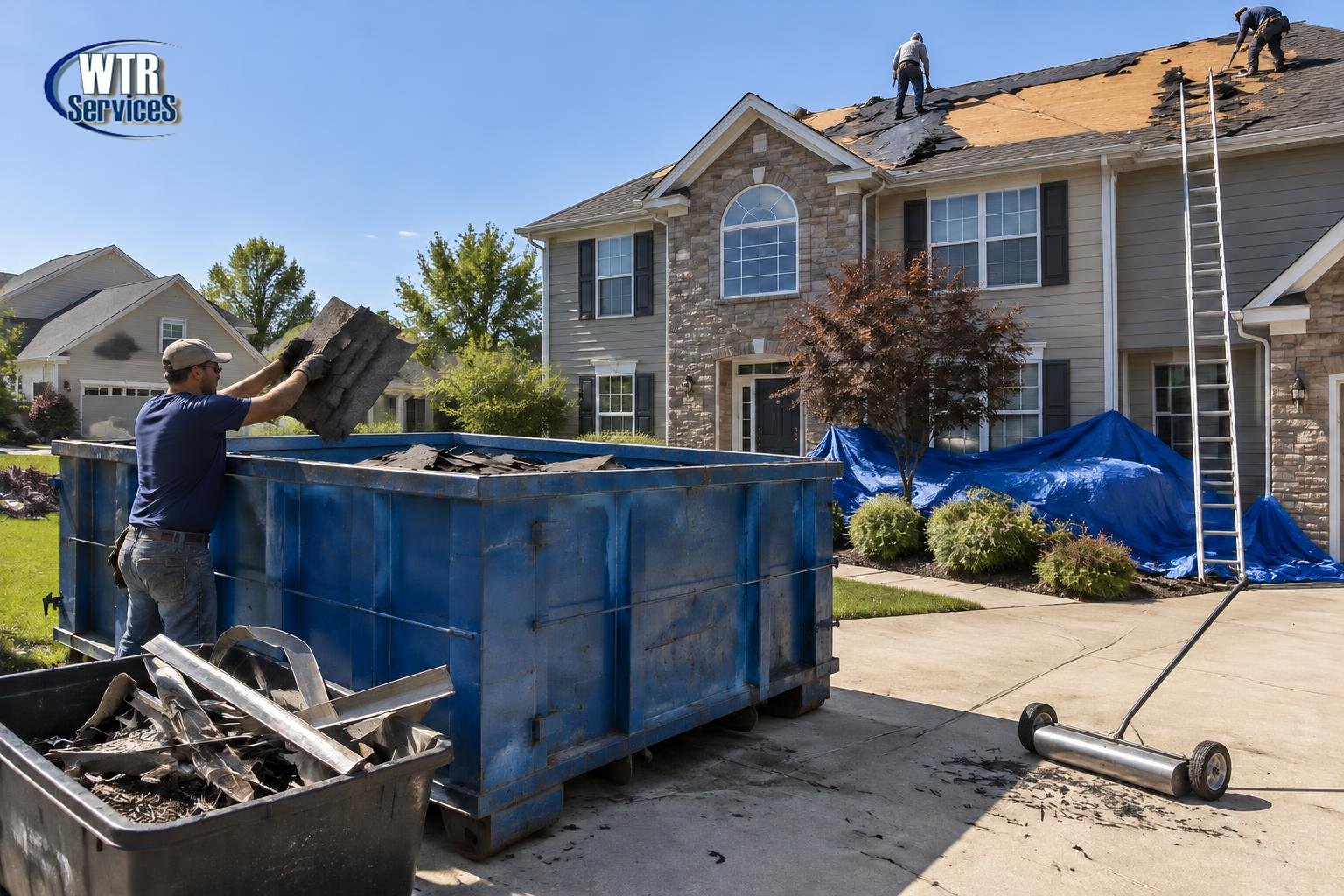
Replacing an old roof leaves behind more waste than most homeowners expect. So what happens to all those shingles once the crew climbs down? Some go to a landfill, while others are processed and reused in road and paving work.
Where they end up depends on the shingle material, its condition and the rules at the facility that receives it. Knowing the common old shingle disposal methods helps you make better decisions about roofing waste and make sure it is handled responsibly.
This guide follows the shingles after they leave the roof. If you are planning the cleanup itself, the roof replacement cleanup guide covers tear-off workflow, property protection and loading.
Where Do Old Roofing Shingles Go After Removal?
What Materials Are Collected During Roof Removal?
| Roofing material | What usually happens to it |
|---|---|
| Asphalt shingles | Recycled when a facility accepts them, otherwise landfilled |
| Roofing felt and underlayment | Disposed of according to the facility's rules |
| Nails | Often recovered with magnets for metal recycling |
| Flashing and drip edge | Recycled as scrap metal when kept clean and separate |
| Damaged decking and wood | Disposed of or recycled where accepted |
| Old vents and boots | Sorted by material type |
Can Old Asphalt Shingles Be Recycled?
- Less landfill waste: Suitable shingles stay out of disposal sites.
- Material recovery: The asphalt and aggregate in old shingles get a second use.
- Resource conservation: Recycled material can reduce the need for some new raw materials.
- Better waste handling: Sorting materials supports more responsible disposal overall.
What Factors Affect Roofing Shingle Recycling?
- Material type: Asphalt shingles are the type most often accepted by shingle recyclers. Slate, wood shakes, metal and other roofing materials need different handling.
- Contamination: Shingles mixed with insulation, plastic, lots of wood, trash or other unwanted material may not meet the facility's requirements.
- Condition: Heavily contaminated or unusual shingles may not be suitable for processing.
- Local availability: Shingle recyclers aren't everywhere. Distance and local programs affect whether recycling is practical for a given job.
What Happens When Old Shingles Cannot Be Recycled?
Are There Any Restrictions on Roofing Shingle Disposal?
- Facility acceptance: Each facility sets its own rules for asphalt shingles and mixed roofing loads.
- Asbestos concerns: Some older roofing materials, such as certain felts, coatings and cement-based shingles, may contain asbestos. If you suspect it, stop and have the material tested by a qualified professional before removal. Suspected asbestos must not go into a standard dumpster.
- Weight limits: Shingles are heavy. A container can reach its weight allowance long before it looks full, especially with two or three layers.
- Fill line and transport: Loads must stay below the container's top edge so nothing blows or falls out on the road during hauling.
How Can a Dumpster Help Manage Roofing Waste?
- Roof size: Larger roofs produce more waste.
- Number of layers: Each extra layer adds a lot of weight.
- Container capacity: Pick a size that fits the expected debris.
- Weight allowance: Ask what weight is included with the rental.
- Accepted materials: Confirm that shingles, underlayment and flashing can all go in.
How Can You Make Roofing Cleanup Easier?
- Book the dumpster so it arrives before the tear-off starts.
- Lay tarps to catch falling shingles and nails where practical.
- Keep flashing and other metal separate if you plan to recycle it.
- Check facility and local rules before any waste is hauled away.
- Sweep the driveway, yard and flower beds with a magnet once the roof is off.
Manage Your Roofing Waste Responsibly With WTR Services
Key Takeaways
- Removed shingles usually go to a shingle recycler or a licensed landfill that accepts construction debris.
- Suitable asphalt shingles can be ground up and reused in asphalt paving.
- Contaminated or mixed loads may not qualify for recycling.
- Facility rules and local regulations decide what is accepted.
- Suspected asbestos roofing must be tested and kept out of standard dumpsters.
- Choose a dumpster by both debris volume and weight.
- Collecting waste as you go keeps a roofing job safer and more organized.
Frequently Asked Questions
Keep Reading: Related Guides
- Asphalt Shingles, Underlayment and Flashing: A Guide to Roofing Waste Disposal
A component-by-component guide to roofing waste disposal: how to handle asphalt shingles, roofing felt, synthetic underlayment, ice-and-water shield, metal flashing and nails during a tear-off in Northeast Ohio.
- How to Estimate Roofing Waste Before Scheduling a Cleanup
Estimate roofing waste before a tear-off: measure roof squares, adjust for pitch, count shingle layers, work out the weight in tons and use it to choose a dumpster in Northeast Ohio.
- Managing Building Debris on Large Construction Sites: A Contractor's Guide
Manage debris on large, multi-crew construction sites: set up sorted collection zones, run more than one container, time pickups to each phase and assign who checks fill levels.
- How to Calculate Container Capacity for a Building Renovation
Work out dumpster capacity for a whole-building renovation: total debris area by area, add a 10–20% allowance, compare 10 to 40-yard sizes and decide on one container or several hauls.