
Asphalt Shingles, Underlayment and Flashing: A Guide to Roofing Waste Disposal
Published · Guide by WTR Services
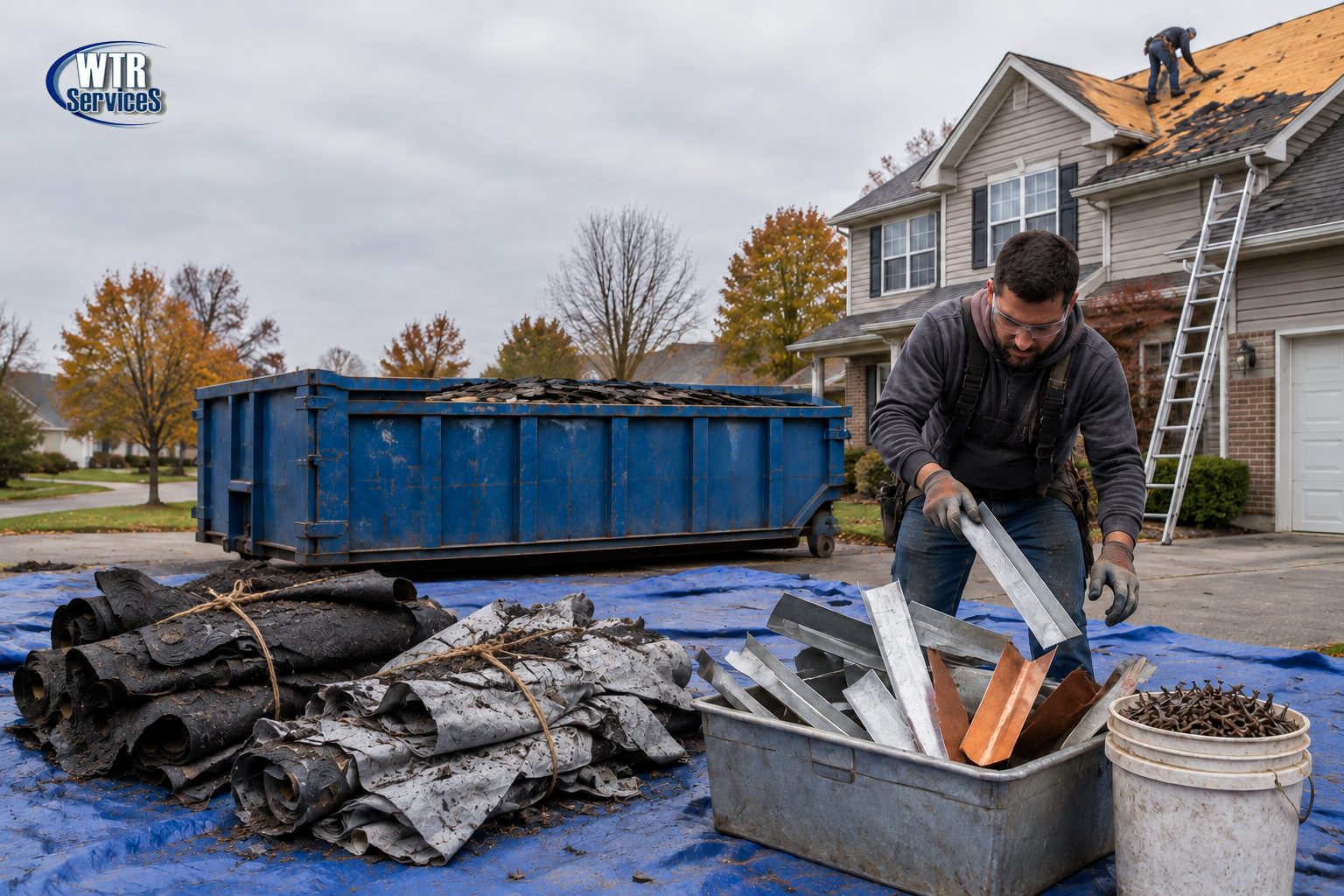
A roof replacement produces more than old shingles. Under the visible layer, the crew also pulls off roofing felt or synthetic underlayment, ice-and-water shield, metal flashing, drip edge, pipe boots and thousands of nails. Each one behaves differently once it's off the roof.
This guide goes through the roof one component at a time: what each material is, how to handle it during the tear-off, and where it usually ends up. Getting asphalt shingle disposal and the smaller streams right keeps the site safer and makes it easier to recover metal that's worth recycling.
It sits alongside our other roofing guides. To size the job before you book, use how to estimate roofing waste. For the day-to-day cleanup routine, see the roof replacement cleanup guide. For where shingles go after pickup, read what happens to old roofing shingles.
What Waste Comes Off a Roof During a Tear-Off?
- Asphalt shingles: The largest and heaviest share, often more than one layer on older homes.
- Ridge caps and starter strips: Shingle products along the peak and edges.
- Roofing felt: Asphalt-saturated paper, common on older roofs.
- Synthetic underlayment: Woven or spun plastic sheet used on newer roofs.
- Ice-and-water shield: A self-adhering membrane along eaves, valleys and around chimneys.
- Metal flashing and drip edge: Aluminum, galvanized steel and sometimes copper.
- Vents and pipe boots: Plastic, rubber or metal fittings around roof openings.
- Nails and fasteners: Loose and still stuck in shingles.
- Damaged decking: Rotted plywood, OSB or boards replaced during the job.
Roofing Waste Sorting Table
| Component | How to handle it | Where it usually goes |
|---|---|---|
| Asphalt shingles | Drop by chute or straight into the container; keep trash and wood out if recycling | Roofing dumpster; some facilities recycle them into paving |
| Roofing felt | Roll or fold into bundles so it doesn't blow around | Roofing dumpster with the shingles |
| Synthetic underlayment | Bundle separately; it's light and catches wind | Roofing dumpster |
| Ice-and-water shield | Remove with the shingles or the decking it's stuck to | Roofing dumpster |
| Metal flashing and drip edge | Pull carefully, set aside in a bin, keep sharp edges contained | Scrap metal recycling if clean; otherwise the dumpster |
| Copper flashing | Keep apart from other metal | Scrap metal recycling |
| Nails and fasteners | Sweep with a magnet; nails in shingles go with the shingles | Dumpster or scrap metal |
| Pipe boots and plastic vents | Collect with other small debris | Roofing dumpster |
| Damaged decking | Stack flat; tell WTR if a lot is coming off | Roofing dumpster, adds weight and volume |
How to Handle Asphalt Shingles During a Tear-Off
- Work in sections: Strip one area of the roof at a time so debris stays manageable.
- Use a chute or a drop zone: Direct shingles into the dumpster or onto tarps instead of throwing them down.
- Protect the ground: Lay tarps over landscaping, walkways and the base of walls.
- Pick up fragments as you go: Don't leave broken pieces until the end of the day.
- Keep the load clean: Avoid mixing in household trash, yard waste or other materials that weren't part of the roof.
Managing Roofing Felt and Synthetic Underlayment
- Roll or fold removed felt into bundles and tie them if needed.
- Keep synthetic underlayment in its own bundle; it's light enough to blow out of an open container.
- Pull loose nails and staples out of large pieces before bundling.
- Place bundles low in the dumpster and put heavier debris on top.
Ice-and-water shield
Sorting and Recycling Metal Flashing
- Remove flashing carefully to avoid bending pieces you plan to reuse.
- Separate metal from shingles, felt and other debris as it comes down.
- Keep copper apart from aluminum and steel.
- Put sharp or jagged pieces in a bin, not loose on the ground.
- Call a local scrap yard to confirm what they take and how they want it prepared.
Roofing Nails and Small Debris
- Run a rolling magnetic sweeper over the driveway, lawn, beds and walkways at the end of each day.
- Sweep again after the final cleanup, in a grid pattern.
- Check gutters and the base of walls, where nails tend to collect.
- Collect pipe boots, vent covers and packaging in a bucket or bag rather than leaving them on the roof.
Choosing the Right Dumpster for Roofing Waste
| Factor | What to consider |
|---|---|
| Roof size | Larger roofs produce more debris |
| Shingle type | Architectural shingles weigh more per square than 3-tab |
| Number of layers | Each extra layer adds roughly another roof's worth of shingles |
| Decking replacement | Plywood and boards add weight and volume |
| Project length | Longer jobs may need a swap or scheduled pickup |
| Weight allowance | Confirm the included weight before loading |
Safe Practices While Removing Roofing Materials
Plan Roofing Waste From Start to Finish
- Estimate the debris weight from roof squares, layers and shingle type.
- Note any components that need separate handling, such as copper flashing or suspected asbestos.
- Book a dumpster sized for the weight, not just the volume.
- Set up a tarp and a metal bin next to the container for sorting.
- Plan pickup or swap timing around the job schedule.
- Follow local disposal and recycling rules.
- Do a final magnetic sweep and walk-around after cleanup.
Keep Your Roofing Project Clean With WTR Services
Key Takeaways
- A roof tear-off produces shingles, felt, synthetic underlayment, ice-and-water shield, flashing, vents, nails and sometimes decking.
- Bundle felt and synthetic underlayment so light material doesn't blow around.
- Ice-and-water shield is bonded to the deck and goes into the dumpster with the tear-off.
- Set clean metal flashing aside for scrap recycling, and keep copper separate.
- Test suspected asbestos roofing on older homes before removal.
- Sweep for nails every day and again after final cleanup.
- Choose a dumpster by weight, layer count and decking, and confirm the weight allowance before loading.
Frequently Asked Questions
Keep Reading: Related Guides
- How to Estimate Roofing Waste Before Scheduling a Cleanup
Estimate roofing waste before a tear-off: measure roof squares, adjust for pitch, count shingle layers, work out the weight in tons and use it to choose a dumpster in Northeast Ohio.
- What Happens to Old Roofing Shingles After a Roof Replacement?
Find out where old shingles go after a tear-off: what gets recycled into paving, what goes to a landfill, what can keep shingles out of recycling and how to keep roofing waste sorted in Northeast Ohio.
- Managing Building Debris on Large Construction Sites: A Contractor's Guide
Manage debris on large, multi-crew construction sites: set up sorted collection zones, run more than one container, time pickups to each phase and assign who checks fill levels.
- How to Calculate Container Capacity for a Building Renovation
Work out dumpster capacity for a whole-building renovation: total debris area by area, add a 10–20% allowance, compare 10 to 40-yard sizes and decide on one container or several hauls.