
How to Estimate Roofing Waste Before Scheduling a Cleanup
Published · Guide by WTR Services
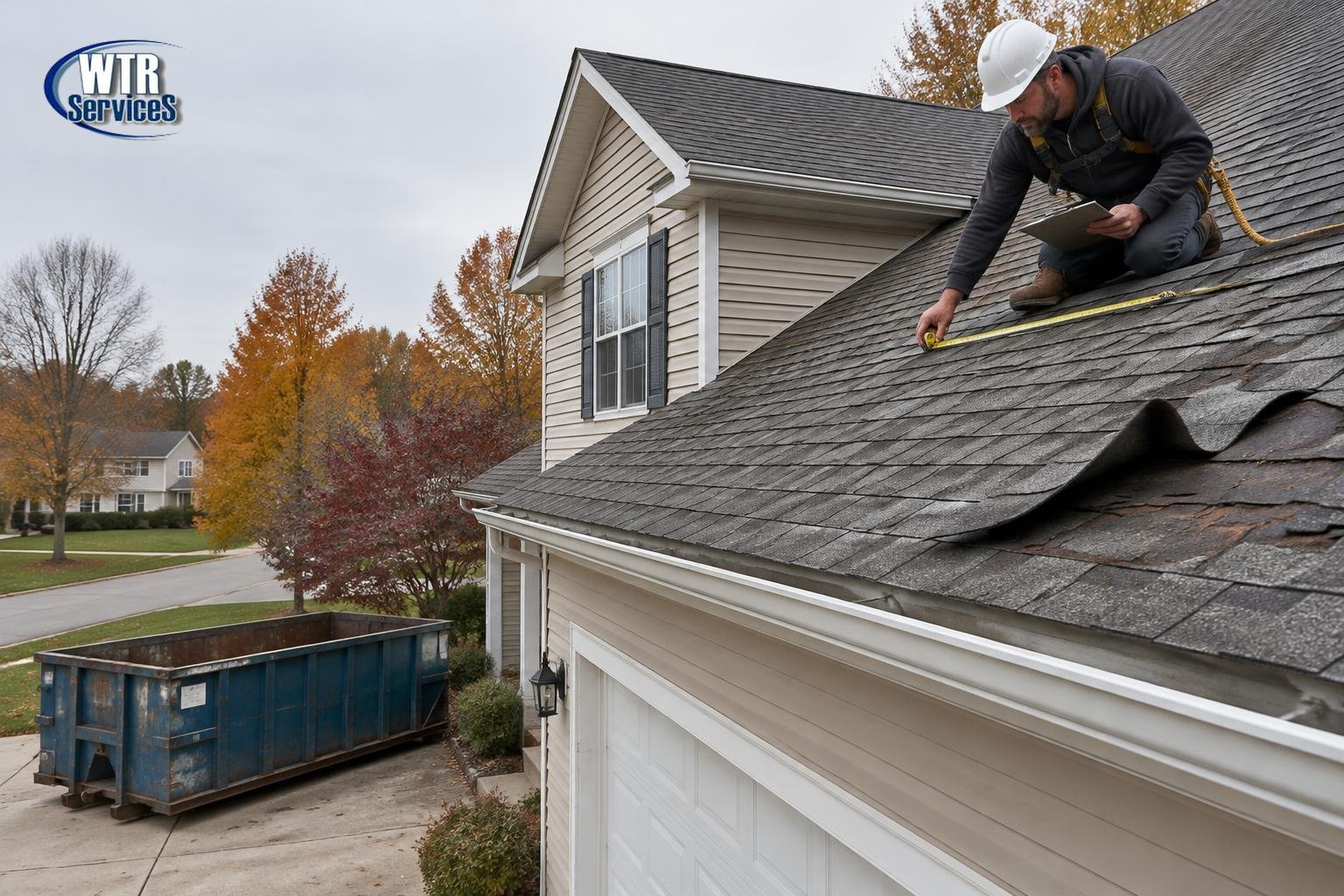
Roofing projects can produce more waste than contractors expect, especially when old shingles, underlayment, flashing and damaged decking all come off. Estimating that waste before work begins helps you choose the right dumpster, plan pickups and avoid delays.
Good roofing debris volume estimation ties together three things: roof size, roofing material and the number of layers being removed. With a few measurements and some simple math, you can book a container that fits the job and keep the site organized.
This guide is the number-crunching step that comes before the tear-off. For the cleanup itself, see the roof replacement cleanup guide. For where the shingles end up afterward, see what happens to old roofing shingles.
Start by Measuring the Total Roof Area
- Each roof section: Measure every plane of the roof separately, then add them together.
- Roof pitch: A sloped roof has more surface than the flat footprint of the house underneath it.
- Extra sections: Include dormers, porches, garages and additions that are being redone.
- Only what's coming off: Leave out any sections that aren't being replaced.
| Roof pitch (rise per 12 in.) | Multiply footprint by |
|---|---|
| 4/12 | 1.05 |
| 6/12 | 1.12 |
| 8/12 | 1.20 |
| 10/12 | 1.30 |
| 12/12 | 1.41 |
Check the Number of Existing Shingle Layers
Calculate the Weight of Roofing Materials
- Identify the roofing material.
- Work out the number of roofing squares.
- Count the layers being removed.
- Find the weight per square. The manufacturer's spec sheet lists it, or weigh one bundle and multiply by the bundles per square, which is usually three.
- Multiply: squares × layers × weight per square.
Include Underlayment, Flashing and Other Roofing Materials
- Underlayment: Old felt paper and synthetic underlayment.
- Flashing: Metal from roof edges, valleys, chimneys and walls.
- Roofing nails: Fasteners pulled during the tear-off.
- Damaged decking: Rotted plywood, broken boards and other wood.
- Insulation: Old or damaged insulation removed during the project.
- Packaging: Bundle wrappers, boxes and other installation waste.
Account for the Type of Roofing Project
| Roofing project | Expected waste |
|---|---|
| Minor roof repair | A few bundles of shingles and some damaged material |
| Partial replacement | Debris from the selected roof sections only |
| Complete replacement | Shingles, underlayment and flashing from the whole roof |
| Multi-layer tear-off | Additional waste from each extra layer |
| Roof renovation | Mixed materials, including old roofing and damaged decking |
Put It Together: A Worked Example
| Step | Calculation | Result |
|---|---|---|
| Roof surface | 1,800 sq ft footprint × 1.12 (6/12 pitch) | About 2,016 sq ft, or 20 squares |
| Shingle layers | Two layers coming off | 40 squares of shingles |
| Shingle weight | 40 squares × 300 lb (architectural) | 12,000 lb |
| Other materials | Add about 10 percent | About 13,200 lb |
| Total in tons | 13,200 ÷ 2,000 | About 6.6 tons |
Convert Your Estimate Into the Right Dumpster Size
- Total estimated debris and its weight.
- The number of layers being removed.
- Space available for placing the dumpster close to the roof edge.
- Whether you'd rather have one container or a swap partway through.
- Pickup timing and disposal requirements.
Plan the Cleanup Before Roofing Work Begins
- Finalize the estimated debris and weight.
- Confirm the dumpster size and weight allowance with the rental provider.
- Choose a placement spot with safe truck access.
- Check local placement rules. If the container goes on the street, read the Ohio dumpster permit guide.
- Line up delivery and pickup with the roofing schedule.
- Leave some room in case you find extra layers or damaged decking.
Estimate Roofing Waste and Plan Your Cleanup With WTR Services
Key Takeaways
- Measure the actual roof surface, adjusting for pitch, before estimating waste.
- Convert to roofing squares: one square is 100 sq ft.
- Count every shingle layer that has to come off.
- Work out weight as well as volume: squares × layers × weight per square.
- Add a cushion for underlayment, flashing, decking and packaging.
- Consider the project type and the condition of the existing roof.
- Confirm dumpster size and weight allowance before booking, and schedule delivery before the tear-off.
Frequently Asked Questions
Keep Reading: Related Guides
- Asphalt Shingles, Underlayment and Flashing: A Guide to Roofing Waste Disposal
A component-by-component guide to roofing waste disposal: how to handle asphalt shingles, roofing felt, synthetic underlayment, ice-and-water shield, metal flashing and nails during a tear-off in Northeast Ohio.
- What Happens to Old Roofing Shingles After a Roof Replacement?
Find out where old shingles go after a tear-off: what gets recycled into paving, what goes to a landfill, what can keep shingles out of recycling and how to keep roofing waste sorted in Northeast Ohio.
- Managing Building Debris on Large Construction Sites: A Contractor's Guide
Manage debris on large, multi-crew construction sites: set up sorted collection zones, run more than one container, time pickups to each phase and assign who checks fill levels.
- How to Calculate Container Capacity for a Building Renovation
Work out dumpster capacity for a whole-building renovation: total debris area by area, add a 10–20% allowance, compare 10 to 40-yard sizes and decide on one container or several hauls.