
Scrap Metal Hauling: How Businesses Can Prepare Materials for Pickup
Published · Guide by WTR Services
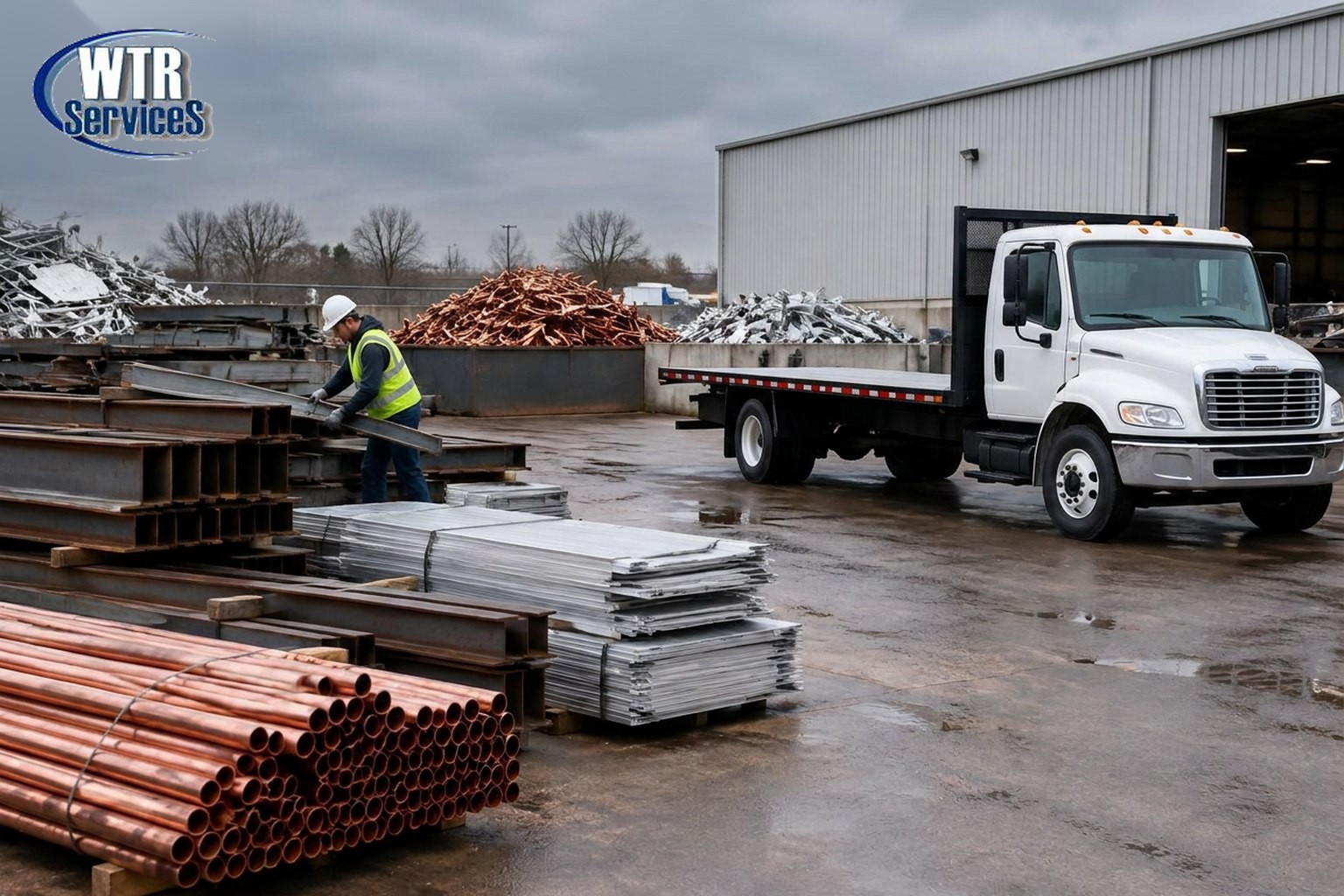
Introduction
Businesses can accumulate scrap metal for many reasons. Manufacturing operations, construction projects, facility maintenance, equipment replacement, warehouse cleanouts, and property improvements can all leave behind metal materials that need to be removed from the workplace.
For businesses with recurring or large-volume scrap, simply placing materials in a general waste container may not be the most practical approach. Scrap recycling hauling provides a way to organize recyclable metal and prepare it for pickup and transportation.
However, efficient hauling starts before the truck arrives.
Businesses can make scrap pickups easier by identifying recyclable materials, separating different material types where practical, organizing the collection area, and communicating important project details to the hauling provider.
This guide explains how businesses can prepare scrap metal for pickup and how scrap metal hauling can fit into a broader commercial waste-management strategy.
What Is Scrap Recycling Hauling?
Scrap recycling hauling involves collecting and transporting scrap or recyclable materials from a business location.
For businesses, the process can involve more than simply removing unwanted items.
A typical scrap hauling project may include:
Identifying materials that need to be removed
Sorting or organizing materials
Preparing the pickup area
Loading materials
Transporting the materials
Completing the cleanup
The exact process depends on the material type, quantity, location, and hauling requirements.
For businesses that regularly generate metal scrap, having a consistent pickup process can make material handling easier and help prevent scrap from accumulating around the facility.
Why Businesses Need a Scrap Pickup Plan
Scrap metal can take up valuable space when it accumulates over time.
A poorly organized scrap area can:
Reduce usable workspace
Create obstacles for employees
Make material identification difficult
Complicate future pickups
Increase cleanup time
Create unnecessary safety concerns
A planned scrap hauling service gives businesses a structured way to manage materials that are no longer needed.
Instead of waiting until a storage area is overflowing, businesses can establish a process for identifying and preparing scrap for removal.
This is particularly useful for manufacturers, contractors, warehouses, property managers, and businesses performing equipment upgrades.
Common Types of Business Scrap Metal
The type of scrap generated varies by industry.
Businesses may accumulate materials such as:
Metal fabrication scraps
Steel
Aluminum
Copper
Metal shelving
Metal fixtures
Pipes
Machinery components
Construction-related metal
Metal equipment
Wire and cable
Metal furniture
Structural pieces
Not every material should automatically be treated the same way.
Some items may contain non-metal components or require specific handling.
Before pickup, businesses should communicate unusual, oversized, contaminated, or potentially restricted materials to the hauling provider.
How to Prepare Scrap Metal for Pickup
Preparing scrap before the truck arrives can make the pickup process more organized.
A useful preparation process includes:
Identify → Sort → Remove Non-Metal Materials → Organize → Secure → Communicate → Schedule Pickup
Each step helps reduce confusion and unnecessary delays.
Step 1: Identify the Scrap Materials
Start by walking through the facility and identifying materials that are ready for removal.
Ask:
Is this material still needed?
Is it part of an active project?
Can it be reused?
Is it suitable for scrap collection?
Does it require special handling?
Clearly identifying the material before pickup prevents useful equipment or inventory from accidentally being removed.
For larger facilities, creating a simple inventory or collection list can help the operations team understand what is included in the pickup.
Step 2: Separate Materials Where Practical
Businesses may generate several different types of metal.
Where practical, separate materials into clearly identified groups.
For example:
Steel
Aluminum
Copper
Mixed metal
Metal equipment
Metal fixtures
The exact sorting requirements depend on the hauling and recycling process.
Businesses should ask the provider whether materials should be separated before pickup or whether mixed materials can be collected together.
The goal is to make the material easy to identify without creating unnecessary handling work.
Step 3: Remove Non-Metal Waste
Scrap piles can easily become mixed with cardboard, plastic, wood, insulation, packaging, or general junk.
Before pickup, remove unrelated waste where practical.
This helps create a cleaner material stream and makes it easier for the hauling team to understand what needs to be collected.
If the project involves a combination of scrap metal and general business waste, the business may need separate disposal solutions.
For example, a commercial dumpster rental may be appropriate for general permitted debris while scrap materials are prepared separately for hauling.
Step 4: Organize the Collection Area
Choose a designated location for the scrap before pickup.
The area should ideally:
Be accessible to the hauling vehicle
Provide enough space for the materials
Keep materials away from unnecessary foot traffic
Avoid blocking entrances or emergency access
Allow workers to move materials safely
Provide reasonable loading access
For larger facilities, clearly communicating the pickup location can save time.
If scrap is spread across multiple buildings or areas, tell the hauling provider in advance.
Step 5: Prepare Oversized or Bulky Materials
Some businesses generate metal items that are too large or awkward to handle like ordinary scrap.
Examples may include:
Large machinery components
Metal frames
Industrial shelving
Long pipes
Large fixtures
Equipment parts
Do not assume that an oversized item can be handled using the same process as smaller scrap.
Provide dimensions and other relevant details to the hauling provider before pickup.
This allows the service requirements to be evaluated before the truck arrives.
Step 6: Consider Safety Before Pickup
Scrap metal can have sharp edges, protruding pieces, unstable piles, or other physical hazards.
Businesses should keep the collection area organized and avoid creating unstable piles.
Where appropriate:
Keep sharp materials positioned safely
Prevent unstable stacks
Keep walkways clear
Restrict unnecessary access to the collection area
Follow workplace safety procedures
Inform employees about the scheduled pickup
The hauling team should also receive relevant information about unusual site conditions.
Step 7: Provide Pickup Details to the Hauling Provider
Good communication can make a significant difference.
Before scheduling pickup, provide information such as:
Type of scrap
Approximate quantity
Largest or heaviest items
Number of pickup locations
Access conditions
Loading requirements
Preferred pickup timing
Any unusual materials
Photos may also be useful for larger or unusual projects if the provider requests them.
The more accurately the project is described, the easier it is to determine the appropriate hauling approach.
Scrap Metal Hauling for Different Business Types
Different industries generate different scrap streams.
Manufacturing Facilities
Manufacturers may produce recurring metal offcuts, fabrication scraps, machinery components, and other production-related materials.
A regular pickup schedule may be useful when scrap accumulates continuously.
Construction Companies
Construction projects can generate metal framing, piping, fixtures, equipment components, and other metal debris.
Scrap hauling can be coordinated alongside the project's broader waste-management plan.
Warehouses
Warehouse cleanouts can uncover metal shelving, damaged equipment, fixtures, and other unwanted materials.
Property Management
Property managers may encounter metal fixtures, appliances, shelving, and other materials during property renovations or tenant turnovers.
Commercial Businesses
Offices, retailers, restaurants, and other businesses may generate smaller quantities of metal through equipment replacement, remodeling, and facility maintenance.
Scrap Hauling vs. General Junk Removal
Scrap metal hauling and general junk removal can overlap, but they are not necessarily the same service.
Scrap Hauling
Generally focuses on scrap materials, particularly metal and recyclable materials.
Junk Haul Away Service
May involve a broader mixture of unwanted items, furniture, general debris, and miscellaneous materials.
A business cleanout can involve both.
For example, a warehouse may have:
Metal shelving
Cardboard
Broken furniture
Plastic materials
General debris
The business may need a combination of scrap hauling and general waste disposal.
Understanding the material mix before starting the project helps determine the appropriate service.
When Businesses May Need a Commercial Dumpster
Not every business cleanup can be handled entirely through scrap hauling.
A commercial dumpster rental may be useful when the project also generates significant amounts of general permitted waste.
For example, a facility renovation could produce:
Scrap metal + wood + drywall + cardboard + packaging + general debris
In that situation, businesses can evaluate separate solutions for the different waste streams.
Scrap materials can be prepared for appropriate hauling, while general project debris can be collected through commercial dumpster service.
This can be particularly useful during:
Facility renovations
Warehouse cleanouts
Equipment replacement
Commercial remodeling
Property improvements
Large-scale maintenance projects
Common Scrap Hauling Mistakes
1. Mixing Scrap With General Waste
Mixed piles can make material identification and handling more difficult.
Better approach: Separate scrap from unrelated waste where practical.
2. Failing to Mention Oversized Items
Large metal components may require different handling.
Better approach: Provide dimensions and details before pickup.
3. Leaving Scrap in an Inaccessible Location
A pile hidden behind equipment or inside a difficult-to-access area can complicate collection.
Better approach: Prepare a clear pickup area.
4. Underestimating the Quantity
A small pile can become a substantial load when multiple storage areas are combined.
Better approach: Estimate the total material before scheduling service.
5. Removing Materials That Are Still Needed
Businesses can accidentally mix active inventory with scrap.
Better approach: Clearly identify materials that are approved for removal.
6. Ignoring Workplace Safety
Sharp edges and unstable piles can create hazards.
Better approach: Follow site safety procedures and maintain an organized collection area.
7. Assuming Every Scrap Item Has the Same Handling Requirements
Some items may contain components or materials requiring special handling.
Better approach: Identify unusual items and confirm requirements with the provider.
Business Scrap Pickup Checklist
Before Scheduling
Identify materials for removal
Confirm materials are no longer needed
Estimate quantity
Identify oversized items
Identify multiple pickup locations
Separate general waste where practical
Confirm any special handling requirements
Before Pickup
Organize the scrap
Clear access to the collection area
Keep walkways clear
Secure unstable materials
Inform relevant employees
Confirm pickup timing
Provide access instructions
After Pickup
Inspect the collection area
Remove remaining debris
Update inventory or waste records
Identify recurring scrap volumes
Consider whether a regular pickup schedule would be useful
Why Choose WTR Services?
Businesses need hauling solutions that fit their material type and project requirements.
WTR Services provides hauling and waste-management solutions for commercial customers, including projects involving scrap, cleanouts, property maintenance, and other material removal needs.
Before scheduling scrap recycling hauling, businesses should provide details about the material, quantity, location, access conditions, and any oversized items.
For projects that involve both recyclable scrap and general debris, WTR Services can also help businesses evaluate whether additional hauling services or commercial dumpster rental may be appropriate.
The goal is to create a practical removal plan that keeps the business organized while reducing unnecessary material accumulation.
Conclusion
Businesses can make scrap recycling hauling more efficient by identifying materials, separating scrap from general waste, organizing pickup areas, preparing oversized items, maintaining safe access, and communicating project details in advance.
For companies that regularly generate metal scrap, a consistent process can help prevent materials from accumulating and taking up valuable operational space.
When a project also produces general debris, businesses can combine scrap hauling services with other waste solutions, such as professional hauling or commercial dumpster service.
WTR Services can help businesses evaluate their material removal requirements and determine an appropriate approach for scrap, recycling, cleanouts, and related commercial waste projects.
Frequently Asked Questions
Keep Reading: Related Guides
- Industrial Waste Removal in Northeast Ohio: When a Roll-Off Dumpster or Hauling Service Makes Sense
How industrial businesses can choose between an industrial dumpster rental, a commercial roll-off container, and material hauling for facility cleanouts, renovations, and equipment replacement.
- Restaurant Dumpster Rental: Managing Food-Service Waste During Renovations and Cleanouts
How restaurant owners can plan a commercial dumpster rental for renovations, kitchen cleanouts, equipment replacement, relocations, and closures without disrupting operations.
- Dumpster Rental for Property Managers: Turnovers, Tenant Move-Outs & Maintenance Cleanup
A property management dumpster rental workflow for apartment turnovers, tenant move-out cleanup, maintenance debris, and rental property cleanouts.
- Dumpster Rental for New Construction: A Waste Management Plan for Builders
Plan dumpster rental for construction sites with a phased waste management approach covering site preparation, framing, exterior work, finishing, and final cleanup.