All Articles

Dumpster Rental for Property Managers: Turnovers, Tenant Move-Outs & Maintenance Cleanup

Published · Guide by WTR Services
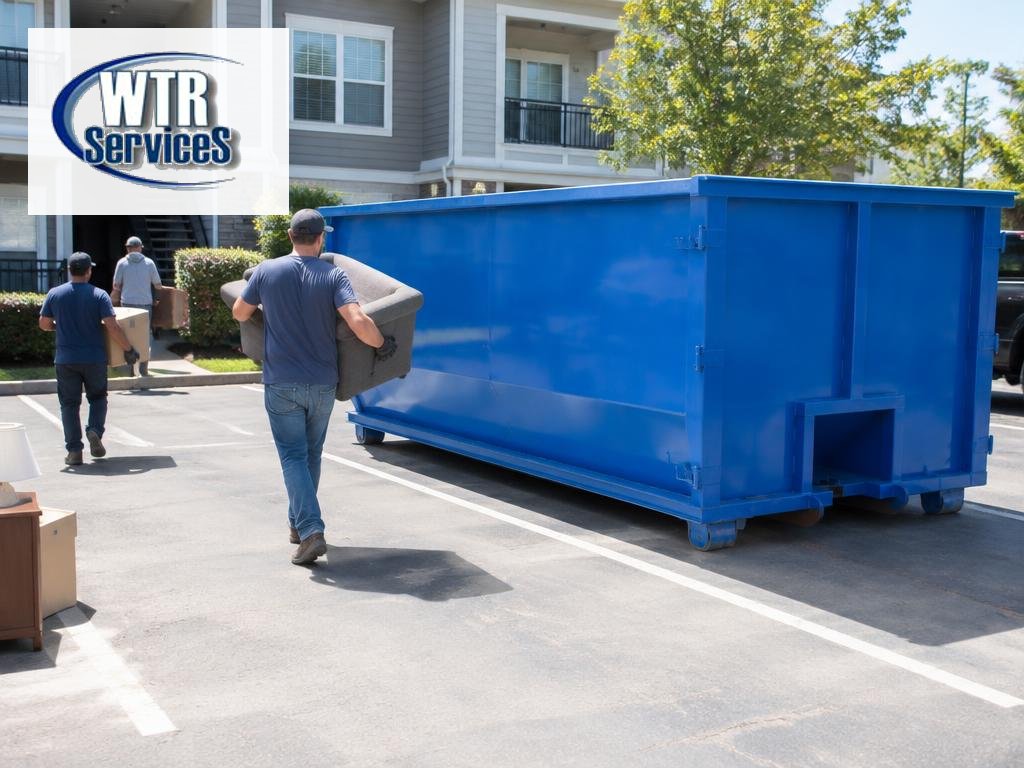
WTR Services guide to property management dumpster rental showing workers carrying furniture toward a blue roll-off dumpster at an apartment complex

Property managers deal with waste removal differently from homeowners or individual contractors. A single property portfolio can generate waste from tenant move-outs, apartment turnovers, maintenance work, unit renovations, abandoned belongings, landscaping projects, and routine property cleanup. Without a reliable disposal process, these tasks can delay unit turnover and leave maintenance teams spending valuable time handling debris instead of preparing properties for the next tenant. A property management dumpster rental gives property managers a practical way to organize larger cleanup projects and coordinate waste removal around their operating schedules. The key is to match dumpster use to the type of property cleanup taking place. An apartment turnover may require a different approach than a major maintenance project or a complete rental-property cleanout. This guide explains how property managers can use dumpster rentals for tenant move-out cleanup, rental property cleanup, apartment turnovers, maintenance work, and ongoing property cleanup. For a broader overview of dumpster service across a property portfolio, see our property management dumpster rental guide.

Why Dumpster Rental Matters for Property Managers

Property managers are often working against deadlines. When a tenant moves out, the property may need to be inspected, cleaned, repaired, and prepared for the next occupant. If unwanted furniture, damaged materials, boxes, carpeting, or general debris are left behind, disposal becomes another task that must be completed before the unit can be turned over. A property management dumpster rental can help centralize waste removal during these situations. Instead of relying on multiple disposal trips, property managers can establish a temporary collection point for permitted materials. Potential benefits include:
  • Faster property cleanouts
  • Easier tenant move-out cleanup
  • Better organization during apartment turnovers
  • Convenient disposal for maintenance debris
  • Reduced accumulation of waste around the property
  • More predictable cleanup workflows
  • Easier coordination between property managers and maintenance teams
The right approach depends on the property type, cleanup requirements, waste volume, and project timeline.

Common Situations That Require Property Management Dumpster Rental

Property managers may need temporary dumpster service for many different situations. Apartment turnovers. A tenant leaves, and the unit needs to be cleared before the next tenant moves in. Tenant move-out cleanup. A former tenant may leave behind unwanted furniture, boxes, household items, or other permitted materials. Rental property cleanup. A vacant property may require a larger cleanup before being listed, rented, or renovated. Maintenance projects. Repair work can generate drywall, flooring, cabinetry, wood, packaging, and other construction-related debris. Unit renovations. Kitchen, bathroom, flooring, or other upgrades can create significantly more waste than a standard turnover. Eviction or abandoned-property cleanup. When permitted and handled according to applicable rules, property managers may need to remove belongings or debris left behind after a tenancy ends. Storm or property damage cleanup. Weather-related damage can create additional debris requiring organized removal. Each situation should be evaluated separately rather than using the same dumpster strategy for every property.

Dumpster Rental for Apartment Turnovers

Apartment turnovers often have a narrow window between one tenant leaving and another moving in. The cleanup process may include inspecting the unit, identifying items requiring disposal, removing abandoned or unwanted materials, completing repairs, replacing damaged fixtures or flooring, cleaning the unit, and preparing it for the next tenant. A dumpster can be introduced into the process when the volume of waste exceeds what normal trash collection can reasonably handle. For example, a turnover involving furniture, carpeting, cabinets, boxes, and general household debris may require a temporary container. Property managers should estimate the waste volume before ordering service so the container is appropriate for the project.

Managing Tenant Move-Out Cleanup

Tenant move-outs can produce unpredictable amounts of waste. One unit may be left nearly empty, while another may contain furniture, appliances, boxes, damaged household items, and other materials. A tenant move-out cleanup workflow can help property managers avoid last-minute disposal problems. Step 1: Inspect the unit. Determine what needs to be removed before cleaning or repairs begin. Step 2: Separate reusable items. Not everything left behind necessarily belongs in the dumpster. Identify items that can be returned, donated, recycled, stored, or otherwise handled separately. Step 3: Estimate disposal volume. Determine whether the remaining materials can be handled through normal property waste services or require temporary dumpster service. Step 4: Confirm accepted materials. Check dumpster rules before loading furniture, appliances, electronics, chemicals, or other potentially restricted items. Our guide to prohibited items in Ohio dumpsters covers the most common restrictions. Step 5: Schedule cleanup. Coordinate dumpster delivery with the maintenance or cleaning team's schedule. Step 6: Complete final inspection. After the unit has been cleared, inspect the property again before the dumpster is removed. This creates a repeatable process that can be applied across multiple properties.

Using a Dumpster for Apartment Cleanouts

An apartment cleanout can involve significantly more material than a routine move-out. Property managers may need to remove furniture, mattresses, cardboard boxes, clothing, shelving, cabinets, carpet, household junk, broken fixtures, and general permitted debris. A dumpster for apartment cleanout projects gives the cleanup team a designated place to put unwanted materials. For larger apartment complexes, property managers may also need to consider whether one container is sufficient or whether service should be scheduled in stages. For more specialized turnover projects, an apartment cleanout dumpster rental can be incorporated into the property's cleanup plan.

Rental Property Cleanup After a Tenant Leaves

A vacant rental property may require more than basic cleaning. Depending on the condition of the property, a rental property cleanup could involve removing unwanted furniture, clearing garages, cleaning storage areas, removing damaged flooring, disposing of broken fixtures, clearing accumulated household debris, preparing rooms for repairs, and removing renovation debris. The most efficient approach is to assess the property before scheduling dumpster service. Property managers should ask: What needs to be removed? How much material is there? What type of material is it? How quickly must the property be ready? The answers can help determine the appropriate dumpster and service schedule.

Dumpster Rental for Maintenance and Repairs

Routine property maintenance can generate waste even when a complete renovation is not taking place. Examples include replacing damaged drywall, removing old flooring, replacing cabinets, repairing decks, replacing doors, removing damaged fixtures, replacing sections of roofing, and clearing damaged materials. For larger maintenance projects, temporary dumpster service can prevent debris from accumulating around the property. For commercial or multi-unit properties, property managers may also evaluate a commercial dumpster rental solution when the waste requirements are recurring or larger in scale.

Property Cleanup During Unit Renovations

Renovating rental units can generate substantially more waste than a normal tenant turnover. A renovation may involve cabinets, countertops, flooring, drywall, trim, doors, wood, packaging, fixtures, and bathroom materials. Instead of treating renovation debris like ordinary household trash, property managers should create a dedicated waste plan before work begins. The plan should identify expected waste volume, material types, dumpster location, delivery date, pickup date, potential replacement requirements, and restricted materials. For residential rental properties, a residential dumpster rental may be appropriate for certain projects, depending on the project's size and waste requirements.

Choosing the Right Dumpster for Property Management Work

There is no single dumpster size that works for every property management project. The right option depends on:
  • Project size. A single-unit cleanout may generate considerably less waste than a multi-unit renovation.
  • Waste type. Light household junk takes up space differently from dense construction debris.
  • Number of units. Clearing several apartments simultaneously can increase disposal volume substantially.
  • Project timeline. A fast turnover may require more carefully coordinated delivery and pickup.
  • Available space. The property must have a suitable location for the container and service vehicle.
  • Local or provider restrictions. Certain materials may have disposal restrictions, and weight limits may apply.
Property managers should confirm these requirements before scheduling service. Our dumpster sizing guide can help match a container to the project.

Planning Dumpster Placement at Rental Properties

Dumpster placement can be especially important in apartment and multi-family environments. The container should be positioned where it is accessible to the cleanup crew, away from unnecessary pedestrian traffic, clear of entrances where possible, accessible for pickup, not blocking emergency access, convenient for loading, and located on a suitable surface. For apartment communities, property managers should also consider how dumpster placement affects residents who are still occupying nearby units. Clear communication can help reduce confusion during larger cleanout projects. Our dumpster delivery preparation guide covers placement and access in more detail.

Creating a Repeatable Property Cleanup Workflow

Property managers handling multiple units can benefit from standardizing the cleanup process. A repeatable workflow might look like: Move-Out → Inspection → Sorting → Dumpster Delivery → Cleanup → Repairs → Final Inspection → Dumpster Pickup → Unit Turnover
  • Move-out. Confirm that the tenant has vacated the property.
  • Inspection. Identify abandoned items, damage, and materials requiring disposal.
  • Sorting. Separate reusable, recyclable, donation-eligible, and disposable materials where appropriate.
  • Dumpster delivery. Have the dumpster available before major cleanup begins.
  • Cleanup. Remove permitted waste and keep the work area organized.
  • Repairs. Complete maintenance and renovation work while continuing to manage debris.
  • Final inspection. Confirm that the unit and surrounding property are ready for the next stage.
  • Dumpster pickup. Schedule removal when the cleanup is complete.
This approach can help property managers reduce last-minute coordination.

Coordinating Dumpster Service With Turnover Deadlines

Timing is one of the biggest considerations for property managers. If a tenant moves out on Monday and a new tenant is scheduled to move in Friday, every cleanup task must fit into that window. Property managers should coordinate dumpster service with tenant move-out dates, property inspections, maintenance schedules, cleaning appointments, contractor availability, and new tenant move-in dates. For larger properties, it may be useful to maintain a turnover calendar showing upcoming cleanouts and maintenance projects. This allows dumpster requirements to be anticipated rather than handled as an emergency.

Common Property Management Dumpster Mistakes

1. Waiting until the last minute. A dumpster requested after cleanup has already started can disrupt the turnover schedule. Better approach: plan waste service as part of the turnover process. 2. Underestimating waste volume. Furniture and household debris can take up considerable space. Better approach: estimate the total volume before selecting the dumpster. 3. Treating every turnover the same. A lightly used apartment and a heavily damaged rental property may have completely different disposal requirements. Better approach: assess each property individually. 4. Forgetting maintenance waste. Property managers sometimes plan for tenant belongings but overlook debris created during repairs. Better approach: include anticipated maintenance and renovation waste in the disposal plan. 5. Ignoring restricted materials. Certain chemicals, batteries, paint, medical waste, and other materials may require specialized disposal. Better approach: confirm accepted materials with WTR Services before loading the container. 6. Poor dumpster placement. A container placed too far from the work area can slow down cleanup. Better approach: select the location before delivery and ensure adequate access. 7. Not planning pickup. The cleanup may be finished, but the dumpster can remain on-site longer than necessary if pickup is not coordinated. Better approach: include pickup timing in the original project schedule.

Property Manager Dumpster Rental Checklist

Before the cleanup:
  • Confirm the tenant move-out date
  • Inspect the property
  • Estimate the waste volume
  • Identify the waste types
  • Separate reusable or recyclable items
  • Confirm accepted and prohibited materials
  • Select an appropriate dumpster
  • Identify the placement area
  • Schedule delivery
During cleanup:
  • Keep debris contained
  • Avoid overloading the dumpster
  • Keep walkways and access areas clear
  • Separate restricted materials
  • Monitor dumpster capacity
  • Coordinate with maintenance teams
Before pickup:
  • Complete the property cleanup
  • Perform a final inspection
  • Confirm no required materials are inside the dumpster
  • Ensure loading requirements are met
  • Schedule or confirm pickup

Why Choose WTR Services?

Property managers need waste solutions that can fit around tenant schedules, maintenance work, and property turnover deadlines. WTR Services provides dumpster rental solutions for residential, commercial, cleanout, renovation, and construction-related waste needs across Northeast Ohio. Whether a property manager is preparing one rental unit for a new tenant or coordinating a larger cleanup project, discussing the project's waste type, volume, timing, and placement requirements in advance can help determine an appropriate service. Review our rental terms and conditions, then request a free quote or call (330) 399-3817 to plan your next turnover cleanup.

Conclusion

Property managers handle waste at many points throughout a property's lifecycle. Tenant move-outs, apartment turnovers, maintenance projects, renovations, abandoned belongings, and general property cleanup can all create disposal challenges. A well-planned property management dumpster rental strategy makes waste removal part of the property management workflow rather than an afterthought. By assessing each property, estimating waste volume, selecting the appropriate dumpster, planning placement, and coordinating delivery and pickup with turnover deadlines, property managers can create a more organized cleanup process. For apartment cleanouts, rental property maintenance, or larger property cleanup projects, WTR Services can help property managers evaluate dumpster rental requirements based on the specific project.

Frequently Asked Questions

Keep Reading: Related Guides