All Articles

Industrial Waste Removal in Northeast Ohio: When a Roll-Off Dumpster or Hauling Service Makes Sense

Published · Guide by WTR Services
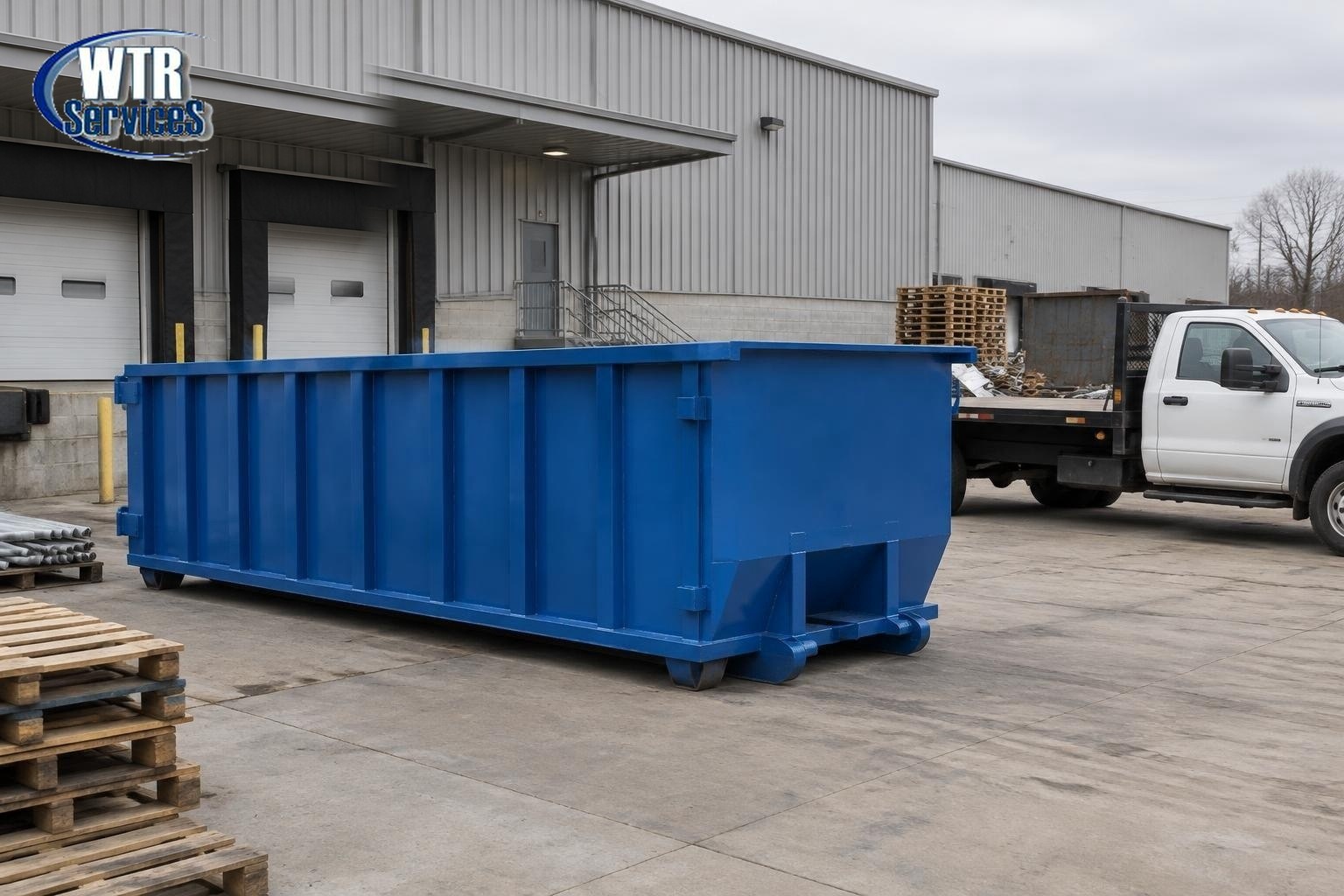
WTR Services industrial waste removal guide showing a blue roll-off dumpster at an industrial warehouse loading dock with pallets and a work truck

Industrial facilities can generate substantial amounts of waste and discarded material during maintenance, construction, equipment replacement, facility cleanouts, production changes, and property improvements. For businesses in Northeast Ohio, the challenge is not simply finding somewhere to put waste. The disposal method needs to match the type, volume, weight, location, and handling requirements of the material. In some situations, an industrial dumpster rental provides a practical solution. In others, a dedicated hauling service makes more sense — particularly when materials need to be collected from multiple areas or require direct transportation rather than a temporary container. Understanding the difference between dumpster service and material hauling can help industrial businesses build a more efficient waste removal plan. This guide explains when commercial dumpster service, roll-off dumpsters, and hauling services may be appropriate for industrial waste removal.

What Makes Industrial Waste Removal Different?

Industrial waste management can involve materials that are very different from ordinary office or retail waste. A facility may generate waste from equipment replacement, manufacturing operations, facility maintenance, construction, renovation, warehouse cleanouts, packaging, material handling, property improvements, and production-area changes. The volume can also vary significantly from one project to another. A routine commercial waste stream may be suitable for ongoing dumpster service, while a large facility cleanout may require a temporary roll-off container or coordinated hauling. The first step is identifying what the project actually needs.

Common Types of Industrial Waste

Depending on the business and project, industrial waste may include:
  • Cardboard and packaging
  • Wood and pallets
  • Metal scraps
  • Plastic materials
  • Construction debris
  • Flooring and drywall
  • Fixtures and furniture
  • Equipment-related materials
  • General facility debris
Heavy materials require additional planning because dumpster weight limits may apply. Certain hazardous, regulated, or otherwise restricted materials may also require specialized handling and should never automatically be placed in a standard dumpster — our guide to prohibited items in Ohio dumpsters covers the most common restrictions. Before scheduling service, identify the materials involved and confirm disposal requirements.

When Does an Industrial Business Need a Dumpster?

An industrial dumpster can make sense when a business has a significant amount of material that needs to be collected and removed from a defined project area. A dumpster may be useful for:
  • Facility cleanouts. Clearing storage areas, warehouses, offices, or production spaces can generate large quantities of discarded material.
  • Construction and renovation. Industrial property improvements can produce wood, drywall, flooring, packaging, and other construction debris.
  • Equipment replacement. Removing old equipment may leave behind packaging, components, fixtures, and general debris.
  • Warehouse reorganization. Businesses may need to dispose of damaged pallets, packaging, shelving, and other permitted materials during major reorganizations — our warehouse cleanup guide covers that scenario in detail.
  • Property preparation. An industrial property may need to be cleared before expansion, remodeling, leasing, or another major project.
In these situations, having a temporary container on-site allows workers to place permitted waste directly into one centralized location.

When Does Hauling Service Make More Sense?

A dumpster is not always the best solution. Material hauling may make more sense when the business needs materials physically collected and transported rather than stored temporarily in a container. Hauling can be useful when materials are located across multiple areas, large or bulky items need to be collected, the property has limited dumpster placement space, a project requires direct loading and transportation, materials need to be moved from one location to another, the business does not want a dumpster remaining on-site, or the cleanup involves a combination of materials and locations. For these situations, businesses may want to evaluate available hauling services alongside dumpster options. The appropriate solution depends on the project scope and material requirements.

Commercial Roll-Off Dumpster Rental for Industrial Projects

For larger industrial projects, a commercial roll-off dumpster rental can provide the capacity needed for substantial amounts of construction, renovation, or cleanout debris. Roll-off dumpsters are commonly associated with temporary projects where waste volumes can fluctuate significantly — facility renovations, warehouse cleanouts, construction projects, demolition-related cleanup, large-scale maintenance, property preparation, and equipment replacement. However, businesses should not select a container based solely on its physical capacity. The type and weight of the material are equally important. A container filled with lightweight packaging has very different weight characteristics from one containing dense construction materials. Our dumpster sizing guide can help match a container to the project.

Industrial Waste Removal During Facility Cleanouts

Facility cleanouts often create a mixture of materials. A warehouse or industrial property may contain years of accumulated packaging, pallets, shelving, furniture, damaged materials, old fixtures, general debris, and construction-related waste. Before beginning the cleanout, divide the material into categories:
  • Keep. Materials that are still needed.
  • Reuse or donate. Items that may have another useful purpose.
  • Recycle. Materials that can be handled through appropriate recycling channels.
  • Dispose. Permitted materials that no longer have a useful purpose.
  • Specialized handling. Materials that require a different disposal process.
This sorting process can reduce unnecessary dumpster use and help keep restricted materials out of general waste containers.

Material Hauling for Industrial Facilities

Industrial sites sometimes need more than a container. A facility may have large or bulky materials located throughout a building, yard, warehouse, or production area. In this situation, material hauling can complement dumpster service. A hauling-focused project may involve identifying materials for removal, determining where materials are located, organizing the collection process, loading materials, transporting them from the property, and completing the cleanup. The exact service requirements depend on the type and quantity of material — for example, heavy equipment hauling follows a different process than general debris removal. Businesses should provide detailed project information when requesting a hauling quote so the appropriate equipment and service approach can be determined.

Dumpster vs. Hauling Service: What Should You Choose?

The decision generally comes down to how the waste is generated and how it needs to be removed. A dumpster works best when waste is generated continuously in one area over days or weeks. Hauling works best when materials are spread out, unusually bulky, or need direct collection and transport. For some projects, the best approach involves both: a dumpster collects general project debris while hauling handles materials that require direct pickup. Our guide on heavy debris disposal: dumpster vs. professional hauling walks through that decision for dense materials.

Planning Dumpster Placement at an Industrial Property

Industrial properties can have complex layouts. Before delivery, consider truck access, loading areas, employee traffic, equipment movement, delivery routes, emergency access, building entrances, overhead clearance, ground conditions, and proximity to the active project. The dumpster should be positioned where workers can use it efficiently without disrupting normal facility operations. For larger facilities, the placement may need to change as the project progresses. Our dumpster delivery preparation guide covers placement and access in more detail.

Managing Heavy and Bulky Industrial Materials

Industrial projects frequently involve heavier materials — concrete, brick, tile, masonry, certain construction materials, and heavy equipment-related debris. These materials can reach weight limits much faster than lightweight waste. Before loading heavy materials, confirm the maximum allowable weight, accepted material types, loading requirements, whether a specialized container is required, and whether separate hauling is more appropriate. The same principle applies to oversized materials: do not assume that a material can be placed in a dumpster simply because there is enough physical space.

Creating an Industrial Waste Removal Workflow

A repeatable workflow can make industrial cleanup easier to manage: Step 1: Define the project. Determine whether the project involves a cleanout, renovation, construction, equipment replacement, or general facility maintenance. Step 2: Identify materials. Create a list of the materials expected to be removed. Step 3: Separate waste streams. Identify materials that can be recycled, reused, donated, or require specialized handling. Step 4: Estimate volume. Determine approximately how much material needs to be removed. Step 5: Select the service. Choose between an industrial dumpster, roll-off dumpster, hauling service, or a combination. Step 6: Plan access. Determine where the dumpster or hauling vehicle can safely access the property. Step 7: Schedule service. Coordinate delivery, pickup, or hauling with the project schedule. Step 8: Monitor the project. As waste volume changes, reassess whether additional service is required. Step 9: Complete final cleanup. Inspect the project area after the major waste has been removed.

Common Industrial Waste Management Mistakes

1. Choosing a dumpster without considering material type. Volume alone does not determine whether a dumpster is appropriate. Discuss both material type and estimated quantity with the provider. 2. Ignoring weight restrictions. Heavy materials can reach limits faster than expected. Confirm weight requirements before loading dense debris. 3. Using a dumpster for materials that need specialized disposal. Some materials require handling outside standard dumpster service. Identify potentially restricted materials before the project begins. 4. Underestimating facility cleanout volume. Industrial properties can contain significantly more material than initially expected. Conduct a walkthrough and estimate waste volume before ordering service. 5. Choosing poor dumpster placement. A poorly positioned dumpster can interfere with facility operations. Coordinate placement with site managers and operations teams. 6. Assuming a dumpster is always the best option. Some projects require direct material collection and transportation. Compare dumpster service with hauling based on the project's actual requirements. 7. Failing to plan pickup. A project may finish before the dumpster is ready for removal. Coordinate pickup timing as part of the original waste plan.

Why Choose WTR Services?

Industrial businesses need waste solutions that can accommodate the size and complexity of their projects. WTR Services provides dumpster rental and waste removal solutions for commercial and industrial project-based needs across Northeast Ohio and Western Pennsylvania. For industrial customers, the appropriate solution may depend on material type, waste volume, project duration, dumpster placement, weight considerations, loading requirements, and pickup or hauling needs. When planning industrial waste removal in Northeast Ohio, discuss the project with WTR Services to determine whether a dumpster, hauling solution, or combination of services is appropriate. Review our rental terms and conditions, then request a free quote or call (330) 399-3817 to plan your project.

Conclusion

Industrial waste removal requires a solution that matches the project rather than a one-size-fits-all approach. For businesses in Northeast Ohio, commercial dumpster service can provide an effective way to manage large quantities of permitted waste during facility cleanouts, renovations, construction projects, and equipment changes. An industrial dumpster rental may be appropriate when waste is generated continuously and can be collected in one location. A commercial roll-off dumpster rental can work well for larger temporary projects, while hauling services may make more sense when materials need to be collected and transported directly. The key is to evaluate the material, volume, weight, site layout, and project timeline before selecting a service — and WTR Services can help industrial customers plan waste removal around the needs of their project.

Frequently Asked Questions

Keep Reading: Related Guides