
All Articles

Heavy Debris Disposal: When You Need a Dumpster vs. Professional Hauling

Published · Guide by WTR Services
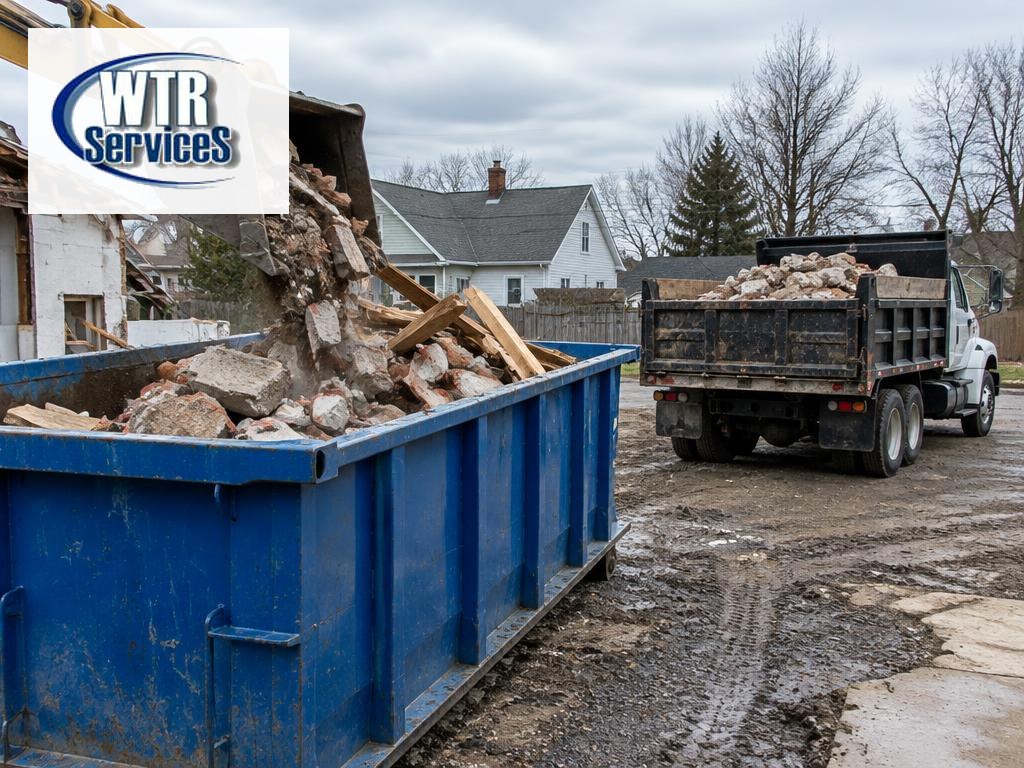
WTR Services heavy debris guide showing an excavator loading concrete and lumber into a blue roll-off dumpster beside a loaded dump truck

A renovation can leave behind piles of broken drywall, old flooring, lumber, roofing materials, or other heavy waste before you know it. Getting that debris off the property becomes the next job, but the right disposal option is not always obvious. You may be deciding between renting a dumpster and hiring professional hauling, especially when the debris is too large, heavy, or bulky for regular trash collection. WTR Services provides dumpster and hauling options for homeowners, contractors, businesses, and other customers across Northeast Ohio. The right choice depends on the type of debris, how much you have, how quickly it needs to go, and whether you can handle the loading yourself.

Key Takeaways

  • A dumpster works well when debris will build up during a project and you can load it as work progresses.
  • Professional hauling can be a better fit when debris is already piled up or you need someone to handle the loading.
  • Heavy materials such as concrete, brick, and soil can require special consideration because weight can add up quickly.
  • Project size, available space, labor, and cleanup timing can all influence the best disposal option.
  • Some projects may benefit from using a dumpster for ongoing debris and hauling for a final cleanup.

Dumpster vs. Professional Hauling: What Is the Difference?

A dumpster gives you a container at your property where debris can be placed as the project moves along. This can work well for renovations, construction, roofing, cleanouts, and demolition jobs where waste is produced over several days. With professional hauling, a crew comes to the property, loads the debris, transports it, and removes it. This can be useful when you already have a large pile waiting to be cleared or do not have enough people available to handle the loading. For larger projects, heavy debris hauling can also help when the material is difficult to move or transport without suitable equipment. For a broader comparison focused on household cleanouts, see our guide to junk hauling vs. dumpster rental; this article concentrates on heavy construction and demolition debris.

When Is a Dumpster the Better Choice for Heavy Debris?

A dumpster can make sense when the project will generate waste over time rather than all at once. You can place materials into the container as each stage of the work is completed. A dumpster may be suitable when:
  • You are remodeling or renovating over several days.
  • Your crew is producing debris throughout the project.
  • You have enough room for a container on the property.
  • You can handle the loading yourself.
  • You need the container to remain on-site while work is underway.
A construction dumpster rental can be useful for contractors handling demolition, remodeling, new construction, and job-site cleanup. Concrete, lumber, and mixed materials are among the most common construction debris uses.

When Should You Choose Professional Hauling?

Hauling can be a better option when the debris is already collected and needs to leave the property quickly. It can also help when large items are difficult to load without extra help. Think about professional hauling when:
  • A large debris pile is already sitting on the property.
  • You do not have enough workers to load the material.
  • The waste includes bulky or awkward items.
  • You need the cleanup completed in a short window.
  • There is limited space for keeping a dumpster on-site.
This can also be useful after a project has finished, when the remaining job is focused mainly on clearing the property. Our hauling services cover material and debris removal across Northeast Ohio for exactly these situations.

How Does the Type of Heavy Debris Affect Your Choice?

The material itself can affect the waste management process. Materials like concrete, brick, stone, and soil are very dense and can reach a container's weight limit long before it looks full. Demolition and roofing waste also create a considerable amount of debris in a short time. Wood and other light construction materials can occupy more space than dense materials, so estimating both volume and weight is needed. Our concrete dumpster guide explains why dense materials often need a dedicated container, and the demolition dumpster guide covers mixed tear-out debris. Material hauling may be useful when the waste contains bulk amounts of material that need transportation off the property in one go.

Dumpster or Hauling Service: Which Is Better for Your Project?

The choice can also depend on how accessible the property is and where the waste is located. A container needs a suitable placement spot and a clear delivery route, while a hauling crew needs room to work and park close to the pile. If the debris is spread across a property or generated room by room, a dumpster keeps everything in one place. If everything is already staged in a single pile near the street or driveway, hauling can clear it in one visit.

What About Dumpster and Junk Removal for Mixed Debris?

Some cleanouts produce a mixture of construction waste, furniture, household items, boxes, and other unwanted materials. A junk haul-away service can suit smaller piles or bulky items that need to be removed from a property. For larger cleanouts, a dumpster can provide a place to collect waste as rooms, garages, basements, or other areas are cleared. Our junk removal dumpster rental page explains how a self-loaded container compares with full-service removal for mixed household debris.

How Does Project Size Affect the Decision?

Project size helps determine the appropriate service. A renovation of one room will generate a reasonable amount of waste, but a complete property renovation or demolition will generate far more. Commercial projects such as office cleanouts, retail remodeling, apartment turnovers, or ongoing waste will often require bigger containers. Commercial dumpster rental services are appropriate in such cases, and larger sites sometimes combine containers with scheduled hauling.

What Should You Consider Before Choosing a Heavy Debris Disposal Option?

When preparing for debris disposal, consider the following factors:
  • Type of material: determine the exact type of waste to be disposed of.
  • Weight: weight limits may be reached quickly with dense material.
  • Volume: calculate the volume of the expected waste.
  • Labor force: determine if you have enough people to load all the waste.
  • Time frame: decide if the waste accumulates slowly or quickly.
  • Access to property: determine if there is enough space for a container or a hauling truck.
This information can help you choose the appropriate method of waste disposal. Check the WTR Services rental terms for weight and material requirements before loading heavy debris.

Can You Use a Dumpster and Professional Hauling Together?

You are not required to select only one option. A renovation, construction job, or property cleanup can produce different kinds of waste at different phases of the process. A dumpster can accommodate the waste created while work is underway, whereas a hauling service can take care of the final pile of debris once the project wraps up. Combining both is common on larger jobs.

Need Help Choosing the Right Heavy Debris Disposal Option?

Choosing between a dumpster and professional hauling comes down to what you are removing, how much waste you have, how heavy it is, and whether you need help loading it. If your project needs a container for ongoing debris, a dumpster may be the better fit. If you already have a pile that needs to be cleared, hauling may save time and labor. WTR Services offers dumpster and hauling options for residential, construction, commercial, industrial, roofing, and cleanup projects across Northeast Ohio. Request a free quote or call (330) 399-3817 to discuss your debris and schedule.

Frequently Asked Questions

Keep Reading: Related Guides