All Articles

How to Choose the Right Demolition Dumpster Rental for Heavy Debris

Published · Guide by WTR Services
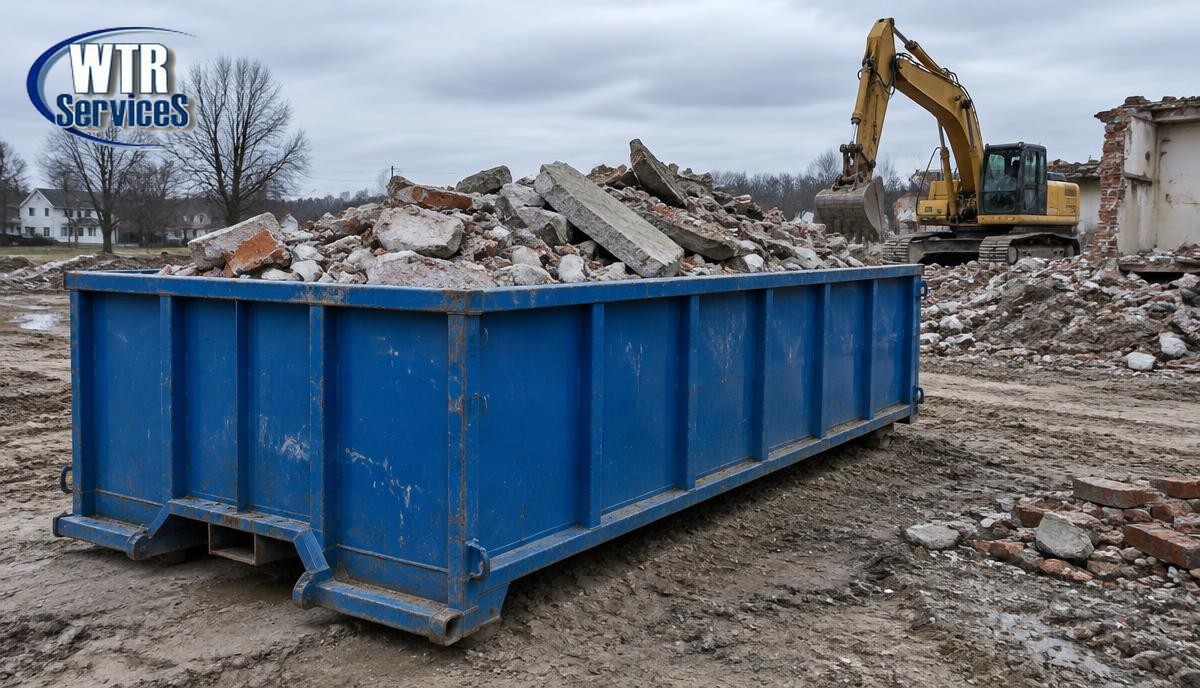
Blue WTR Services roll-off dumpster filled with concrete and brick rubble on a demolition site with an excavator

Choosing the right demolition dumpster rental comes down to two things: how much debris your project will produce and how much that debris weighs. For contractors working with concrete, brick, block, or other dense materials, container size is only half the equation — weight limits matter just as much. Get that balance right before demolition starts, and you avoid overloaded containers, unexpected charges, and delays in demolition waste removal.

The Critical Blueprint for a Demolition Dumpster Rental

Getting the size right on a demolition dumpster rental starts with understanding two factors that need to be balanced on every job. Navigating volume vs. weight limits. Residential cleanouts deal with light, bulky stuff — furniture, boxes, yard waste. It fills a bin fast but weighs very little. Demolition is different. Concrete, brick, and steel pack dense weight into a small space, and a half-full container can already hit the truck's legal hauling limit. That's why volume alone never tells the whole story on a demolition job: weight limits ultimately determine how much material you can move in one load. Real consequences of misjudging the debris load. Miscalculating a load causes real problems on site:
  • Overage fees: You'll be billed for every ton over the contracted limit, and dense masonry racks up tonnage fast.
  • Safety hazards: An overloaded bin shifts weight unevenly, which gets dangerous once the truck hits a grade or a pothole.
  • Rejected hauls: Drivers can legally refuse to haul a bin that's over the axle weight limit — leaving a full container sitting on your site with nowhere to go.
None of these problems show up until the truck is already loaded, so the smart move is estimating weight before the first swing of the wrecking ball.

Categorizing Demolition Waste Removal and Material Density

Before you can size a bin correctly for demolition waste removal, you need to know exactly what kind of debris is coming out of that structure. Managing mixed construction and demolition debris. Most tear-downs don't produce one clean material stream. Drywall, lumber, wiring, plaster, and scrap metal all come down together. That mix is where demolition waste removal gets tricky — light framing lumber sits next to heavy plaster chunks, and average density becomes hard to predict. Crews that separate metal early tend to save money, since scrap often hauls or recycles separately from the rest. Sizing bins for general demolition debris. Layout matters as much as tonnage. A single-story ranch with wood framing behaves nothing like a brick commercial gut job. For a mixed residential tear-down with mostly wood, drywall, and other lighter materials, a 30-yard dumpster rental may provide enough capacity — but the final choice should still account for the expected weight of the debris, not just the space it takes up. Bigger commercial jobs or anything with dense debris need a size conversation before delivery, not after the first load goes in. Call ahead, describe the structure, and let the provider match tonnage to volume instead of guessing off square footage alone. Our construction dumpster guide walks through the sizing basics.

Managing Concrete and Ultra-Heavy Masonry Safely

Concrete and masonry break every rule that applies to a standard demolition dumpster rental, and they need their own approach entirely. When to use a concrete dumpster rental. Foundations, sidewalks, driveways, and block walls are dense enough to hit weight limits in a container that still looks half empty. A concrete dumpster rental solves that by design — heavy-material containers are intended for loads where weight becomes the limiting factor. Keeping the material level and within the container's requirements also helps crews avoid creating an unsafe or overloaded load. Lower walls mean easier loading, too: crews can toss chunks over the side without wrestling material above shoulder height. Respecting heavy debris dumpster weight restrictions. Brick, asphalt, and block behave like concrete's cousins — dense, unforgiving, and quick to max out a container's rated capacity. A heavy debris dumpster earns its name here. For projects involving large amounts of concrete, a dedicated heavy-material container is a better fit than a general-purpose bin, and keeping masonry separate from lighter debris makes the load easier to estimate and manage. Weather plays a role as well: rain-soaked debris and wet soil add considerable weight, which is another reason to avoid filling a container right to its apparent capacity.

Operational Best Practices: Placement and Safety

Even the right size bin causes problems if it lands in the wrong spot on a busy demolition site. Securing jobsite accessibility and clearance. The drop zone needs level, stable ground, and roll-off trucks need a straight, clear approach to set the container down without scraping obstacles. Check overhead clearance before delivery day — power lines and low branches turn a routine drop into a serious hazard. Leave enough room for the truck to back out, too: a narrow alley may fit the container but not the truck's path in and out. Essential site safety protocols. A few habits keep both the crew and the pad intact through the whole project:
  • Surface protection: Ask the hauler whether protective boards or other ground protection are recommended for the delivery surface, particularly on asphalt, concrete, or finished areas.
  • Prohibited materials: Confirm the hauler's accepted-material list before loading. Asbestos, certain chemicals, liquids, and other hazardous materials require separate handling and disposal — our Ohio prohibited items guide covers the details.
Following these steps consistently keeps insurance claims down and keeps the job moving without a mid-project shutdown over a preventable violation.

Why Choose WTR Services for Your Northeast Ohio Demolition Project?

WTR Services is a local, family-owned company serving Northeast Ohio since 2006 — including Trumbull, Mahoning, Columbiana, Portage, Ashtabula, and Mercer counties, from Warren and Youngstown to Boardman and Salem. Contractors can discuss material type, expected volume, access conditions, and weight requirements before delivery, which helps match a container to the job rather than simply ordering the largest size available. Before demolition begins, confirm three things: what materials are being removed, how much debris you expect, and where the container can safely be placed. Those details give the hauler enough information to recommend the right size and avoid unnecessary weight or access problems. Whether it's a residential tear-down or a commercial gut job, a construction roll-off dumpster rental planned around your debris type and schedule keeps the dumpster supporting the work instead of becoming another jobsite problem. Call (330) 399-3817 or get a free quote to talk through your project.

Frequently Asked Questions

Keep Reading: Related Guides