
Construction Dumpster Rental: Sizes, Rules & What You Can Throw Away
Published · Guide by WTR Services
Running a construction site takes more than just labor, materials, and equipment. It also produces debris that needs to be managed throughout the life of the project. Choosing the right construction dumpster rental is a key part of the planning process, whether you are renovating a property, doing demolition work, or managing a new build.
According to the U.S. Environmental Protection Agency (EPA), construction and demolition waste includes materials like wood, drywall, asphalt shingles, concrete, metal, and other building materials typically generated at construction sites. At WTR Services, customers throughout Northeast Ohio use dumpster rental solutions for construction, roofing, residential, commercial, and industrial projects. This guide explains common dumpster sizes, basic disposal considerations, and the types of materials typically placed in construction dumpsters.
Key Takeaways
Understanding Construction Waste Before You Rent a Dumpster
- Wood and lumber scraps
- Drywall
- Roofing materials
- Concrete
- Brick and masonry materials
- Metal components
- Flooring materials
- Packaging materials
Figuring Out Construction Dumpster Sizes
- 10 Yard: Small renovations and minor demolition work
- 20 Yard: Remodeling projects and medium construction jobs
- 30 Yard: Major renovations and larger construction projects
- 40 Yard: Large commercial and industrial projects
Construction Waste Disposal Basics
- Project scope
- Type of construction activity
- Structural demolition requirements
- Material removal needs
- Duration of the project
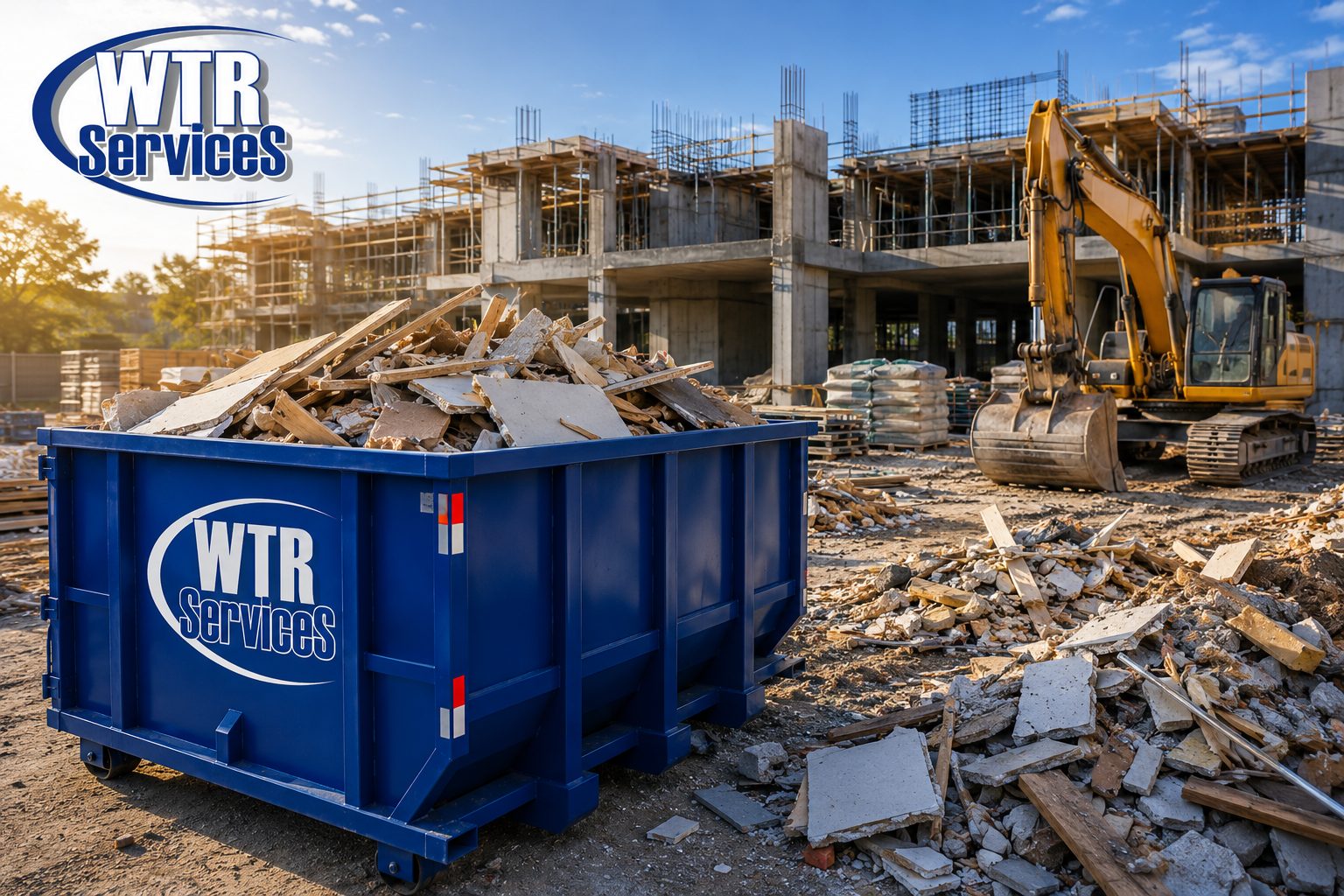
What Can You Put in a Construction Dumpster?
- Drywall
- Lumber
- Wood framing
- Roofing materials
- Flooring materials
- Insulation
- Concrete
- Brick
- Block
- Tile
- Packaging materials
- Metal components
- Non-hazardous renovation debris
What Materials May Require Separate Disposal?
- Hazardous chemicals
- Paints and solvents
- Batteries
- Certain electronic items
Selecting the Right Dumpster for Your Project
- Small remodel: 10 Yard
- Kitchen or bathroom renovation: 20 Yard
- Major renovation: 30 Yard
- Commercial construction: 40 Yard
Why Roll-Off Dumpsters Are Common on Construction Sites
- Remodeling projects
- Roofing jobs
- Demolition work
- New construction
- Commercial renovations
Planning for Demolition Debris
- Wall removal
- Interior tear-outs
- Concrete demolition
- Masonry removal
- Structural demolition work
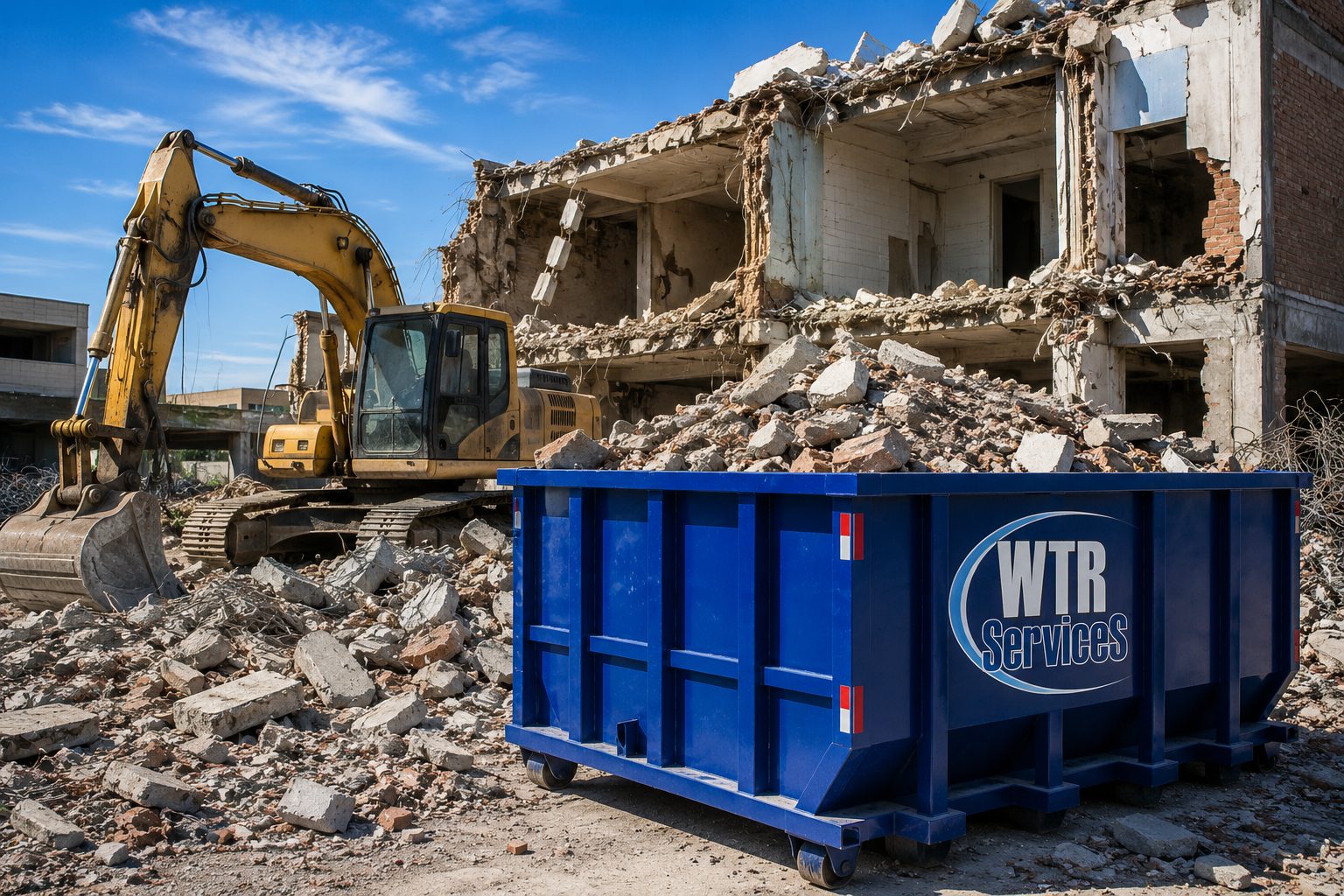
Simplify Construction Waste Removal with WTR Services
Frequently Asked Questions
Keep Reading: Related Guides
- Scrap Metal Hauling: How Businesses Can Prepare Materials for Pickup
Scrap recycling hauling works best when materials are identified, separated, and organized before the truck arrives. Here is how businesses can prepare scrap metal for an efficient pickup.
- Industrial Waste Removal in Northeast Ohio: When a Roll-Off Dumpster or Hauling Service Makes Sense
How industrial businesses can choose between an industrial dumpster rental, a commercial roll-off container, and material hauling for facility cleanouts, renovations, and equipment replacement.
- Restaurant Dumpster Rental: Managing Food-Service Waste During Renovations and Cleanouts
How restaurant owners can plan a commercial dumpster rental for renovations, kitchen cleanouts, equipment replacement, relocations, and closures without disrupting operations.
- Dumpster Rental for Property Managers: Turnovers, Tenant Move-Outs & Maintenance Cleanup
A property management dumpster rental workflow for apartment turnovers, tenant move-out cleanup, maintenance debris, and rental property cleanouts.