
All Articles

Restaurant Dumpster Rental: Managing Food-Service Waste During Renovations and Cleanouts

Published · Guide by WTR Services
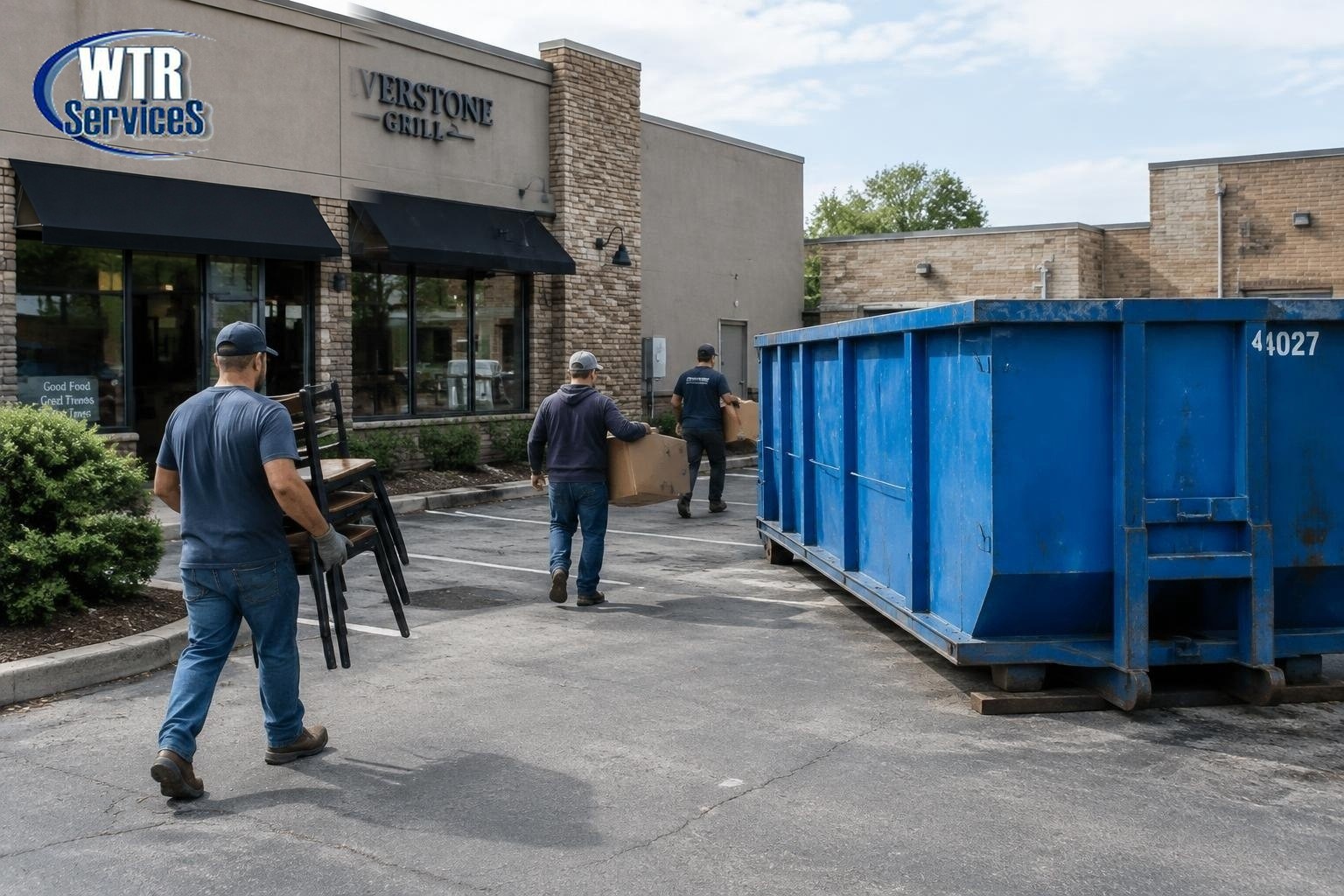
WTR Services restaurant dumpster rental guide showing workers carrying chairs and boxes toward a blue roll-off dumpster behind a restaurant

Restaurants generate waste differently from most other businesses. Along with everyday food-service waste, a restaurant can produce cardboard, packaging, damaged equipment, furniture, fixtures, flooring, cabinetry, and construction debris during a renovation or major cleanout. When a restaurant is remodeling, replacing equipment, closing temporarily, or preparing a newly acquired space for opening, ordinary trash collection is rarely enough. A planned commercial dumpster rental provides a designated place for larger quantities of permitted waste while keeping the project organized — and it has to fit around kitchen operations, customer areas, deliveries, employees, and renovation schedules. This guide explains how a restaurant dumpster rental can support food-service businesses during renovations, cleanouts, equipment replacements, openings, and closures across Northeast Ohio.

Why Restaurants Need Specialized Waste Planning

Restaurant waste management becomes more complicated the moment a business moves beyond routine daily operations. A typical restaurant already deals with food-service waste, cardboard, packaging, disposable supplies, damaged furniture, broken fixtures, and equipment packaging. A renovation or cleanout adds much larger waste streams on top of that. Remodeling a restaurant could involve removing cabinets, countertops, flooring, drywall, ceiling materials, lighting fixtures, shelving, seating, decorative elements, and old equipment. Without a dedicated disposal plan, these materials can quickly occupy valuable space in the kitchen, dining room, or back parking area. A commercial dumpster service lets restaurant operators plan for larger waste volumes instead of relying exclusively on routine trash collection.

Common Restaurant Waste During Renovations and Cleanouts

Restaurant projects can produce several different categories of waste:
  • Packaging and cardboard. Equipment deliveries and renovation materials generate substantial cardboard and packaging.
  • Furniture. Tables, chairs, booths, shelving, and other furnishings may need to be removed during a redesign or replacement project.
  • Fixtures and interior materials. Cleanouts can produce flooring, cabinets, counters, drywall, trim, and other permitted renovation debris.
  • Equipment. Restaurants may replace refrigerators, ovens, prep stations, and shelving — but not every appliance can automatically go in a dumpster. Disposal requirements vary, so confirm accepted materials before loading.
  • Construction debris. Remodeling generates wood, drywall, flooring materials, packaging, and other construction-related waste.
The correct disposal method depends on the material, quantity, weight, and provider requirements. Our guide to prohibited items in Ohio dumpsters covers the most common restrictions.

When to Consider a Restaurant Dumpster Rental

A restaurant dumpster rental is useful when a project generates more waste than the regular collection system can reasonably handle. Common situations include:
  • Restaurant renovation. A kitchen remodel, dining-room redesign, or complete interior renovation generates significant debris.
  • Kitchen cleanout. Replacing old equipment, shelving, cabinets, or fixtures creates a concentrated waste stream.
  • Restaurant closure. A permanent closure may require removing furniture, fixtures, equipment, packaging, and other permitted materials.
  • Relocation. Moving to a new location can involve cleaning out the old space while preparing the new one.
  • Rebranding. A rebrand may involve removing signs, décor, furniture, fixtures, and interior materials.
  • Equipment replacement. Replacing large quantities of equipment produces packaging and discarded materials.
  • Property handover. Tenants may need to clear a restaurant space before returning it to a landlord.
For a similar project in a retail setting, our retail renovation dumpster rental guide covers the store-specific side of the same planning process.

Planning Dumpster Service Around the Renovation Timeline

Restaurant renovations often happen under tight schedules — an operator may have only a limited window to complete demolition, installation, cleaning, inspections, and reopening preparations. A commercial dumpster rental should be incorporated into that schedule from the beginning. Before renovation: estimate the amount and type of debris expected from demolition and removal. During demolition: keep discarded materials contained instead of allowing debris to accumulate throughout the restaurant. During installation: collect packaging, damaged materials, and other permitted waste generated as new equipment and fixtures are installed. During final cleanup: use the dumpster for remaining project debris before the restaurant reopens. This phased approach keeps waste management aligned with the renovation timeline and prevents the common problem of demolition starting before a disposal solution is in place.

Managing Kitchen and Equipment Cleanouts

Commercial kitchens contain a wide range of equipment and fixtures. A kitchen cleanout may involve shelving, cabinets, prep tables, counters, small fixtures, packaging, flooring materials, broken equipment, and miscellaneous permitted debris. Before placing equipment into a dumpster, determine whether the item requires specialized disposal — some equipment contains components or materials subject to specific disposal requirements. A good rule is simple: do not assume that every item from a restaurant kitchen belongs in a dumpster. Confirm accepted materials with the dumpster provider before the cleanout begins.

Choosing the Right Dumpster for a Restaurant Project

Dumpster requirements vary depending on the project. A small restaurant cleanout produces considerably less waste than a complete kitchen demolition, so consider the project size, waste volume, material type, weight, available placement space, project duration, and required pickup schedule. For one-time renovations and cleanouts, a temporary commercial roll-off dumpster rental is usually the right fit. For recurring restaurant operations, a front load dumpster rental may be worth evaluating when the waste requirements call for a more regular commercial collection setup. Our commercial dumpster sizes guide and dumpster sizing guide can help match a container to the project. Remember that two projects with the same volume can have very different weights. Dense materials such as concrete, brick, tile, or masonry may have specific weight restrictions, so discuss the material mix with WTR Services before selecting a dumpster.

Dumpster Placement at a Restaurant

Dumpster placement deserves particular attention at restaurants because the property may have constant activity. The container should ideally be positioned where it is accessible to the cleanup crew, does not obstruct customer entrances, does not interfere with deliveries, does not block emergency access, provides safe loading access, and can be reached for pickup. For restaurants operating during a renovation, placement may need to be coordinated around employees, contractors, delivery vehicles, and customers. If the restaurant is temporarily closed, placement is usually easier because the site has fewer operational conflicts. Our dumpster delivery preparation guide covers placement and access in more detail.

Coordinating Service Around Restaurant Operations

Timing can make a major difference. A restaurant that remains open during a renovation may need to separate waste management from peak operating periods. Consider coordinating dumpster activity around kitchen operating hours, food deliveries, customer traffic, contractor schedules, building access, renovation milestones, inspection dates, and the planned reopening. For a larger renovation, the dumpster schedule should be included in the contractor's project timeline. This prevents situations where demolition begins before a disposal solution is available.

Openings, Closures, and Common Mistakes

Restaurants may need dumpster service at both ends of the business lifecycle. Opening a new restaurant generates waste from construction, equipment packaging, furniture installation, fixtures, signage, and interior finishing. Closing a restaurant can create an even broader cleanout — the property may need to be cleared of furniture, fixtures, shelving, packaging, interior materials, unwanted equipment, and general permitted debris, often with property managers, landlords, and franchise operators involved. The most common restaurant dumpster mistakes are easy to avoid: 1. Treating renovation waste like normal restaurant trash. A major renovation generates significantly more material than routine operations. Estimate renovation waste separately. 2. Ordering the dumpster after demolition starts. Debris accumulates quickly. Schedule delivery before major demolition or cleanout activities begin. 3. Ignoring weight restrictions. Dense construction materials can reach weight limits quickly. Confirm weight requirements before loading heavy debris. 4. Putting restricted materials in the dumpster. Some chemicals, fuels, batteries, and hazardous materials require specialized disposal. Confirm accepted and prohibited materials before the project starts. 5. Poor placement. An inconvenient container interferes with deliveries and operations. Select the placement location during project planning. 6. Forgetting the final cleanup. Even after demolition and installation are complete, packaging and small debris remain. Include a final cleanup stage before reopening.

Why Choose WTR Services?

Restaurant waste projects require a service plan that fits the specific situation. WTR Services provides dumpster rental solutions for commercial businesses, construction projects, cleanouts, and renovation-related waste across Northeast Ohio and Western Pennsylvania. Before scheduling, discuss the project details with us: restaurant size and project scope, expected waste volume, material types, dumpster placement, project duration, pickup requirements, and any potentially restricted materials. For ongoing restaurant waste requirements, we can also discuss commercial dumpster service options that fit your regular waste-generation patterns. Review our rental terms and conditions, then request a free quote or call (330) 399-3817 to plan your restaurant project.

Conclusion

Restaurants have unique waste-management requirements, particularly during renovations, kitchen cleanouts, relocations, equipment replacements, and closures. A well-planned commercial dumpster rental gives restaurant operators a dedicated solution for managing larger quantities of permitted waste without letting debris interfere with the project. The most effective approach is to plan dumpster service around the renovation or cleanout timeline, identify the expected waste streams, consider both volume and weight, select an appropriate location, and confirm disposal requirements in advance. Whether the project involves a kitchen remodel, dining-room renovation, equipment replacement, or complete restaurant cleanout, WTR Services can help you evaluate your dumpster rental requirements.

Frequently Asked Questions

Keep Reading: Related Guides