All Articles

Dumpster Rental Permits in Ohio: Placement Rules and Your Pre-Delivery Checklist

Published · Guide by WTR Services
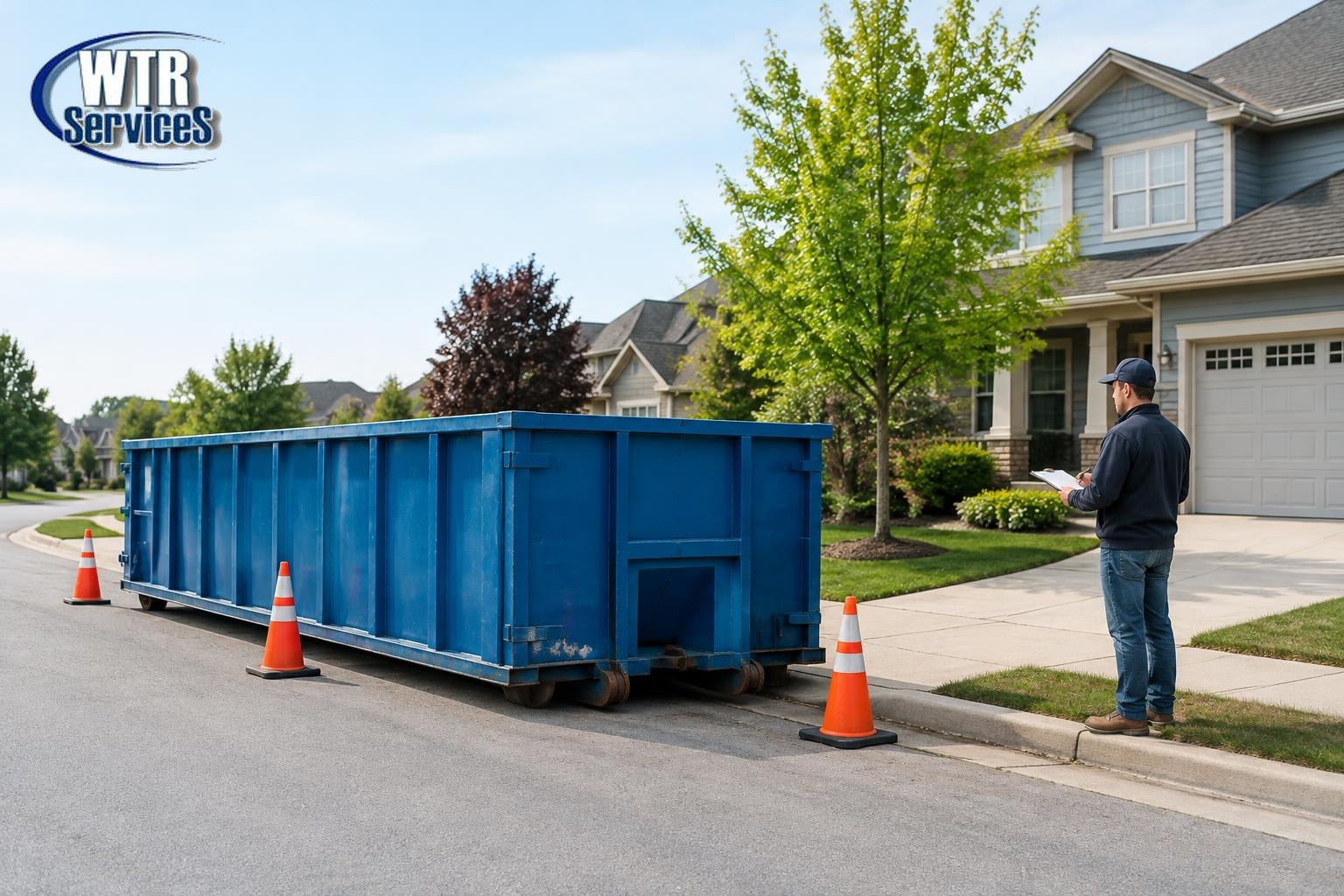
WTR Services guide to Ohio dumpster permits showing a blue roll-off container beside a residential curb and a clear sidewalk

A home cleanout or renovation usually starts with choosing a container and a delivery date. Before the truck arrives, there is another detail to settle: does your chosen location require permission? A private driveway and a public street can have different requirements, even within the same community. WTR Services provides roll-off dumpsters for residential, commercial, construction, roofing, and cleanup projects across Northeast Ohio. This guide turns permit questions into a practical pre-delivery checklist: choose a location, contact the responsible authority, gather application details, and confirm approval before placement. For a short overview, see our existing guide to whether you need a dumpster permit in Ohio.

Key Takeaways

  • Requirements depend on the exact address and proposed placement.
  • Private-property and public-street placement can follow different rules.
  • Contact the authority responsible for the location before arranging delivery.
  • Prepare your address, container details, placement plan, and intended dates.
  • WTR Services' terms make customers responsible for obtaining required permits.
  • Recheck approval if the location or rental dates change.

Start With the Location, Not the Dumpster Size

Renting a dumpster does not mean the same permit applies throughout Ohio. First identify where the container will sit and whether any part of it could occupy public space. A driveway apron, roadside strip, or area beside a sidewalk may not be treated the same way as the main driveway. Do not assume that space immediately outside your property belongs to you. If the boundary or right-of-way is unclear, describe the location to the local office. Confirm the requirements for that specific spot rather than relying on a neighbor's previous rental.

Check Driveway Placement and Property Permission

A driveway is often the simplest residential placement option, but private property is not an automatic exemption from every local or property rule. Check any applicable requirements, obtain the property owner's permission if you are renting, and review HOA restrictions where relevant. There must also be enough space for the truck to deliver and collect the container. Keep entrances usable and avoid a position that blocks needed garage access. For a residential dumpster rental, discuss the driveway surface, slope, and available space before committing to a placement plan.

Check Street and Right-of-Way Placement Separately

A container on a public street can affect parking, traffic, pedestrians, and access to neighboring properties. Ask the authority controlling that space whether a permit, written consent, or another approval is required. Requirements can differ between municipalities and road authorities. Ask whether the proposed location is allowed, how long the container may remain, and whether there are conditions for visibility, markings, or traffic safety. Do not assume cones alone authorize street placement. Keep sidewalks, access routes, and emergency access clear, and follow the specific conditions attached to any approval.

Who Should You Contact in Northeast Ohio?

There is no single local office that processes every dumpster placement across the state. Start with your city or township and ask which department handles temporary containers or right-of-way occupancy. Depending on the address, you may be directed to public works, a street department, a permitting office, or another road authority. For projects in Warren, Youngstown, and surrounding communities, provide the exact delivery address rather than just the city name. A postal address may not identify the authority responsible for the road. Ask for the current instructions and keep a record of the office and person who supplied them.

Prepare These Details Before You Call or Apply

The local office may request information about the container and the proposed use of the space. Gather these details so the conversation is productive:
  • Property address and applicant contact details
  • Proposed container size or dimensions
  • Exact placement location, with a photo or sketch if requested
  • Intended delivery and pickup dates
  • Purpose of the cleanup or project
  • Whether any part of the container occupies public space
Confirm the actual application requirements with the office. A generic checklist is useful preparation, but it does not replace the local form or any additional documentation the authority requires.

Confirm Fees, Timing, and Approval Conditions

Ask about the current application fee, expected processing time, required documents, and how you will receive approval. Do not rely on a statewide fee estimate or assume a permit will be available the same day. The schedule and requirements depend on the responsible authority. Also ask whether an approval expires, whether the authorized dates must match the rental period, and how to request changes. Keep the approval available and follow any instructions about displaying it. Coordinate dumpster delivery only after required permission has been confirmed.

Who Is Responsible for Getting the Permit?

WTR Services' Terms & Conditions state that the customer is responsible for obtaining any required permits and providing a safe, accessible delivery location. Discuss placement with the company, but do not assume booking the dumpster includes a permit application. For contractor-led projects, decide who will contact the authority and obtain the documents. A clear assignment prevents both homeowner and contractor from assuming the other person has handled it. Share any placement restrictions with everyone involved in arranging delivery.

Check Safe Access Before Delivery

Permission and physical access are separate checks: an approved location still needs to be suitable for the delivery equipment. Clear parked vehicles and other obstacles, look for low branches and overhead utility lines, and discuss surface or weight concerns with WTR Services. Do not move or work near utility lines yourself. Tell the provider about anything that could affect clearance. Our dumpster delivery preparation guide covers access, driveway preparation, and overhead checks in more detail.

What If the Location or Schedule Changes?

If your driveway becomes blocked or the project runs longer than expected, contact the provider and the permitting authority before assuming the original permission still applies. A different street position or extended rental may require updated approval. Placement without required permission can result in delays, a request to relocate the container, or local penalties. The outcome depends on the applicable rules; checking early helps avoid preventable disruption. Keep any revised dates and placement instructions together with your rental details.

Your Final Pre-Delivery Checklist

Before delivery, confirm the location, the required permission, the permitted dates, and the truck's access route. Make sure your provider knows about any local restrictions and that the container will not block essential access. WTR Services can discuss container options and delivery arrangements for your cleanup. Request a free quote or call (330) 399-3817 with your project details and proposed placement. This guide is general planning information; the responsible local authority provides the requirements for your specific address.

Frequently Asked Questions

Keep Reading: Related Guides