
Dumpster Rental vs Full-Service Junk Removal: Which Is Better for Your Project?
Published · Guide by WTR Services
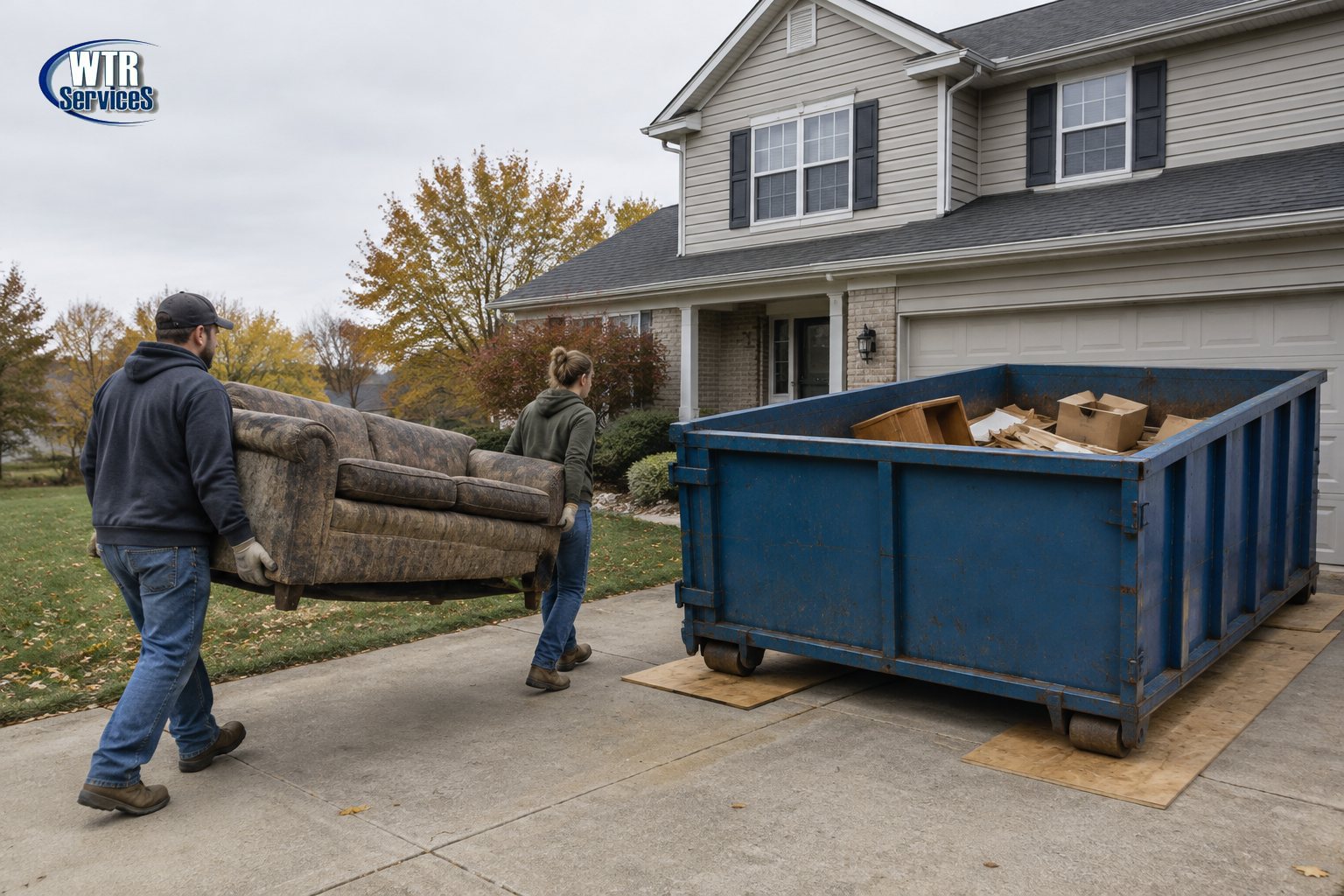
A renovation or cleanout can leave you with more waste than you expected, and the next question is how to get rid of it. Comparing dumpster rental vs junk removal usually comes down to one thing: who does the lifting. With a dumpster, you load it yourself. With full-service junk removal, a crew comes in and carries everything out for you.
Both get the job done, but they differ in labor, time, flexibility and what you end up paying for. This guide focuses on that labor question and helps you decide whether loading it yourself makes sense for your project. If your items are already gathered and you're mainly deciding between a one-time pickup and a container, see our junk hauling vs. dumpster rental comparison.
What Is the Difference Between Dumpster Rental and Full-Service Junk Removal?
| Factor | Dumpster Rental | Full-Service Junk Removal |
|---|---|---|
| Who loads | You and your helpers | The removal crew |
| Labor | Your own time and effort | Included in the price |
| Timing | Load over several days | Done in one scheduled visit |
| Best for | Ongoing projects and big cleanouts | Quick jobs and heavy carry-outs |
| Price based on | Container size, rental period and weight | Volume, labor time, material and access |
Which Option Is More Affordable?
- Labor: More workers or more loading time adds cost with full-service removal.
- Waste volume: Bigger loads need more truck or container space.
- Debris type: Concrete, lumber, furniture and household trash can carry different disposal charges.
- Travel distance: Longer trips add transportation cost.
- Disposal fees: Landfill, recycling and special-handling charges affect the final price.
Can You Load It Yourself? A Quick Self-Check
- Do you have help? Couches, dressers, appliances and mattresses usually need two people.
- Can you lift it safely? Heavy items, long carries and stairs raise the risk of strains and injuries.
- How far is the carry? A ground-floor garage next to the driveway is easy. A third-floor apartment with no elevator is not.
- Do you have the time? Loading a whole house or a remodel can take a few days or several weekends.
- Is there room for a container? You need a driveway or other flat spot the truck can reach, and possibly a permit if it goes on the street.
- Is the debris heavy? Concrete, brick, dirt and shingles fill a container's weight allowance quickly. See our dumpster weight limits guide.
When Should You Choose Dumpster Rental?
- You're renovating: Keep broken tile, lumber, drywall and other remodeling debris in one place. Our kitchen vs. bathroom remodeling dumpster guide covers sizes.
- You're running a construction job: Crews can toss waste as the work moves along.
- You have a large cleanout: Clear things out gradually instead of rushing to finish in one day.
- You have helpers: Load it yourselves instead of paying for removal labor.
- You want flexibility: Keep the container on site through your rental period, and ask about an extension if the job runs long.
When Is Full-Service Junk Removal the Better Option?
- The items are hard to move: Pianos, hot tubs, large appliances or furniture that has to come down several flights of stairs.
- You don't have help: You live alone or can't lift heavy items safely.
- There's no room for a container: No driveway or parking area where a dumpster can sit.
- The load is small and one-time: A few large items that won't fill much of a container.
- You need it gone fast: The property has to be cleared on a tight deadline, such as before a sale or move-out.
How Do Project Size and Waste Type Affect Your Choice?
| Project Type | Usually a Good Fit | Why |
|---|---|---|
| A few bulky items | Full-service removal | Small load, one quick visit |
| Kitchen or bathroom remodel | Dumpster rental | Debris builds up over several days |
| Garage or basement cleanout | Either option | Depends on volume, help and time |
| Whole-house or estate cleanout | Dumpster rental | Large volume, cleared at your own pace |
| Roof replacement | Dumpster rental | Heavy shingles go straight into the container |
| Large construction project | Dumpster rental | Ongoing waste storage on site |
| Office cleanout | Either option | Depends on volume and labor needs |
Can You Combine Both Options?
What Should You Check Before Booking Either Service?
- Accepted materials: Confirm they take your construction debris, furniture or appliances, and ask about anything hazardous.
- Weight limits: Ask what weight is included and how extra weight is charged.
- Rental period: Find out how long you can keep the dumpster and what an extension involves.
- Timing: Know when the container will be delivered and picked up, or when the crew will arrive.
- Disposal: Ask whether materials are recycled, donated or taken to a licensed facility.
- What's included: Check whether loading, sorting, hauling and disposal are all in the quote.
Make the Right Waste Removal Choice with WTR Services
Key Takeaways
- The main difference is who does the loading: you with a dumpster, a crew with full-service removal.
- A dumpster is often more budget-friendly when you have help and enough waste to fill it.
- Full-service removal suits small loads, heavy carry-outs, tight deadlines and properties with no room for a container.
- Labor, volume, debris type, distance and disposal fees all affect the price.
- Check weight limits, rental periods and accepted materials before booking.
- Combining a dumpster with a separate pickup for a few hard items is common.
Frequently Asked Questions
Keep Reading: Related Guides
- What Determines the Cost of Professional Junk and Debris Removal?
The main junk removal cost factors explained: load volume, weight, material type, labor, access, travel and disposal fees, plus what to tell a provider so your quote matches the job in Northeast Ohio.
- How to Prepare a Job Site for a Complete Roof Replacement
A before-the-crew-arrives checklist for roof replacement site preparation in Northeast Ohio: walk the property, protect landscaping and the driveway, pick the dumpster spot, stage materials and plan daily cleanup.
- Asphalt Shingles, Underlayment and Flashing: A Guide to Roofing Waste Disposal
A component-by-component guide to roofing waste disposal: how to handle asphalt shingles, roofing felt, synthetic underlayment, ice-and-water shield, metal flashing and nails during a tear-off in Northeast Ohio.
- How to Estimate Roofing Waste Before Scheduling a Cleanup
Estimate roofing waste before a tear-off: measure roof squares, adjust for pitch, count shingle layers, work out the weight in tons and use it to choose a dumpster in Northeast Ohio.