
What Size Roll-Off Container Works Best for a Garage or Basement Cleanout?
Published · Guide by WTR Services
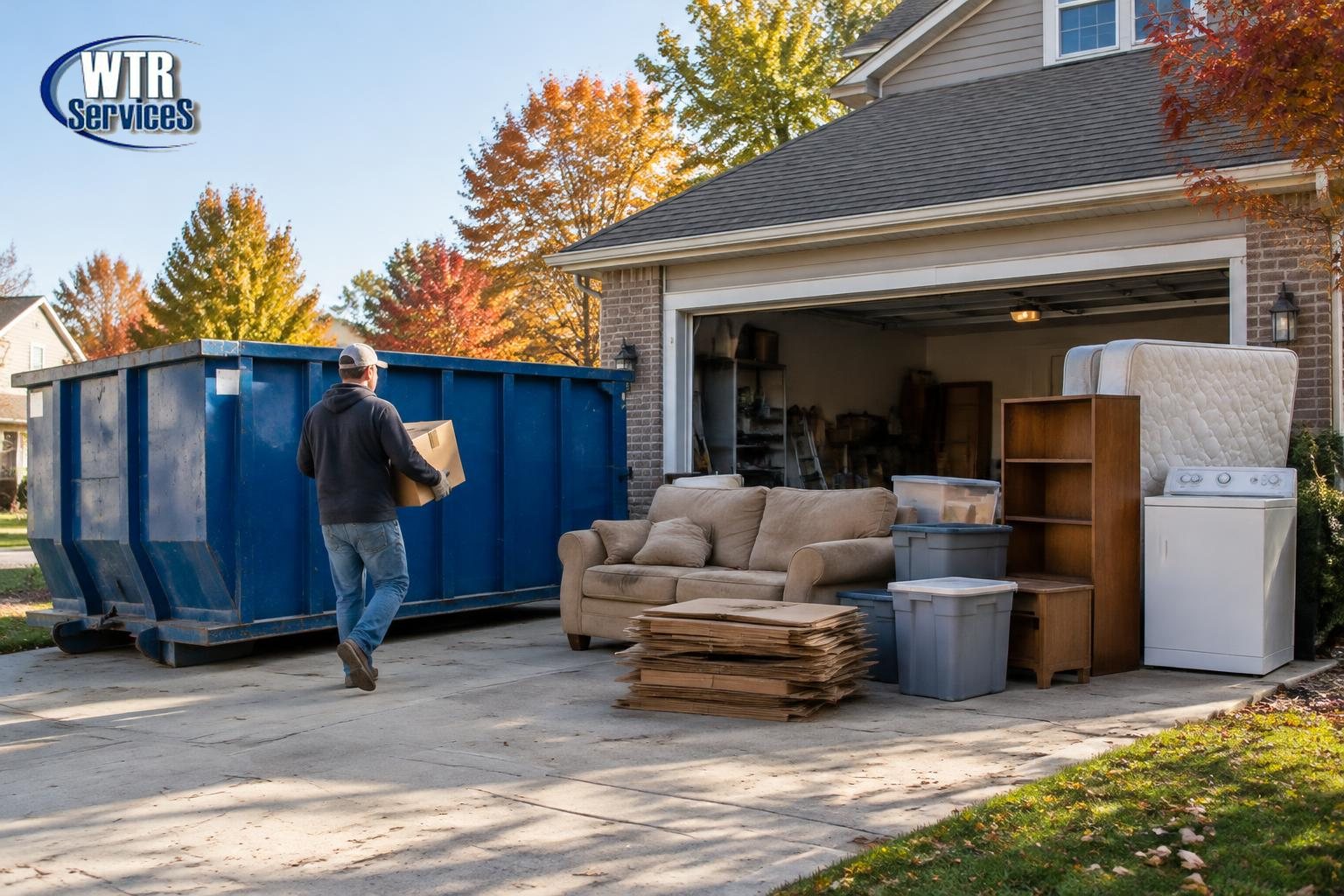
Cleaning out a garage or basement can leave you with more junk than expected. Old furniture, cardboard boxes, broken appliances, unused tools and stored belongings can fill a space quickly.
Choosing the right garage cleanout container capacity helps you handle that waste without paying for more space than you need. The best size depends on how much you plan to remove, what kind of items you have and how easily they fit inside a roll-off container.
This guide focuses on picking the container size. For a full step-by-step plan, see the garage cleanout dumpster guide or the basement cleanout guide.
What Should You Consider Before Choosing a Container Size?
- Amount of waste: Estimate how many boxes, bags, furniture pieces and other items need to go.
- Type of belongings: Sofas, cabinets, mattresses and appliances take up more space than smaller household items.
- Available space: Check whether your driveway has room for the container.
- Cleanout timeline: Decide whether you will clear everything in one day or need several days.
How Do You Estimate the Amount of Cleanout Waste?
- List large furniture: Count sofas, tables, chairs, cabinets, shelves and mattresses. Measure larger items that cannot be taken apart.
- Count boxes and bins: Estimate how many cardboard boxes, plastic bins and bags you plan to remove, and note their sizes.
- Check appliances and equipment: Include old washers, dryers, freezers and other large appliances, and confirm your provider accepts them.
- Include smaller belongings: Tools, toys, old decorations, sports equipment and general household junk can take up a lot of room together.
- Allow extra space: Some items have awkward shapes and cannot be stacked neatly. Leave room for them in your estimate.
Which Roll-Off Container Size Works Best?
| Container size | Nominal capacity | Best suited for |
|---|---|---|
| 10-yard | 270 cu ft | Small garage cleanouts, a few furniture pieces and several boxes |
| 15-yard | 405 cu ft | Moderate cleanouts with old furniture, storage shelving and household junk |
| 20-yard | 540 cu ft | Larger garage or basement projects with several bulky items and stored belongings |
| 30-yard | 810 cu ft | Extensive cleanouts covering several rooms or large amounts of unwanted items |
How Much Space Do Furniture, Boxes, and Appliances Need?
- Sofas: These take up a lot of space, especially when they cannot be taken apart.
- Mattresses: Their large, flat shape can make stacking other items difficult.
- Cabinets and dressers: Removing shelves, drawers and doors can save space.
- Cardboard boxes: Flatten empty boxes to reduce their volume.
- Washers and dryers: These are heavy and bulky, with little room to stack around them.
- Chairs and tables: Detaching legs and separating parts makes loading easier.
- Storage bins: Empty bins can often nest inside one another.
How Can You Make Better Use of Container Space?
- Start with large items: Load bulky furniture and appliances first to create a base for smaller belongings.
- Break down furniture: Remove legs, shelves and other detachable parts where possible.
- Flatten cardboard boxes: This cuts down on empty gaps and makes loading easier.
- Fill suitable gaps: Place smaller items between larger objects.
- Keep the load level: Do not let junk extend above the top of the container.
- Separate restricted materials: Check the accepted materials list before loading electronics, chemicals or other restricted items.
What Other Factors Can Affect Your Container Choice?
- Weight allowance: Heavy materials such as concrete, soil and some appliances can reach the weight allowance before the container is full. Check the rental terms before loading them.
- Placement area: Measure your driveway or chosen spot. The container needs to fit safely without blocking access.
- Local disposal rules: Some materials need separate disposal. Ask which items are accepted and whether extra arrangements are needed.
- Rental period: Think about how long you need to sort, remove and load everything.
When Should You Book a Residential Dumpster Rental?
Plan Your Garage or Basement Cleanout With the Right Container
Key Takeaways
- Choose a container based on the total volume and type of waste.
- Count furniture, appliances, boxes and smaller belongings before booking.
- 10-yard and 15-yard containers may suit smaller cleanouts.
- 20-yard and 30-yard containers can handle larger projects.
- Break down furniture and flatten boxes to use space efficiently.
- Always check weight allowances, accepted materials and placement requirements.
Frequently Asked Questions
Keep Reading: Related Guides
- Managing Building Debris on Large Construction Sites: A Contractor's Guide
Manage debris on large, multi-crew construction sites: set up sorted collection zones, run more than one container, time pickups to each phase and assign who checks fill levels.
- How to Calculate Container Capacity for a Building Renovation
Work out dumpster capacity for a whole-building renovation: total debris area by area, add a 10–20% allowance, compare 10 to 40-yard sizes and decide on one container or several hauls.
- How to Plan Waste Disposal for a Small Construction Project
Plan waste disposal for a small construction project: list the debris each stage creates, sort it from day one, compare dumpster, hauling and self-haul, and time delivery.
- Choosing the Right Waste Container for a Multi-Room Home Remodel
Plan dumpster rental for a multi-room remodel: see what each room throws out, split disposal into strip-out, build and finishing phases, and match container size and weight.