
Small vs. Large Dumpster Rental: Plan for Uncertain Cleanup Volume
Published · Guide by WTR Services
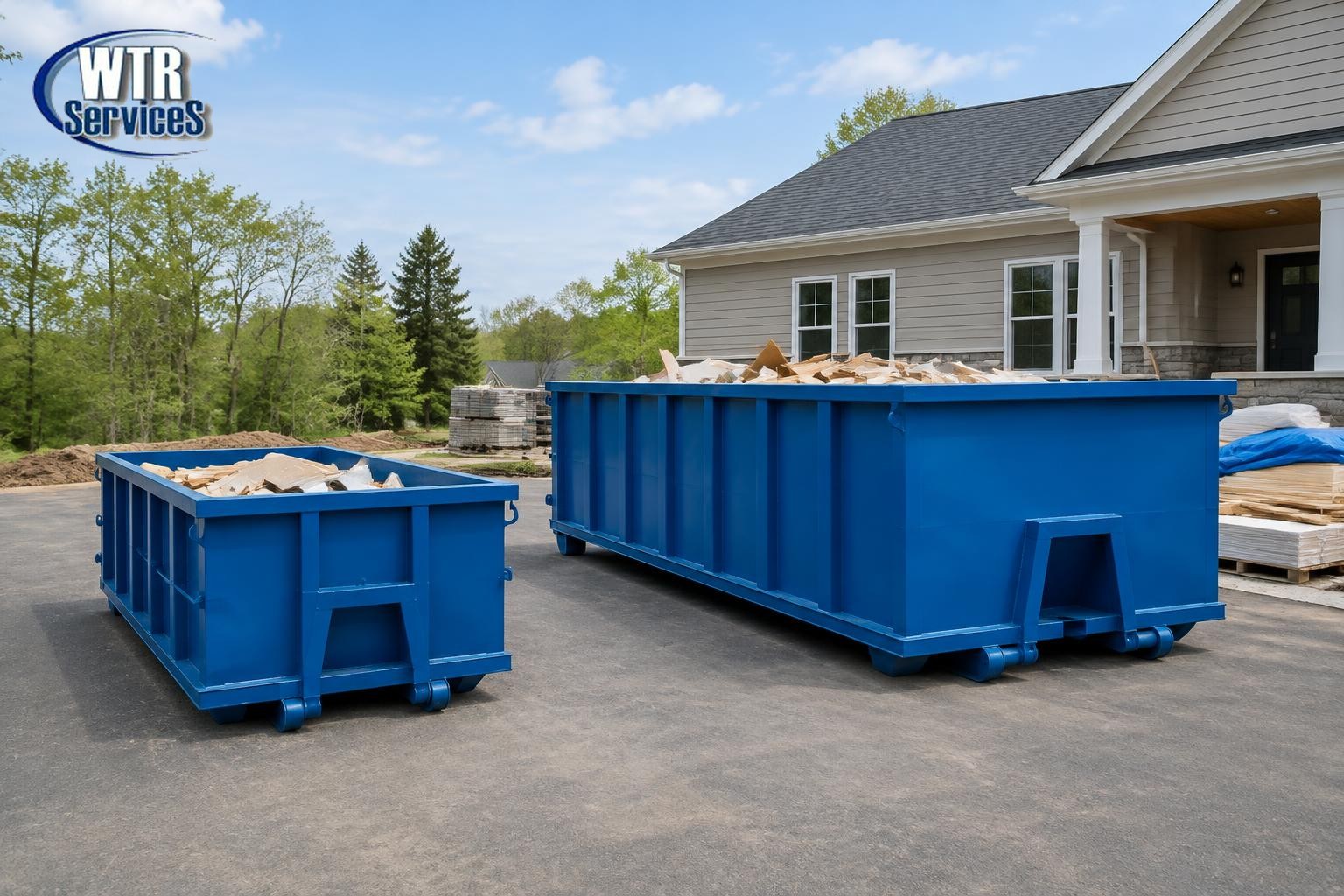
Choosing between a small dumpster rental and a large dumpster rental is often a question of uncertainty. Can you describe everything that will be discarded, or will more waste appear as rooms are cleared and demolition begins? A container that fills too soon can interrupt the work. Extra capacity, however, cannot solve a weight restriction or an unsuitable placement area.
This guide focuses on choosing a service plan when the final debris volume is not yet clear. It complements our five-size comparison, which compares individual capacities, and the general sizing guide. Use those resources for size details, then evaluate your project's remaining unknowns before reserving.
What Counts as Small or Large?
Start With What You Know and What You Do Not
When a Smaller Dumpster Is Worth Discussing
When a Larger Dumpster May Help
Compare the Service Plan, Not Just the Container
| Decision | Smaller container | Larger container | What to confirm |
|---|---|---|---|
| Predictable, limited cleanup | May match the known waste | Could leave unused volume | Full material inventory |
| Bulky or expanding cleanup | May fill before work ends | May provide useful extra room | Largest items and remaining scope |
| Dense renovation debris | Weight can limit the load | More volume does not solve weight | Acceptance and loading requirements |
| Restricted placement | May be practical in some layouts | May constrain usable space | Actual dimensions and truck access |
| Phased work | Arranged removal may clear the next stage | Could collect several stages together | Pickup, exchange, and rental terms |
One Larger Container or Arranged Additional Service?
Heavy Debris Changes the Decision
Placement Can Rule Out an Otherwise Suitable Option
Compare Complete Rental Terms Without Guessing Prices
Five Mistakes That Create Avoidable Uncertainty
- Booking before deciding which belongings will actually be discarded.
- Counting only demolition waste and overlooking later project stages.
- Ignoring bulky-item gaps when estimating usable capacity.
- Treating extra volume as permission for extra heavy material.
- Assuming an exchange, extension, or immediate delivery is guaranteed.
Bring This Brief to WTR Services
- Exact property address and a reachable project contact.
- Confirmed waste, possible additions, and the largest objects.
- Dense, wet, restricted, or unidentified materials.
- Work stages and preferred delivery and completion dates.
- Placement measurements and truck-access conditions.
- Questions about available capacities and additional service.
Frequently Asked Questions
Keep Reading: Related Guides
- What Happens If You Overfill a Dumpster? Common Problems and How to Avoid Them
An overfilled dumpster can delay pickup and create unsafe transport conditions. Learn the warning signs, safe next steps, and prevention tips for Northeast Ohio projects.
- How Much Weight Can You Put in a Dumpster? Allowances and Safe Loading
Understand dumpster weight limits, included tonnage, dense debris, moisture, and possible overage charges before arranging a Northeast Ohio rental with WTR Services.
- 10 vs. 15 vs. 20 vs. 30 vs. 40 Yard Dumpsters: Compare Your Options
Compare five roll-off dumpster capacities side by side, including project examples, volume and weight tradeoffs, placement checks, and questions for WTR Services.
- Dumpster Rental in Northeast Ohio: What to Expect From Delivery to Pickup
First-time renter? Follow the dumpster rental journey from booking and delivery through loading and pickup, with practical preparation tips from WTR Services.