
All Articles

10 vs. 15 vs. 20 vs. 30 vs. 40 Yard Dumpsters: Compare Your Options

Published · Guide by WTR Services
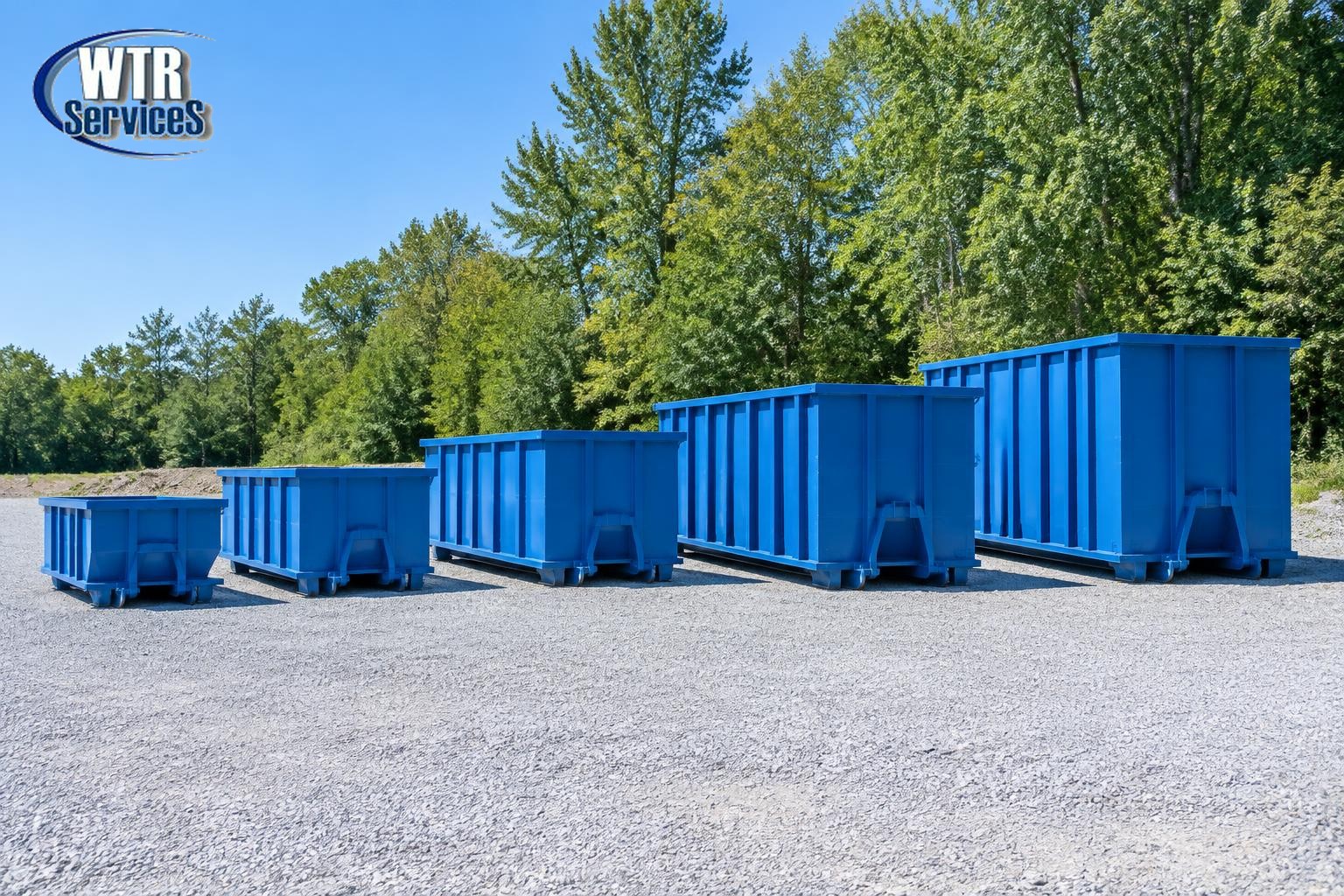
Illustrative lineup of five blue roll-off dumpsters increasing in size at a service yard, with the actual WTR Services logo in the upper-left corner

Choosing between a 10-, 15-, 20-, 30-, and 40-yard dumpster is a comparison problem, not a contest to find the biggest container. Too little space can interrupt a cleanup; unnecessary capacity can complicate placement without improving the job. Material weight, access, and the way your project generates waste matter alongside volume.

This guide compares the five capacities and the tradeoffs between neighboring sizes. The project examples are planning prompts, not guaranteed fits or a promise that every size is currently available from WTR Services. Use the general dumpster sizing guide for broader advice, then confirm the available container, accepted materials, and rental requirements for your address.

What the Yard Number Measures

The size label describes nominal volume in cubic yards. One cubic yard equals 27 cubic feet, so a nominal 20-yard container represents 540 cubic feet and a 40-yard container represents 1,080 cubic feet. Those volume labels do not specify the allowable load weight or exact exterior dimensions. Containers of the same capacity may differ in length, width, and height. Bulky objects create gaps when loaded, and fill restrictions affect usable space. Ask for the dimensions of the actual container offered rather than using a generic measurement to decide whether it will fit your property. The cover is an illustrative size comparison, not a scaled diagram or a photograph of confirmed WTR inventory.

Five Capacities at a Glance

These examples describe possible project categories. They are not fixed recommendations, material acceptance rules, or permitted load weights.
Nominal capacityRelative volumeProject examples to discussMain decision point
10 yardsSmallest of these fiveLimited garage clutter, a small room cleanup, selected renovation debrisWill bulky items use up the available space?
15 yards50% more than 10 yardsA fuller garage or modest renovationIs the additional nominal capacity enough for the whole job?
20 yardsTwice the volume of 10 yardsMultiple-room cleanup, medium renovationDoes the material weight constrain the load?
30 yards50% more than 20 yardsExtensive cleanout, large renovationCan the site accommodate the offered container and truck?
40 yardsTwice the volume of 20 yardsHigh-volume facility cleanup, major constructionWould staged pickups be more practical?

10 vs. 15 Yards: Predictable Cleanup or Extra Room?

A 10-yard option is worth discussing when waste volume is limited and reasonably predictable. A small decluttering job or compact renovation may fall into this category, but furniture and cabinetry can fill available space quickly. Do not assume every garage or bathroom produces the same amount of waste. Moving from 10 to 15 nominal cubic yards adds five yards of volume. That extra space may be useful when the job includes more shelving, flooring, or household contents than a basic cleanup. It does not automatically add a proportional weight allowance or solve access restrictions. List the largest pieces and estimate how much space they occupy after safe disassembly. Then compare the actual offered dimensions and terms. For individual details, read the 10-yard guide and 15-yard guide.

15 vs. 20 Yards: Allow for the Whole Renovation

A modest renovation can create waste in several stages: old fixtures and flooring first, then offcuts, packaging, and cleanup debris later. Comparing only the initial demolition pile may underestimate the total. A 20-yard option offers five nominal cubic yards more than a 15-yard container, but that difference should be evaluated against the actual inventory. Multiple-room cleanups and some home improvements may benefit from the additional volume. Other projects may reach a weight restriction first, especially with tile, roofing, or wet materials. A room count is not enough to make the decision. Tell WTR Services which materials will share the container and whether contractors will add debris after the first cleanup. The 20-yard dumpster guide provides more context; acceptance and loading requirements still need to be confirmed for your rental.

20 vs. 30 Yards: More Volume or Another Service Visit?

The step from 20 to 30 yards adds ten nominal cubic yards, a substantial increase for bulky waste. Large household cleanouts, multi-room remodeling, and extensive property improvements can generate enough material to make that extra volume worth discussing. Before choosing it, compare a larger container with an arranged exchange or additional pickup. A phased job may benefit from clearing the first load before the next work stage begins. An exchange is not automatically included or available on your preferred date, so ask about scheduling and terms. Check the offered container's height and footprint as well as capacity. It must work for safe loading and truck access throughout the project. See the 30-yard dumpster guide for the individual size discussion.

30 vs. 40 Yards: High-Volume Work Needs Site Planning

A 40-yard container provides ten nominal cubic yards more than a 30-yard option. Large facility cleanouts, warehouse projects, and major construction work may create enough bulky, permitted waste to justify considering that capacity. It is not automatically the right answer for all commercial jobs. The loading area must remain usable for employees, customers, contractors, and emergency access. Confirm actual dimensions, ground suitability, overhead clearance, and the truck approach before deciding. A large dumpster that blocks essential access can disrupt the project it was intended to support. Dense material can make extra volume less useful because the weight limit may be reached long before the container is full. Discuss the 40-yard option and commercial dumpster sizes in the context of your material mix and service schedule.

Compare Weight Separately From Capacity

Cardboard, packaging, and some household contents often use space differently from concrete, brick, soil, tile, or masonry. Dense debris needs explicit approval and appropriate loading arrangements. Do not select a large container intending to fill it with heavy material just because the volume is available. Mixed renovation loads can be difficult to estimate. Separate the heavy components in your inventory and ask whether they can share the proposed dumpster with other debris. Confirm material acceptance, the included weight allowance, and any loading restrictions before scheduling. A smaller dumpster is not automatically approved for heavy debris either. Use the heavy debris dumpster-versus-hauling guide when the waste may need a different removal approach, and check the Ohio prohibited-items guide for restriction background.

Check the Offered Container Against Your Property

Measure the proposed placement area, but remember the container footprint is only part of the requirement. The delivery vehicle needs room to approach, position the dumpster, and retrieve it later. Narrow driveways, gates, overhead wires, branches, parked equipment, and ground conditions can affect which option is practical. Ask WTR Services for the actual available container dimensions and describe access conditions. Keep entrances, emergency routes, and commercial loading zones clear. Check local requirements before proposing street or other public-space placement. Our delivery preparation guide covers the access checks in more detail. Do not assume capacity always corresponds to a particular footprint. Different designs can have different heights or lengths even when their nominal volumes match.

Compare the Timeline, Not Just the Initial Pile

A one-day cleanout and a multi-week construction project can produce similar total volumes at different rates. For a short project, one suitable container may simplify collection. For a phased job, arranged pickups or exchanges may preserve working space and prevent an overloaded container. Include waste from every planned stage: demolition, installation, packaging, and final cleanup. Explain who will load it and when. Confirm the rental period, potential extension arrangements, and removal instructions rather than assuming the container can stay indefinitely. A residential rental and a construction rental both need these checks. The work and debris determine the requirements, not whether the customer is a homeowner or contractor.

A Seven-Step Size Comparison Worksheet

Use this brief before requesting a quote:
  • Identify the project and each cleanup or construction phase.
  • List the main materials and the largest bulky objects.
  • Estimate volume after practical, safe breakdown of suitable items.
  • Flag dense, wet, restricted, or uncertain materials separately.
  • Measure placement space and describe delivery and pickup access.
  • Compare available capacities and possible staged service arrangements.
  • Confirm acceptance, weight allowance, rental dates, and the offered container dimensions.
Avoid choosing solely on price, assigning a size by room count, or assuming the largest option eliminates weight concerns. If two neighboring capacities seem plausible, describe the uncertainty to the team rather than guessing how many truckloads will fit.

Compare Your Options With WTR Services

WTR Services is a family-owned company based in Warren and serving Northeast Ohio and Western Pennsylvania since 2006. Share your project inventory, property address, access conditions, and preferred timing so the team can discuss the available options. For local service information, see Warren dumpster rentals. Call (330) 399-3817 or request a free quote. You can also visit WTR Services for company information. Confirm the actual size availability and rental requirements before booking; the comparison examples in this guide are not a guarantee that a particular project will fit a particular container.

Frequently Asked Questions

Keep Reading: Related Guides