Emergency Dumpster Rental After Storm Damage: A Northeast Ohio Response Plan
Published · Guide by WTR Services
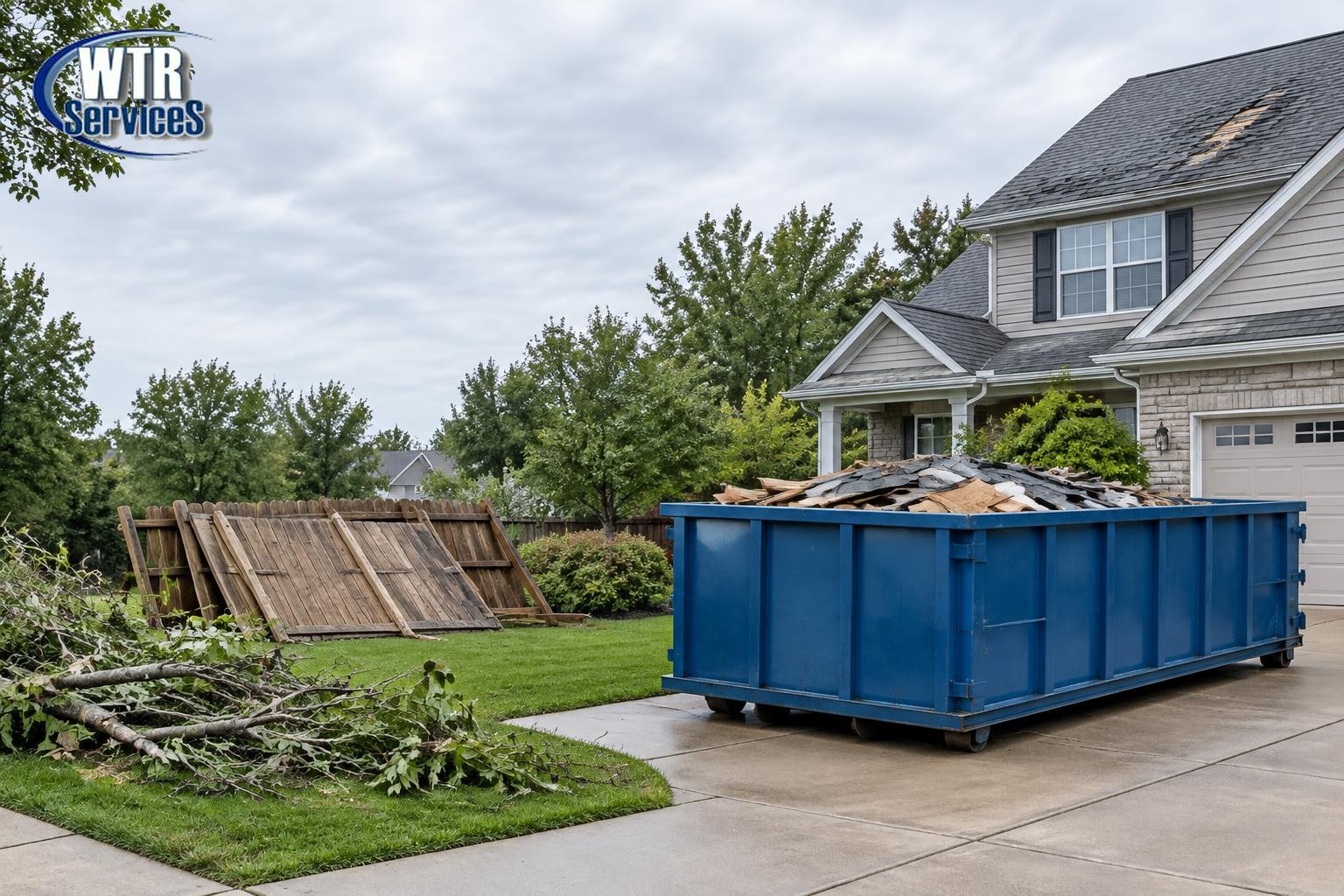
Storm damage creates an unexpected waste-management problem while owners are already dealing with repairs, insurance calls, and disrupted access. An emergency dumpster rental can provide a collection point for permitted debris once the property is safe. It is not a substitute for emergency responders, utility crews, tree specialists, or structural repairs.
This guide turns urgent cleanup into a coordinated response plan for homeowners, landlords, contractors, and businesses. For container sizing and routine loading guidance, use our existing storm debris dumpster guide. Here, the focus is what to communicate, document, and arrange before debris removal starts.
1. Establish When Cleanup Can Safely Begin
2. Document Damage Before Materials Leave
3. Build a Debris Inventory for the First Call
- List the main materials: lumber, shingles, household contents, vegetation, or masonry.
- Estimate the quantity and identify the largest pieces.
- Identify wet, unusually heavy, contaminated, or potentially restricted materials.
- Note whether debris is concentrated in one place or spread across several locations.
- Explain which areas contractors will clear first and which will remain inaccessible.
4. Separate the Cleanup Into Material Streams
5. Decide Between a Dumpster and Direct Hauling
6. Confirm a Safe Delivery and Loading Area
- Keep emergency routes, exits, hydrants, and neighboring access clear.
- Describe gates, narrow approaches, overhead obstacles, and damaged pavement.
- Confirm who can authorize placement and who will be onsite.
- Check local permission requirements if public-space placement is proposed.
7. Coordinate the Schedule Without Assuming Immediate Availability
8. Keep Cleanup Moving Without Creating New Hazards
Emergency Storm Cleanup Checklist
- Confirm the property and truck approach are safe to access.
- Document damage and clarify insurer instructions.
- Identify material types, volume, and unusually heavy pieces.
- Separate restricted or contaminated materials.
- Check local collection options and public-space permission.
- Confirm availability, accepted waste, rental dates, and weight allowance.
- Identify a safe placement area and onsite contact.
- Coordinate access with repair and restoration crews.
- Keep the load within the agreed fill and weight requirements.
- Inspect safe areas for remaining debris without entering unsafe spaces.
- Confirm pickup access and retain relevant service records.
Arrange Storm Debris Removal With WTR Services
Frequently Asked Questions
Keep Reading: Related Guides
- 10 vs. 15 vs. 20 vs. 30 vs. 40 Yard Dumpsters: Compare Your Options
Compare five roll-off dumpster capacities side by side, including project examples, volume and weight tradeoffs, placement checks, and questions for WTR Services.
- Dumpster Rental in Northeast Ohio: What to Expect From Delivery to Pickup
First-time renter? Follow the dumpster rental journey from booking and delivery through loading and pickup, with practical preparation tips from WTR Services.
- Scrap Metal Hauling: How Businesses Can Prepare Materials for Pickup
Scrap recycling hauling works best when materials are identified, separated, and organized before the truck arrives. Here is how businesses can prepare scrap metal for an efficient pickup.
- Industrial Waste Removal in Northeast Ohio: When a Roll-Off Dumpster or Hauling Service Makes Sense
How industrial businesses can choose between an industrial dumpster rental, a commercial roll-off container, and material hauling for facility cleanouts, renovations, and equipment replacement.