
All Articles

How to Plan Waste Disposal for a Small Construction Project

Published · Guide by WTR Services
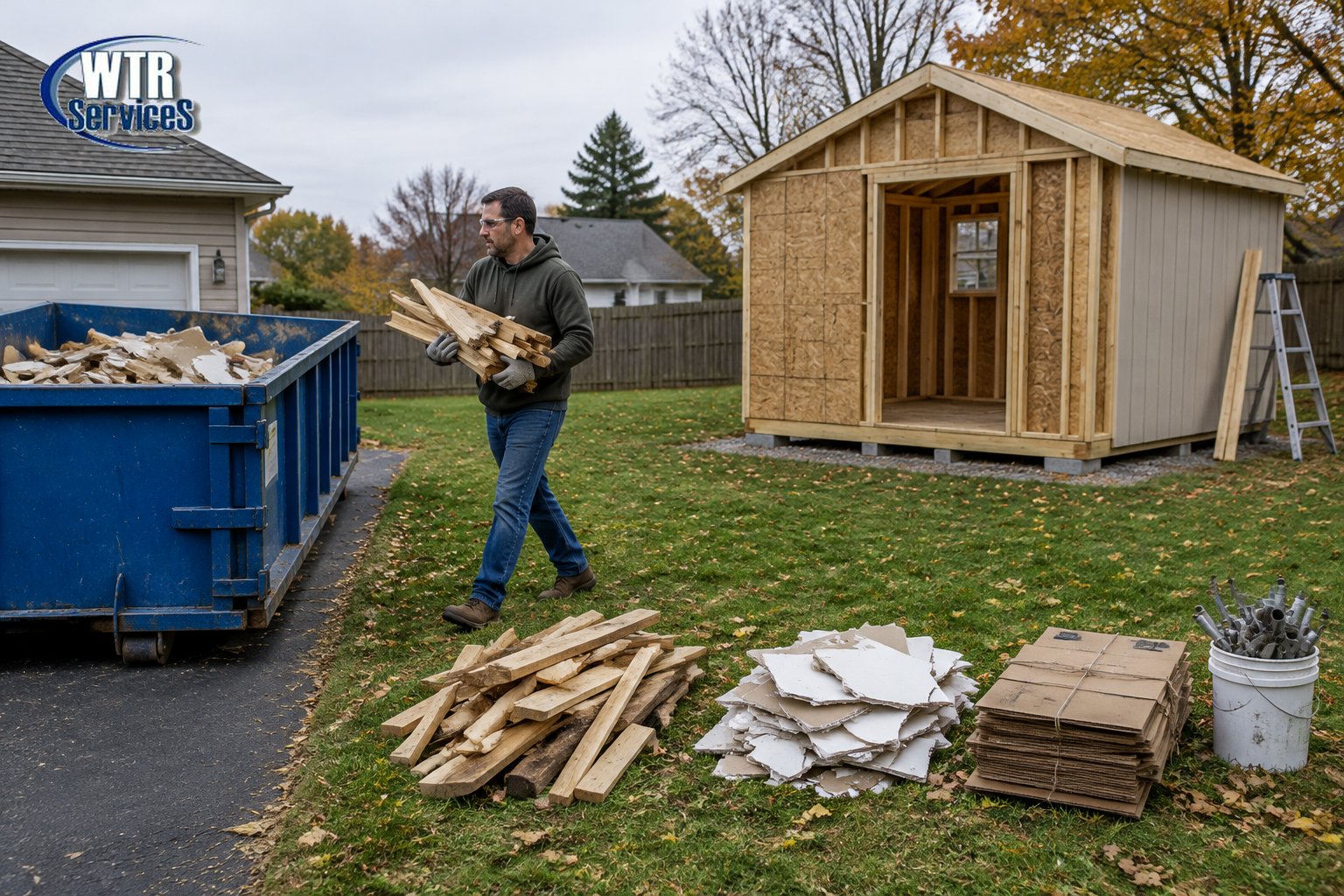
Homeowner in gloves and safety glasses carrying lumber scraps to a blue roll-off dumpster beside a half-built backyard shed, with sorted piles of lumber, broken drywall, flattened cardboard and metal pipe on the lawn and the WTR Services logo in the upper-left

Even a small build creates more waste than most people expect. A backyard shed, a kitchen remodel or a new interior wall can leave you with a pile of drywall, lumber scraps and packaging within days.

Without a plan, that pile grows quickly. It blocks access, slows the work and turns into a bigger job later. A little thought up front makes small construction debris disposal far easier to manage.

This guide walks you through the process step by step. WTR Services has helped Northeast Ohio homeowners and contractors handle project waste since 2006, so these tips come from real jobs. If you run a larger site with a crew, the construction site cleanup checklist covers daily crew routines in more detail.

What Waste Will Your Small Project Create?

Before you start, think about the type of waste the project will produce. Small construction and renovation jobs often generate drywall scraps, lumber, old door frames, cardboard, plastic packaging, tile, brick, metal pipe and old wiring. Knowing the materials in advance helps you plan how they will be collected and where they will go. Walk through each stage of the project and estimate what needs to be removed. Demolition usually creates heavier waste, while the build stage produces bulkier, lighter scraps. Packaging can also take up more space than expected, especially cardboard and plastic wrap. Make a rough list of these materials before work begins. To turn that list into cubic yards, use the renovation waste estimating guide before demolition, or the project debris volume guide once the piles are on the ground.

How Should You Sort Waste Before Work Begins?

Sorting makes disposal simpler. Some materials need separate handling, and clean metal or cardboard can often be recycled instead of thrown away. Good building material disposal starts with a few simple piles. Set up these groups from day one:
  • Clean lumber and untreated wood
  • Drywall, kept dry, because wet board is much heavier
  • Metal such as pipe, wire and flashing, which can often be recycled
  • Heavy debris such as brick, tile and concrete
  • Cardboard, packaging and general recyclables
  • Anything hazardous, such as leftover paint, solvents or old sealants
You don’t need anything fancy. A few labeled bags or a clear corner of the garage is enough to keep small renovation cleanup under control. If you are unsure what goes where, Construction Dumpster Rental: Sizes, Rules & What You Can Throw Away explains the common rules in plain terms, and the Ohio prohibited items guide lists what has to stay out of a dumpster. One important warning: if you find material that might contain asbestos, such as old floor tile, pipe insulation or a textured ceiling, stop work. Don’t break it, drill it or sweep it up. Have it checked by a licensed asbestos professional first. Homes built before 1978 may also have lead paint, which needs careful handling.

Which Disposal Method Fits a Small Job?

Once you know what you have, decide how you will get rid of it. For most small jobs, there are three main routes:
  • Haul it yourself. Driving debris to a landfill or transfer station works for tiny loads, but trips add up fast, and you need to check what each facility accepts.
  • Rent a dumpster. A roll-off container sits on your driveway, you fill it as you work, and it is picked up when you are done.
  • Book hauling. A truck comes for a load that is ready to go, which suits heavy debris or a one-time removal.
The right choice for small construction debris disposal depends on volume, access and budget. A single pickup-truck load is very different from a full room strip-out. The junk hauling vs. dumpster rental comparison walks through the trade-offs. For many projects, a construction dumpster rental is the simplest option. The container sits on your driveway, you toss waste in as you work, and there is no need for repeat trips. For a small household job, a residential dumpster rental may be all you need. A few quick tips:
  • If you land between two sizes, compare the larger container with the cost of an extra pickup.
  • Check the weight allowance before you load heavy debris.
  • Ask what is not allowed inside.
For help with those questions, read dumpster weight limits and the guide to what size dumpster you need. If the dumpster has to sit on a public street, many Ohio cities and villages require a permit. Sort that out before delivery day; the Ohio dumpster permit guide explains what to check.

How Do You Plan Timing and Space?

Waste doesn’t arrive evenly. The biggest pile usually appears in the first few days, during strip-out and demolition. Schedule your dumpster or hauling to match that. If it arrives too late, debris piles up around the site. If it arrives too early, it may sit in the way before you need it. Ask about rental length when you book; see how long you can keep a rental dumpster for what to confirm. Think about space too. A dumpster needs a flat, firm spot with clear access for the delivery truck. Walk the route from your work area to the dumpster and make sure nothing blocks the way. The delivery preparation guide covers what to clear before the truck arrives. Small renovation cleanup works best as a daily habit, not a big push at the end. Ten minutes at the end of each day keeps things under control. Regular job site cleanup also makes the space safer. It cuts down trip hazards, protects your tools and keeps the neighbors happy. Try these simple habits:
  • Pick one drop zone for waste and keep it tidy.
  • Break down boxes and flatten packaging.
  • Keep drywall and cardboard covered if rain is forecast.
  • Sweep up fine dust before it spreads.

When Should You Call for Help?

Sometimes doing it all yourself isn’t worth the hassle. Heavy sheets of drywall and bulky lumber are awkward to carry, and your back will thank you for asking for help. This is where hauling services can make life easier. Instead of making repeat trips in your own vehicle, you let a truck built for heavy loads take it away. For brick, concrete and dirt, the heavy debris dumpster vs. hauling guide explains which option fits. Help is worth considering when:
  • You have no space for a dumpster.
  • The waste is too heavy to move safely.
  • The project is finished and you just want a clear site.
  • You have a mix of waste types and are unsure how to deal with them.
Good renovation waste handling doesn’t mean doing everything alone. Tell WTR Services what you are removing, and we will suggest whether a dumpster, hauling or both makes the most sense, so you can focus on the build. When you choose anyone to take your waste, ask how they dispose of it and where it goes. A reputable company will answer plainly and use approved disposal facilities.

How Do You Stay Safe and Keep Costs Down?

A good waste plan is about more than tidiness. It also protects you and your wallet. Start with safety:
  • Wear gloves, eye protection and a dust mask when cutting or clearing.
  • Never load debris above the top edge of the dumpster.
  • Lift with your legs and ask for help with heavy items.
  • Keep children and pets away from the waste area.
For loading technique, follow how to load a roll-off dumpster, and see what happens if you overfill a dumpster. Then look at costs. Small habits can make a real difference over a project:
  • Measure twice and order accurately to avoid surplus materials.
  • Reuse cutoffs for blocking, bracing or small jobs.
  • Return unopened materials where the store allows it.
  • Keep clean, recyclable waste separate so it can be recycled.
Also remember that you are responsible for where your waste ends up. If a stranger offers to take it cheaply, be careful. Illegal dumping is against the law in Ohio, and dumped debris can sometimes be traced back to the job it came from.

Get Your Waste Plan Sorted Today

Good planning turns a messy job into a manageable one. Know what you will throw away, sort it early, choose the right method and keep the site tidy as you go. If you want a simple, stress-free approach to small construction debris disposal, WTR Services is ready to help. Request a free quote from WTR Services or call (330) 399-3817, tell us about your project, and we will help you find the right solution.

Key Takeaways

  • List your waste before the project starts.
  • Expect drywall, lumber, packaging and rubble on most small jobs.
  • Sort materials into groups from day one.
  • Match your disposal method to the volume and space you have.
  • Schedule delivery or hauling around your busiest waste stage.
  • Tidy daily to keep the site safe and clear.
  • Use a reputable company that takes waste to approved disposal sites.
  • Ask for help when the load is heavy or awkward.

Frequently Asked Questions

Keep Reading: Related Guides