
What Determines the Cost of Professional Junk and Debris Removal?
Published · Guide by WTR Services
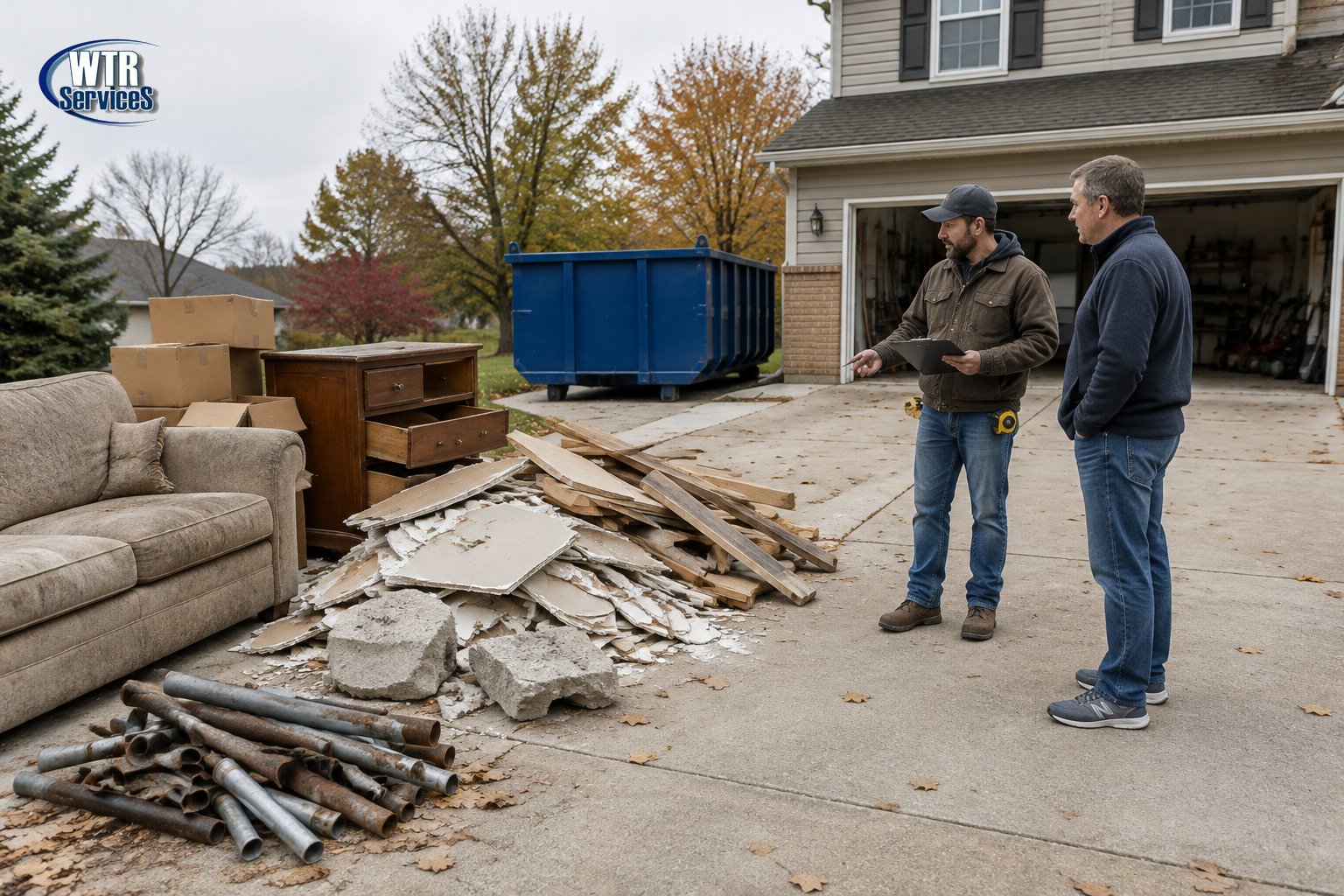
Getting rid of old furniture, renovation debris or a garage full of clutter usually takes more effort than people expect, and the price can vary a lot from one job to the next. That's because several junk removal cost factors work together: how much there is, how heavy it is, what it's made of, how hard it is to reach and where it has to go.
This guide explains each factor so you can plan a realistic budget, compare quotes fairly and avoid surprise charges, whether you're clearing a home, finishing a renovation or cleaning up a commercial site. It doesn't list prices, because every load is different. For what drives roll-off rental pricing specifically, see our dumpster rental cost guide.
What Factors Influence Junk Removal Pricing?
| Factor | Why it affects the price | What to tell the provider |
|---|---|---|
| Volume | Bigger loads take more truck or container space and may need extra trips | Rough size of the pile, or how many rooms or areas are involved |
| Weight | Dense material costs more to transport and dispose of | Any concrete, brick, dirt, shingles, tile or metal |
| Material type | Some items need sorting or a specific facility | A list of what's in the load, especially mixed debris |
| Labor | Carrying, lifting and taking things apart adds time | Whether items are already outside or still inside |
| Access | Stairs, narrow doors and tight parking slow loading | Floor level, stairs, gates and where a truck can park |
| Travel distance | Longer trips to the property or facility add time and fuel | The property address |
| Disposal fees | Facilities charge by material and often by weight | Ask whether disposal is included in the quote |
How Does the Amount of Junk Affect Removal Costs?
- Small loads: A few pieces of furniture, boxes, household items or an old appliance.
- Medium loads: A room's worth of furniture, a yard cleanup or mixed household trash.
- Large loads: Renovation or construction debris, or a whole-house or estate cleanout.
Does the Type of Debris Change the Price?
- Household junk: Old furniture, mattresses, boxes and belongings you no longer need.
- Construction debris: Lumber, drywall, flooring, cabinets and roofing materials.
- Yard waste: Branches, brush, leaves and old landscaping.
- Heavy materials: Concrete, brick, tile, dirt, asphalt and metal.
- Restricted items: Tires, appliances with refrigerant, paint, chemicals and batteries, which often need a separate disposal route or aren't accepted at all.
How Do Weight and Heavy Debris Affect Cost?
- Keep heavy debris separate from light junk where you can.
- Mention it up front so the provider sends the right truck or container.
- Ask what weight is included and how any extra weight is charged.
How Do Labor and Transportation Affect the Total Price?
- The number of workers the job needs.
- How long it takes to collect and load everything.
- The distance from your property to the disposal or recycling facility.
- How easy the collection area is to reach.
- How many trips it takes to finish.
Why Do Disposal Fees Matter?
Can Property Size and Access Increase Removal Costs?
How Can You Lower Your Junk Removal Costs?
- Sort first: Separate heavy debris, scrap metal and restricted items from general junk.
- Pull out scrap metal: Clean metal can often go to scrap recycling instead of into a paid load.
- Donate or sell usable items: Furniture and appliances in good shape don't need to go in the load at all.
- Gather everything in one spot: A single, easy-to-reach pile saves loading time.
- Keep restricted items out: They can add fees or get a load turned away.
- Match the service to the job: Small one-time loads and multi-day projects often suit different options.
How Can You Estimate Your Junk Removal Budget?
- List the items: Furniture, appliances, construction materials and general trash.
- Estimate the volume: Roughly how much space the pile takes up.
- Flag heavy materials: Concrete, brick, dirt, shingles, tile and metal.
- Describe the access: Stairs, narrow doors, gates and parking limits.
- Ask what's included: Loading, sorting, hauling and disposal.
- Ask about extras: Extra trips, overweight loads, restricted items or extra rental days.
Get a Clear Estimate Before Your Next Cleanup
Key Takeaways
- Junk removal costs depend mainly on volume, weight, material type and labor.
- Heavy debris like concrete, brick, dirt and shingles can cost more than a bigger pile of light junk.
- Restricted items such as tires, refrigerant appliances and chemicals may add fees or need separate disposal.
- Stairs, narrow access and travel distance can raise the price.
- Disposal fees vary by material and facility, so ask whether they're included.
- Sorting, pulling out scrap metal and gathering junk in one spot can lower the cost.
- A detailed quote shows exactly what's included before you book.
Frequently Asked Questions
Keep Reading: Related Guides
- Dumpster Rental vs Full-Service Junk Removal: Which Is Better for Your Project?
Dumpster rental vs full-service junk removal comes down to who does the lifting. Compare labor, time, cost drivers and project fit, with a quick self-check to see if loading it yourself makes sense.
- How to Prepare a Job Site for a Complete Roof Replacement
A before-the-crew-arrives checklist for roof replacement site preparation in Northeast Ohio: walk the property, protect landscaping and the driveway, pick the dumpster spot, stage materials and plan daily cleanup.
- Asphalt Shingles, Underlayment and Flashing: A Guide to Roofing Waste Disposal
A component-by-component guide to roofing waste disposal: how to handle asphalt shingles, roofing felt, synthetic underlayment, ice-and-water shield, metal flashing and nails during a tear-off in Northeast Ohio.
- How to Estimate Roofing Waste Before Scheduling a Cleanup
Estimate roofing waste before a tear-off: measure roof squares, adjust for pitch, count shingle layers, work out the weight in tons and use it to choose a dumpster in Northeast Ohio.