
Where Should Businesses Dispose of Renovation and Facility Waste?
Published · Guide by WTR Services
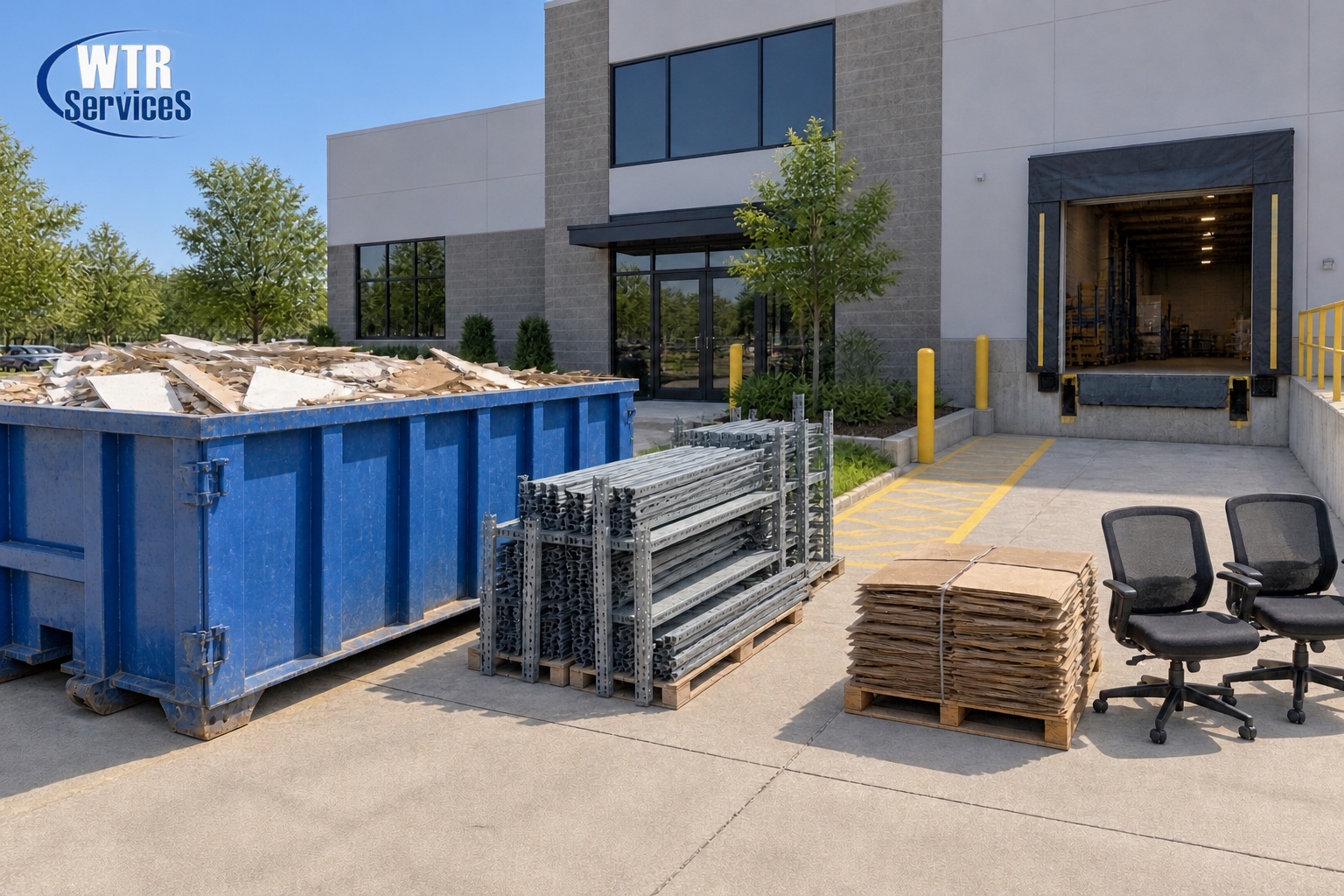
An office upgrade, retail remodel or warehouse improvement can leave a business with old furniture, drywall, flooring, shelving, packaging, fixtures and metal to get rid of, often while employees and customers still need to use the building. Good business renovation waste disposal starts with knowing what the project will produce, where each material should go and how collection can fit around your operating hours.
This guide is for business owners, property managers, facility supervisors and renovation contractors. It covers where each type of commercial renovation and facility waste can go, how to plan collection without disrupting the business, and when a dumpster, hauling or a specialist service is the better fit. For container sizing, placement and supplier questions on a refit, see our commercial renovation dumpster rental guide.
Why Do Businesses Need a Renovation Waste Plan?
- Keep work areas organized: Give contractors and staff one clear place for approved debris.
- Reduce disruption: Time container swaps and large debris moves around customers, deliveries and shifts.
- Improve safety: Keep sharp material, broken fixtures and loose debris away from employees and visitors.
- Control costs: Avoid extra handling, repeat trips, the wrong container and surprise charges.
- Recover value: Set aside furniture, fixtures and materials that can be reused, donated or recycled before they're mixed with trash.
What Types of Waste Do Commercial Renovations Produce?
| Waste category | Common examples | What to check |
|---|---|---|
| Furniture and fixtures | Desks, chairs, counters, cabinets, shelving | Reuse or donation may be possible if items are in good condition |
| Drywall and plaster | Partitions, wall panels, ceiling materials | Confirm acceptance and keep suspect materials separate |
| Flooring | Carpet, tile, laminate, vinyl, underlayment | Material type and condition affect disposal and recycling options |
| Wood and lumber | Framing, trim, doors, wooden fixtures | Ask whether treated or painted wood has restrictions |
| Metal | Pipes, shelving, framing, fixtures | Clean metal can often be recycled separately |
| Glass | Windows, partitions, display panels | Handle carefully and confirm how it should be contained |
| Electrical items | Wiring, light fixtures, equipment | Some components need separate recycling or special handling |
| Packaging | Cardboard, plastic wrap, pallets | Keep recyclable packaging out of mixed construction debris |
| Concrete and masonry | Concrete, brick, tile, block | Heavy; may need a dedicated container or separate arrangement |
| General facility waste | Old equipment, damaged supplies, miscellaneous items | Check acceptance and pull out restricted items |
Where Should Businesses Dispose of Renovation and Facility Waste?
| Disposal route | Best for | Check before using it |
|---|---|---|
| Commercial dumpster | Steady, mixed renovation debris over several days or weeks | Accepted materials, size, weight allowance, rental period and placement |
| Construction dumpster | Large amounts of drywall, wood, flooring and building debris | Capacity and weight compared with the expected load |
| Hauling | Debris already gathered in piles, bulky items, one-time removal | Whether loading is included or only transport |
| Recycling facility | Cardboard, clean metal, some wood, flooring and masonry | Material acceptance and how it must be prepared |
| Donation or reuse | Working furniture, shelving, cabinets, office equipment | The receiving organization's requirements |
| Specialist disposal | Chemicals, batteries, lamps, refrigerants, electronics, suspect asbestos | The correct licensed or approved route |
How Should Waste Be Managed in Different Commercial Properties?
Office renovations
Retail remodeling
Warehouse cleanup and renovation
Restaurants and hospitality
Property management and multi-tenant buildings
How Can You Minimize Disruption During a Business Renovation?
- Schedule around operating hours: Plan container swaps and large debris moves for quieter periods.
- Use one designated collection area: Pick a spot workers can reach that stays clear of customers, inventory and equipment.
- Work in phases: Renovate floor by floor or section by section so less debris builds up at once and unaffected areas stay open.
- Sort at the source: Keep reusable furniture, recyclable packaging, metal and general debris apart as they're removed.
- Keep access routes clear: Debris should never block emergency exits, fire equipment, accessible entrances or walkways.
- Coordinate everyone: Make sure contractors, facility staff and building management know where waste goes and who arranges pickup.
Should You Choose a Commercial Dumpster or Hauling?
| Consideration | Commercial dumpster rental | Hauling |
|---|---|---|
| Best suited to | Debris generated over days or weeks | Debris already gathered or a one-time removal |
| Loading | Done by your staff or contractor | Depends on the service agreement |
| Project length | Phased renovations and ongoing cleanup | Scheduled removal of existing piles |
| Site needs | A safe on-site placement area | No container needs to stay on site |
| Price depends on | Size, weight, rental period and extra fees | Volume, access, transportation and disposal |
How Do You Plan Waste Collection Before Renovation Begins?
- Step 1, assess the waste: Walk the areas being renovated and list what will be removed: furniture, fixtures, flooring, drywall, packaging, equipment and metal.
- Step 2, set aside reusable and recyclable items: Decide what will be transferred, donated, sold or recycled before demolition starts.
- Step 3, identify restricted materials: Look for chemicals, batteries, electronics, lamps, refrigerant appliances and suspect building materials, and ask how each should be handled.
- Step 4, estimate the volume: Use the renovation scope to estimate debris, including heavy materials. Our guide to estimating project debris volume shows how.
- Step 5, choose the disposal methods: Compare dumpster rental, hauling, recycling, donation and specialist services. Most projects use more than one.
- Step 6, confirm placement and access: Check customer and employee access, loading dock and delivery routes, parking, emergency access, ground conditions and overhead clearance, and get building or property approval.
- Step 7, assign responsibilities: Name who sorts, who loads, who watches the container fill level and who schedules pickup.
- Step 8, review during the project: Hidden damage or extra fixtures can add debris, so check the plan as work progresses.
How Should Restricted and Special-Disposal Materials Be Handled?
- Electronics: Computers, monitors, printers and networking gear often need separate recycling. Remove sensitive data first.
- Batteries and electrical components: These can create fire or environmental risks in general waste. Keep them separate.
- Fluorescent lamps: Some lighting contains materials that need special handling. Check collection or recycling requirements.
- Chemicals, paints and solvents: Cleaners, fuels, adhesives and similar products usually need specialist disposal.
- Refrigerators and AC equipment: Refrigerants must be recovered by qualified professionals before disposal or recycling.
- Suspected asbestos or lead: In older buildings, stop work in the affected area and get a professional assessment before removal. Never put these materials in a standard dumpster.
- Concrete, masonry and tile: These reach weight limits quickly. Ask whether they need a separate container or arrangement.
What Affects Commercial Renovation Waste Disposal Costs?
- Quantity and type of waste: A small office refresh may be mostly furniture and packaging, while a major warehouse renovation produces heavy construction debris.
- Container size and weight allowance: Dense materials can make a container overweight before it's full.
- Rental period: Ask when it starts, how extensions work and whether pickup can follow your renovation schedule.
- Delivery, pickup and placement: Access limits, ground conditions and placement requirements affect the service.
- Labor: Decide who will move debris from inside the building to the collection point.
- Recycling and specialist disposal: Plan for separate collection of special items instead of treating them as last-minute costs.
- Additional fees: Review terms for overweight loads, restricted materials, extra days and extra pickups.
What Waste Mistakes Should Businesses Avoid?
- Starting without a plan: Arrange collection before the first major removal.
- Mixing everything together: Furniture, electronics, metal, packaging, drywall and hazardous items may need different routes.
- Ignoring operating hours: A container in a delivery lane or a swap during peak hours disrupts the business.
- Underestimating volume: Base the estimate on the full scope and review it as work progresses.
- Choosing by size alone: Weight limits and material restrictions matter as much as capacity.
- Forgetting reusable assets: Usable desks, chairs, shelving and equipment may have value elsewhere.
- Overlooking restricted materials: Don't assume a commercial dumpster accepts every facility item.
- Blocking access routes: Keep exits, loading areas, accessible entrances and walkways clear throughout.
- Not assigning responsibility: Without an owner, debris piles up and restricted items end up in the wrong container.
Plan Your Commercial Renovation Waste With WTR Services
Key Takeaways
- Most commercial renovations need more than one disposal route: dumpster, hauling, recycling, donation and specialist services.
- List the waste and pull out reusable, recyclable and restricted items before demolition starts.
- Plan container placement and pickups around customers, deliveries, employees and emergency access.
- Working in phases keeps less debris on site and more of the building open.
- Heavy materials can exceed weight limits before a container is full.
- Electronics, batteries, lamps, chemicals, refrigerants and suspect asbestos or lead need special handling.
- Assign one person to monitor waste and schedule pickups.
Frequently Asked Questions
Keep Reading: Related Guides
- How to Organize Large-Scale Property Cleanups Without Delays
Run a whole-property cleanout without delays: assess every area, sort belongings, prepare furniture, book collection, follow a sample schedule and assign roles for estate, rental and pre-sale cleanups in Northeast Ohio.
- Managing Waste Collection for Retail Stores, Offices and Warehouses
Plan everyday waste collection for retail stores, offices and warehouses: map waste streams, track fill levels, set pickup frequency, avoid delivery conflicts and know when to add a roll-off dumpster or hauling.
- Dumpster Rental vs Full-Service Junk Removal: Which Is Better for Your Project?
Dumpster rental vs full-service junk removal comes down to who does the lifting. Compare labor, time, cost drivers and project fit, with a quick self-check to see if loading it yourself makes sense.
- What Determines the Cost of Professional Junk and Debris Removal?
The main junk removal cost factors explained: load volume, weight, material type, labor, access, travel and disposal fees, plus what to tell a provider so your quote matches the job in Northeast Ohio.