All Articles

Residential Dumpster Rental Checklist for Ohio Homeowners

Published · Guide by WTR Services
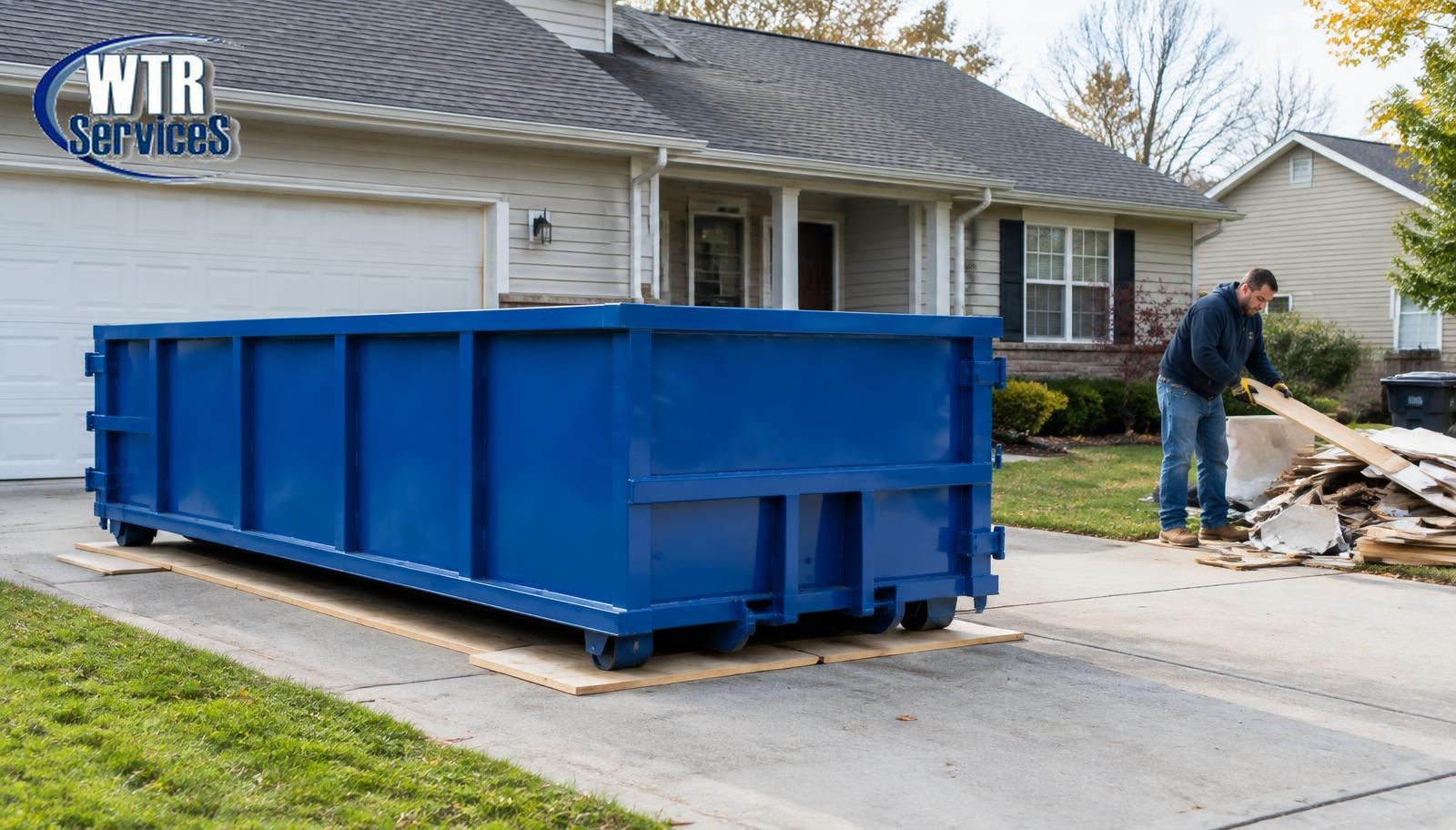
Blue residential roll-off dumpster placed on protective boards in a Northeast Ohio driveway beside renovation debris

A residential dumpster can turn a scattered home cleanup into one organized project, but the best results come from planning before the truck arrives. Container size, debris type, driveway access, placement, and timing all affect how smoothly delivery and pickup go. This homeowner checklist walks through those decisions in the order you should make them.

WTR Services supplies residential dumpster rentals for cleanouts, remodeling, moving preparation, roofing, and property projects across Northeast Ohio. Rather than repeating our service details or our room-by-room home cleanout guide, this article focuses on what to confirm before reserving and receiving a roll-off container at your home.

Key Takeaways

- List the project materials and estimate their volume before choosing a container. - Measure the proposed placement area and keep the delivery approach clear. - Confirm whether a driveway, street, or other placement location has special requirements. - Schedule delivery before work starts and allow enough time for delays or final cleanup. - Review questionable items with WTR Services before loading the dumpster.

1. Define the Residential Project

Start with the work itself. A garage cleanout, kitchen remodel, roof replacement, and estate cleanup produce different materials at different rates. Write down which rooms or outdoor areas are involved, whether demolition is planned, and how long the work should take. This prevents a vague estimate from driving your reservation. Homeowners commonly rent dumpsters for: - Garage, attic, and basement cleanouts - Moving or downsizing preparation - Kitchen and bathroom remodeling - Flooring, cabinet, and drywall removal - Roofing projects - Estate and whole-property cleanouts If the job is primarily sorting a garage, use our garage cleanout guide. For a family property or inherited home, the estate cleanout checklist covers a more careful sorting process.

2. Estimate Debris Before Selecting a Size

Container choice should follow your debris estimate, not the other way around. Make a rough inventory of bulky furniture, boxes, flooring, cabinets, drywall, lumber, shingles, and other approved materials. Consider both volume and weight: a pile of broken furniture takes up space, while masonry or roofing debris can become heavy before a container looks full. Avoid assuming every residential project needs the same size. A focused room cleanup may require far less capacity than a whole-house renovation. Our dumpster size guide compares common container options by project type. When you contact WTR Services, describe the project and materials so the team can help match the rental to the expected load.

3. Review What Can Go in the Dumpster

Sort materials before delivery into accepted debris, reusable or recyclable items, and items that need confirmation. Common household and renovation debris may be suitable for a roll-off container, but chemicals, liquid paint, automotive fluids, batteries, tires, electronics, refrigerated appliances, and pressurized cylinders can require separate handling. Read the general guide to what you can put in a dumpster, then check the Ohio-specific list of dumpster prohibited items. Keep uncertain items aside and provide WTR Services with a list or photos before loading. Confirming first is much easier than removing a restricted item from beneath a full load.

4. Choose and Measure the Placement Area

A level, accessible driveway is often the most practical residential location, but every property is different. Measure the available length and width, account for the container door if it will be used for walk-in loading, and look overhead for tree limbs, utility lines, or roof overhangs. The truck also needs a clear path to approach, place, and later retrieve the dumpster. Before delivery day, move vehicles, trailers, basketball hoops, and portable equipment away from the approach. Unlock gates and trim back anything that could restrict access. Tell the team about a steep or narrow driveway, soft ground, tight turn, low branch, or other condition when you reserve. Protective boards may help distribute contact at the placement point, but placement suitability should still be discussed in advance.

5. Check Permit and Neighborhood Requirements

A dumpster placed entirely on private property may be treated differently from one occupying a public street, alley, sidewalk, or right-of-way. Requirements vary among Northeast Ohio cities and townships, so contact the appropriate local office when public placement may be necessary. Our Ohio dumpster permit guide explains what information officials commonly request. Also review homeowner association or property-management rules where they apply. Ask about approved placement areas, notice requirements, and limits on how long a container may remain. Complete those checks before scheduling so a last-minute placement issue does not delay the project.

6. Coordinate Delivery With the Work Schedule

Arrange delivery before demolition or clearing begins, but not so early that rental time is lost while the container sits empty. Decide who will be present or reachable on delivery day, confirm the placement point, and keep the phone available in case the driver needs clarification. Marking the location can help when nobody will be outside during arrival. Build some flexibility into the plan for weather, contractor changes, or a cleanup that takes longer than expected. If you are planning a weekend project, ask about available delivery and pickup dates rather than assuming a specific turnaround. Our guide to how long you can keep a dumpster rental covers rental-period planning in more detail.

7. Load the Dumpster Safely and Evenly

Distribute debris across the container instead of creating one heavy pile at an end. Break down approved bulky items when it is safe to do so, place large flat materials along the bottom or sides, and fill open spaces with smaller debris. Keep the area around the dumpster clear so people are not stepping over loose materials or carrying items through traffic. Never climb onto the walls or load material above the marked fill line. Overfilled or unbalanced containers may be unsafe to transport and can delay pickup. Keep children and pets away from the work zone, use gloves and appropriate eye protection, and stop loading if you uncover a leaking, pressurized, or otherwise questionable item.

Residential Dumpster Reservation Checklist

Use this final list before confirming your rental: - Project rooms and work scope identified - Main debris types listed - Approximate debris volume estimated - Dumpster size discussed with WTR Services - Restricted or uncertain items separated - Placement area measured - Truck approach and overhead clearance checked - Vehicles and movable obstacles scheduled for removal - Permit or neighborhood requirements reviewed - Delivery and pickup expectations confirmed - Contact person available for delivery day - Rental terms and terms and conditions reviewed Keeping these details together makes the reservation conversation faster and gives everyone a shared plan for delivery.

Plan Your Northeast Ohio Residential Dumpster Rental

A successful home dumpster rental starts before the first item is loaded. Define the project, estimate the waste, check placement and local requirements, and coordinate the container with your actual work dates. Those steps help protect the schedule and keep debris in one manageable location from start to finish. WTR Services provides driveway-friendly roll-off dumpster options for residential projects throughout Northeast Ohio, including Warren, Youngstown, Akron, Boardman, and nearby communities. Call (330) 399-3817 or get a free quote to discuss your project, placement area, debris, and preferred dates. You can also visit WTR Services to review local dumpster rental options.

Frequently Asked Questions

Keep Reading: Related Guides