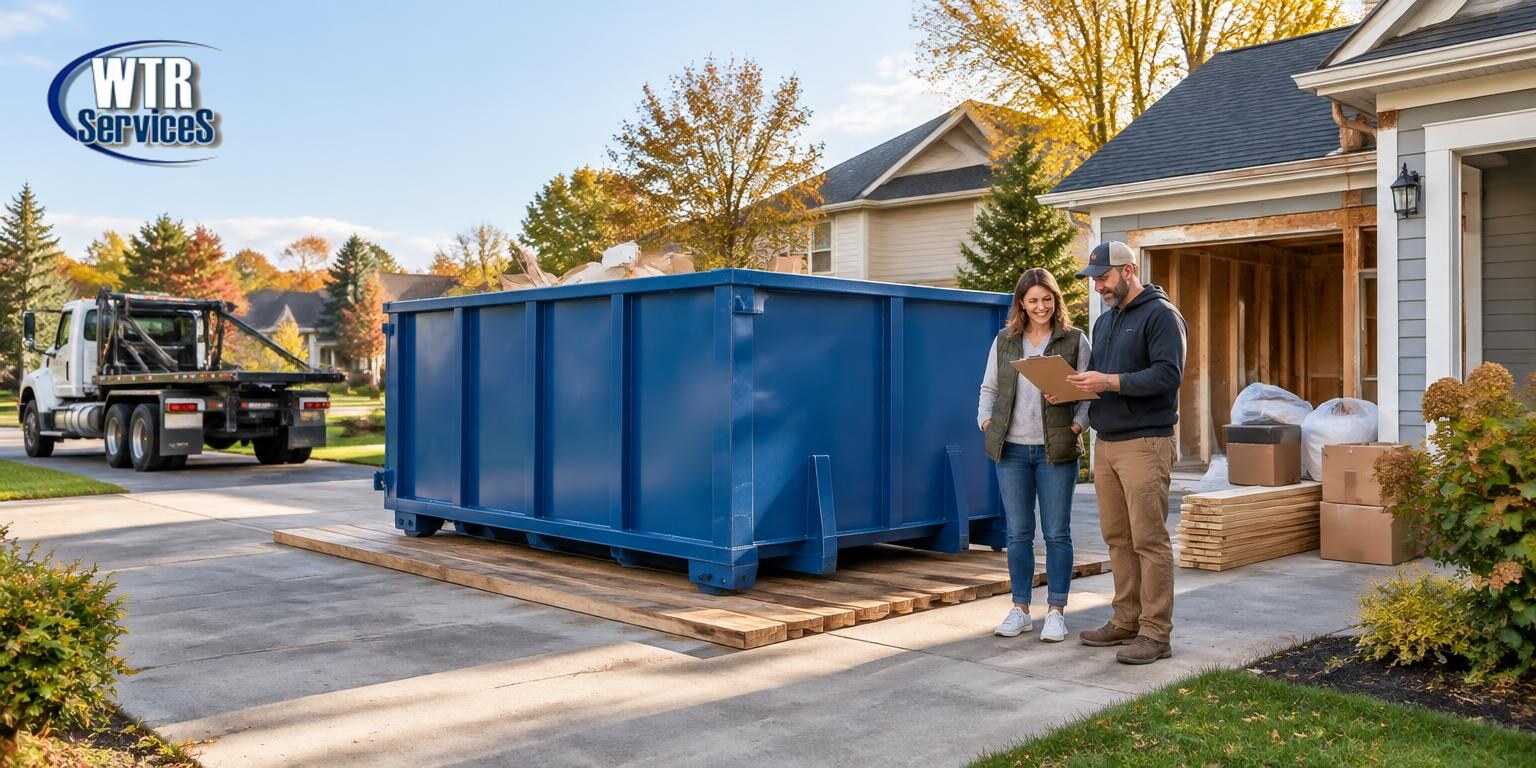
A dumpster rental works best when it is treated as part of the project plan rather than an afterthought. The container must match the debris, the delivery truck needs a clear approach, local placement rules may apply, and the rental dates should align with the actual work. A few decisions made before delivery can prevent delays after demolition or cleanup begins.
This guide is a practical planning worksheet for homeowners, contractors, businesses, and property managers. It brings the main decisions into one sequence while linking to WTR Services' detailed guides for size, pricing, accepted materials, permits, and rental time. Use it before requesting a quote so the conversation is based on the facts of your job.
Key Takeaways
- Define the project, location, materials, and dates before comparing containers.
- Estimate debris by both volume and weight; bulky and dense materials create different needs.
- Confirm the placement area, truck approach, overhead clearance, and public-property rules.
- Ask what the quote includes instead of comparing one advertised number.
- Keep restricted items separate and load approved debris evenly below the fill line.
Step 1: Write Down the Project Scope
Start with a one-sentence description: which part of the property is being cleaned, remodeled, roofed, built, or demolished? Then list each work area and the material expected from it. A garage cleanout may generate boxes and furniture, while a kitchen remodel adds cabinets, countertops, flooring, and drywall. Roofing and masonry projects can become heavy before they consume the same amount of space.
Record the property address, desired start date, expected work duration, and deadline. Note whether the project is residential, construction, roofing, commercial, or industrial. This basic profile helps WTR Services direct you to the appropriate residential dumpster rental, construction dumpster rental, roofing dumpster rental, or commercial option.
Step 2: Build a Debris Inventory
Walk the full job before estimating the container. Count large furniture, appliances, cabinets, fixtures, flooring, lumber, drywall, shingles, landscaping material, and boxed household contents. Include basements, attics, garages, sheds, and exterior work areas. Photographs can help explain piles or unusual items when requesting guidance.
Separate the list into bulky material, dense material, general debris, recyclable or reusable items, and anything that needs confirmation. Volume and weight are not interchangeable: furniture occupies substantial space, while concrete, dirt, brick, tile, and shingles can add significant weight. Do not mix heavy material into a general load without discussing it first.
Step 3: Choose Size From the Inventory
Avoid picking a dumpster solely because it is a familiar size or the lowest-priced option. A container that is too small can interrupt work and require another haul; one that is much larger than necessary may not be the best use of the site or budget. The correct choice depends on debris type, volume, weight, access, and available inventory.
Use our detailed guide, What Size Dumpster Do I Need?, to compare common project patterns. Then provide WTR Services with your debris inventory and photographs. A recommendation based on the actual job is more useful than a universal room count or pickup-truck conversion.
Step 4: Check Materials Before Booking
Do not assume that every household, construction, or commercial item belongs in the same roll-off container. Set aside chemicals, liquid paint, automotive fluids, batteries, tires, electronics, refrigerated appliances, pressurized cylinders, medical waste, asbestos, and other questionable materials until their handling is confirmed. Requirements can depend on the material and receiving facility.
Review what you can put in a dumpster and the Ohio guide to dumpster prohibited items. Give WTR Services a complete item list before delivery. Confirming uncertain debris early protects the schedule and allows time to arrange donation, recycling, specialty collection, or another appropriate outlet.
Step 5: Plan the Placement and Delivery Path
Choose a level area with enough room for the container and safe loading. A private driveway is often practical, but the delivery truck also needs an unobstructed approach and room to place and retrieve the dumpster. Look for parked vehicles, gates, tight turns, soft ground, steep grades, tree limbs, utility lines, roof overhangs, and construction equipment. Share any concern when reserving.
If the proposed location extends into a public street, alley, sidewalk, or right-of-way, local requirements may apply. Rules differ among cities and townships, so review the Ohio dumpster permit guide and contact the appropriate local office. Property managers and homeowners should also check association or site rules before delivery day.
Step 6: Match the Rental to the Work Schedule
Plan delivery close enough to the work that the container is ready when debris begins, but not so early that it sits unused. Identify the person who can answer delivery questions, mark the placement point, and keep the approach clear. Ask how pickup is requested and whether the container stays until you call or follows another agreed schedule.
Allow room for weather, contractor changes, inspection delays, and final cleanup. Rental periods and extensions depend on the agreement rather than one universal number. The guide to how long you can keep a dumpster rental explains timing questions to ask before confirming your dates.
Step 7: Compare the Full Quote
Dumpster rental costs depend on factors such as container size, debris type and weight, rental duration, delivery distance, disposal conditions, and requested service. When comparing quotes, ask what is included, which circumstances can add charges, how extensions work, and whether special materials need separate arrangements.
Our Ohio dumpster rental cost guide explains these pricing factors without promising a one-price-fits-all total. Give each provider the same project details so the comparison is meaningful. A clear scope and item list are essential when evaluating the full service, not only the opening number.
Step 8: Prepare and Load Safely
Before arrival, move vehicles and portable obstacles, unlock required gates, and keep the designated area available. During the project, maintain a clear walking path and keep children and pets away from the work zone. Use appropriate gloves, footwear, and eye protection for the materials being handled.
Load approved large, flat materials where they use space efficiently, break down bulky items when safe, and distribute weight across the container. Do not concentrate dense debris at one end, climb the walls, or allow materials to extend above the marked fill line. Stop and ask before loading anything leaking, pressurized, unidentified, or potentially hazardous.
Project Planning Worksheet
Collect these details before requesting a dumpster rental:
- Property address and municipality
- Project type and work areas
- Desired delivery date and project deadline
- List of bulky, dense, general, and questionable materials
- Estimated volume or photographs
- Proposed placement location
- Driveway width, slope, surface, gates, and turns
- Overhead branches, wires, or structures
- Public-property or association requirements
- Person available for delivery questions
- Expected pickup process and rental timing
- Quote inclusions, weight terms, and possible additional charges
Keeping this worksheet with the project schedule makes it easier to communicate changes if the scope grows.
Plan a Local Dumpster Rental With WTR Services
WTR Services is a family-owned company based in Warren, Ohio, serving communities throughout Mahoning, Trumbull, Columbiana, Portage, and Ashtabula counties in Northeast Ohio and Mercer County in Western Pennsylvania. Available containers and scheduling depend on the project and location.
Call (330) 399-3817 or get a free quote with your worksheet, photographs, preferred dates, and placement details. For a home project, the residential dumpster checklist provides an additional delivery-day review. Clear information at the start helps WTR Services recommend an available rental that fits the work.
Learn how an estate cleanout dumpster can help Ohio families and executors clear an inherited property efficiently before a sale, closing, or other deadline.
Use this residential dumpster rental checklist to plan container size, driveway placement, delivery access, rental timing, and debris for an Ohio home project.
Learn how to choose the right dumpster rental company in Northeast Ohio by comparing project fit, dumpster sizes, scheduling, delivery options, and service areas.
Learn which dumpster items need separate disposal in Ohio, including paint, batteries, electronics, mattresses, chemicals, tires, and automotive fluids.