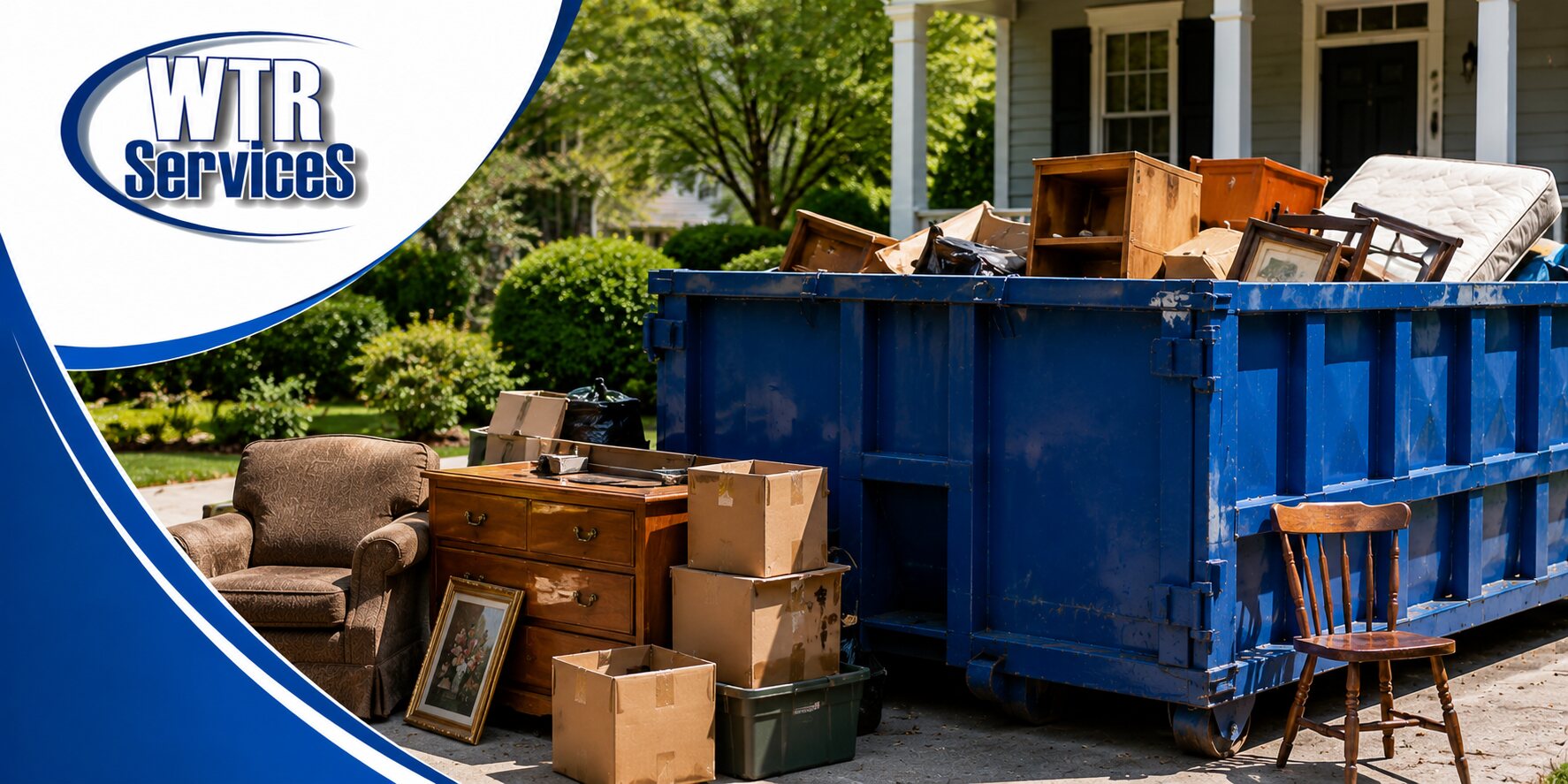
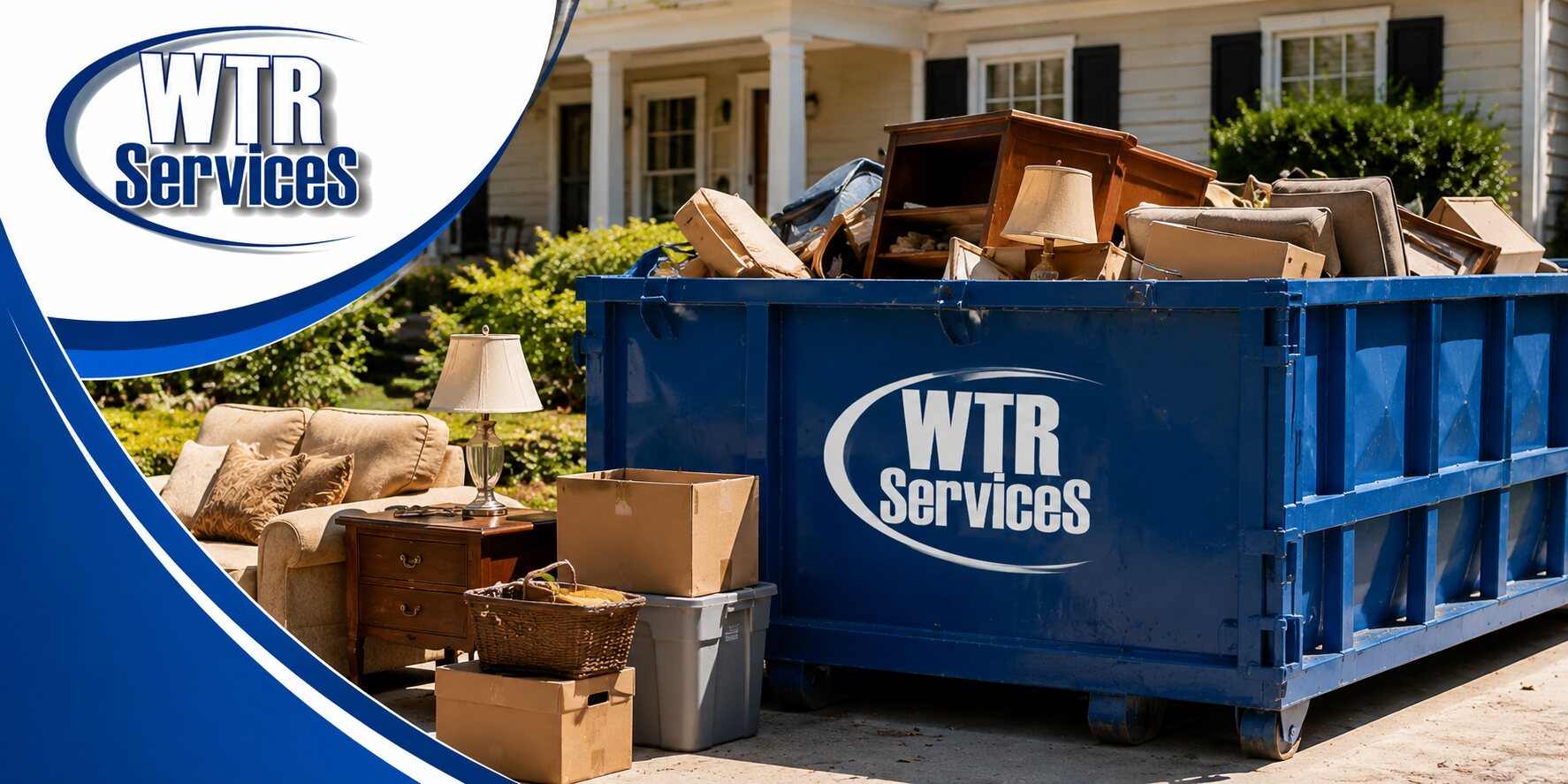
Clearing an inherited home can quickly become a scheduling problem. Furniture, household goods, basement storage, garage contents, and years of belongings must be reviewed while a sale, closing, auction, renovation, or probate milestone may already be approaching. An estate cleanout dumpster gives the family or executor one place for approved unwanted items while the work continues.
This guide focuses on managing an estate cleanout efficiently when time matters. For careful decisions about records, valuables, photographs, and heirlooms, start with our separate estate cleanout checklist. Once those items are protected and the disposal volume is clearer, the steps below can help keep an inherited-property cleanup moving.
Key Takeaways
- Set the property deadline first, then work backward to plan sorting, delivery, loading, and pickup.
- Separate documents, valuables, donations, and restricted materials before general loading begins.
- Estimate every room, basement, attic, garage, and outbuilding before choosing a dumpster.
- Confirm driveway access, local placement requirements, rental timing, and accepted debris in advance.
- A single on-site container can reduce repeated disposal trips and keep the cleanup team focused at the property.
Why an On-Site Dumpster Helps When Time Is Short
A full house contains far more than what is visible in its main rooms. Closets, cabinets, storage areas, basements, attics, and garages can add substantial volume after furniture is counted. Transporting those contents in a personal vehicle creates repeated loading, driving, unloading, and return trips. It also limits the work to the receiving facility's schedule.
With a dumpster at the property, approved debris can move directly from each work area to one container. Family members or a cleanup crew can continue sorting while others load, rather than pausing for every trip. The dumpster does not remove the need for careful decisions, but it can eliminate a major logistical bottleneck once those decisions are made.
Build the Cleanout Schedule Around the Property Deadline
Write down the date the home must be ready, then reserve time for more than loading. A practical schedule includes an initial walkthrough, document and keepsake review, donation pickup, container delivery, active cleanup days, a final property check, and dumpster pickup. Leave a buffer before the closing, contractor arrival, or listing photography in case weather or family decisions slow the work.
For a Northeast Ohio estate, travel can also affect the plan when an executor or relatives live outside the area. Choose a contact person who can answer delivery questions and confirm when the container is ready for pickup. If several family members are involved, set a clear deadline for claiming items so disposal decisions do not stop mid-project.
Sort Critical Items Before Fast Loading Begins
Speed should come from an organized process, not from placing everything into the container at once. Before general debris moves, secure legal and financial records, property documents, keys, medications, photographs, jewelry, collections, and anything named in an estate plan. Create separate areas for items to keep, donate, sell, recycle, confirm, and dispose.
The existing estate cleanout checklist provides a detailed approach to sensitive belongings. Using it first keeps this deadline-focused stage safer: once the family review is complete, the cleanup crew can identify approved disposal items without reopening every box or drawer.
Estimate the Whole Property Before Choosing a Dumpster
Do not size the container from the living room alone. Walk through bedrooms, closets, the kitchen, basement, attic, garage, porch, shed, and any other storage space. Count bulky furniture and note whether cabinets, carpeting, or other materials will also be removed. A property that has been occupied for decades may hold more than its square footage suggests.
Share the room count, storage areas, largest items, and general debris types with WTR Services. The team can help compare available options without relying on a one-size-fits-all estimate. Our dumpster size guide explains the factors that affect capacity, while the residential dumpster checklist covers delivery access and placement preparation.
Choose a Provider by Project Fit, Not Price Alone
A useful estimate should explain more than a single number. Before reserving an estate cleanout dumpster rental in Northeast Ohio, ask what the quote covers, how the rental period works, which debris is accepted, how pickup is requested, and what information could change the final charge. Describe any mattresses, appliances, heavy material, or unusual items before booking.
Also confirm that the provider serves the property's city or township and can work with the required timeline. WTR Services is based in Warren and serves communities throughout Mahoning, Trumbull, Columbiana, Portage, and Ashtabula counties in Northeast Ohio, as well as Mercer County in Western Pennsylvania. Local scheduling and availability vary, so reserve as soon as the cleanout dates are known.
Prepare the Property for Delivery
Select a level location with enough room for the container and the delivery truck's approach. A private driveway is often practical, but it should be discussed before delivery if it is narrow, steep, soft, recently paved, or obstructed by tree limbs, utility lines, vehicles, gates, or roof overhangs. Move cars and portable obstacles before the scheduled arrival.
Placement on a public street, sidewalk, alley, or right-of-way may involve municipal requirements. These rules vary by location; the rental company does not replace the property owner's responsibility to confirm local approval. Review our Ohio dumpster permit guide and contact the appropriate city or township office when public placement is being considered.
Separate Restricted and Special-Handling Items
Standard roll-off containers are not appropriate for every material. Set aside chemicals, liquid paint, automotive fluids, batteries, tires, electronics, refrigerated appliances, pressurized cylinders, and other questionable items until their handling is confirmed. Never hide uncertain material beneath furniture or general household debris.
Rules can depend on the item and receiving facility, so review what you can put in a dumpster and the Ohio guide to dumpster prohibited items. Provide an item list or photos to WTR Services before delivery. Donation, recycling, document shredding, or a local collection program may be more suitable for some belongings.
Load for Safe, Efficient Use of Space
Once approved disposal items are identified, place large flat objects and safely disassembled furniture where they use the container's footprint efficiently. Distribute weight across the dumpster instead of concentrating everything at one end. Use smaller approved items to fill open spaces, but keep debris below the marked fill line.
Maintain a clear path between the house and container, especially when several people are working. Keep donation and family-review areas away from that path so the wrong item is not loaded accidentally. Do not climb on the container walls, and stop to confirm any unfamiliar material rather than making a rushed decision.
Avoid the Mistakes That Slow Estate Cleanouts
The most common delay is underestimating the contents of storage spaces and discovering midway through the job that the plan or container does not fit the property. Another is booking before the family has separated records, valuables, and claimed belongings. Starting disposal too early can create conflict and force the crew to search through material that was already sorted.
Other avoidable problems include waiting until the final days before a deadline, overlooking street-placement requirements, failing to mention unusual items, blocking the delivery approach, and filling above the container's limit. A short walkthrough and reservation conversation can address each issue before the cleanup starts.
Estate Cleanout Timeline Checklist
Use this sequence to keep the project moving:
1. Confirm the sale, closing, auction, renovation, or probate milestone.
2. Identify the executor or cleanup decision-maker.
3. Secure documents, valuables, medications, photographs, and heirlooms.
4. Set a deadline for relatives to claim belongings.
5. Schedule donations, recycling, or specialty disposal.
6. Inventory every room and storage area.
7. Discuss dumpster size, debris, dates, and placement with WTR Services.
8. Clear the delivery path and mark the placement point.
9. Load only approved materials and keep them below the fill line.
10. Walk through the property before requesting pickup.
Clear an Inherited Property With WTR Services
An estate cleanup is easier to manage when the family separates sensitive decisions from disposal logistics. Protect important belongings first, estimate the whole property, reserve the appropriate container, and give the cleanup a realistic schedule with a buffer before the final deadline.
WTR Services provides estate cleanout dumpster rentals and residential roll-off containers throughout Northeast Ohio. Call (330) 399-3817 or get a free quote with the property location, room count, storage areas, materials, placement details, and target dates. The team can help you select an available option that fits the cleanup plan.
Use this residential dumpster rental checklist to plan container size, driveway placement, delivery access, rental timing, and debris for an Ohio home project.
Learn how to choose the right dumpster rental company in Northeast Ohio by comparing project fit, dumpster sizes, scheduling, delivery options, and service areas.
Learn which dumpster items need separate disposal in Ohio, including paint, batteries, electronics, mattresses, chemicals, tires, and automotive fluids.