
All Articles

Dumpster Rental for Home Additions: Debris Planning

Published · Guide by WTR Services
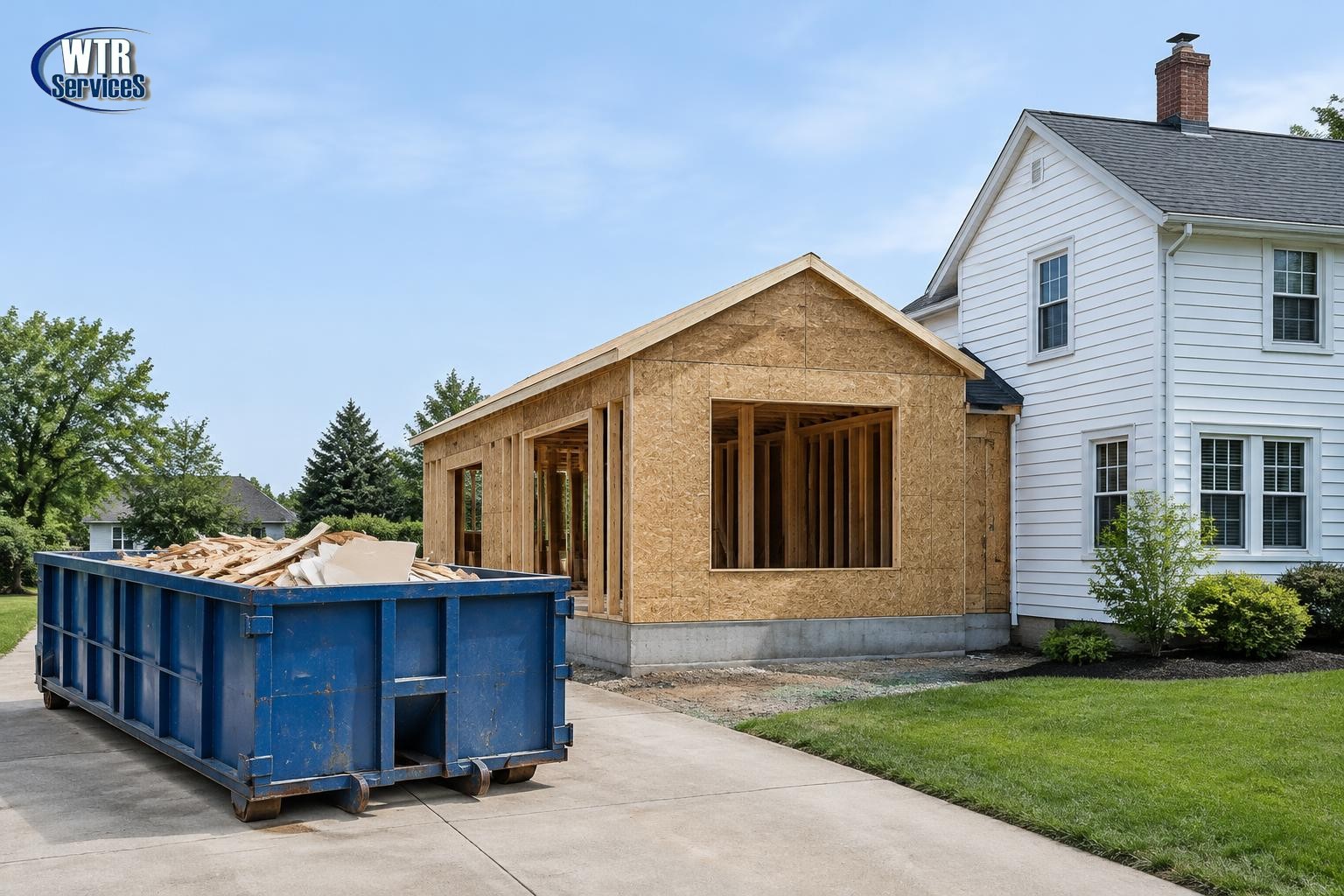
Blue roll-off dumpster holding construction debris beside a wood-framed home addition, with the WTR Services logo in the upper-left

Adding a bedroom, extending a kitchen, or building a garage creates waste at every stage of the project. Demolition produces heavy debris, while the build adds lumber offcuts, drywall scraps, and packaging. Without a disposal plan, this waste can slow your crew and take up valuable space on your property. A dumpster rental for construction gives you one designated place for approved debris from start to finish. We at WTR Services offer dumpster rental for residential and construction projects. Before work begins, check what size fits your project, how long you can keep the container, and when it can be delivered.

What Debris Does a Home Addition Produce?

An extension typically generates two categories of waste. The first comes from demolition, when old drywall, flooring, wood, and cabinets are removed to make room for the new space. The second comes from the build itself, which leaves behind lumber offcuts, drywall scraps, siding, and packaging. Good construction debris removal starts with a rough estimate of how much waste you will have and what it is made of. A small bedroom addition may not produce much. A garage addition that involves taking down walls or changing the structure will produce a lot more. Volume and weight both matter. Bulky items fill a container quickly, but dense debris can hit the weight limit while there is still space left. Knowing this early makes it easier to talk through your options with the rental company. Unlike a standalone new build, an addition joins new work to an occupied home. Keep household walkways and emergency access clear, and agree where demolition debris and new-build scraps will be staged. For dense foundation debris, review concrete, brick and asphalt disposal.

Which Dumpster Size Is Right for a Home Addition?

Dumpsters are sized in cubic yards. The one you need depends on how big the addition is, how much you’re tearing out, and what kind of material you’ll be throwing away.
Dumpster SizeWhere it fits
10-YardDrywall and wood scraps from a bedroom extension
15-YardFlooring, drywall, and framing scraps from a room addition
20-YardMixed debris from a bedroom and closet addition
30-YardA larger volume of mixed debris from a garage addition
40-YardDebris from a multi-room extension, subject to material and weight limits
These sizes are rough examples. A job that’s mostly drywall and wood may need a different dumpster than one with concrete, brick, or a lot of demolition. Not every company offers all five sizes, and heavy materials often have their own rules. Before you book a home addition dumpster, figure out the demolition waste and the new construction debris as two separate piles. Tell the provider what you plan to throw away, then ask about the container size, weight limit, accepted materials, and any extra fees. A building construction dumpster should be picked by weight as well as volume, or you could end up with one that doesn’t fit the job. Use the dumpster sizing guide and five-size comparison alongside your contractor’s estimate. A bigger container does not automatically allow a heavier load; confirm dumpster weight limits.

What Affects the Cost of a Construction Dumpster Rental?

Two things set the price: the dumpster you pick and the terms attached to it. Always ask for the full quote. The starting price in an ad rarely tells the whole story. Check these before you book:
  • Size: Bigger dumpsters cost more. But if you go too small, you may pay for another haul.
  • Rental days: Ask how many days are included and what each extra day costs.
  • Weight limit: Determine the number of tons involved and how much you will pay for each ton beyond that
  • Delivery and pickup: Ask if both are in the price.
  • Banned items: Some things can’t go in, and others cost extra to dump.
When you call about a dumpster rental for construction, say what you’re building, how much waste you think you’ll have, and how long the job will take. Then ask what happens to the price if the load comes in heavy or the work runs late. Ask for project-specific construction dumpster rental terms rather than assuming a standard price or rental period.

When Should You Schedule Delivery and Pickup?

Book delivery just before demolition or any other stage that creates a lot of debris, as long as the spot for the dumpster is ready. That way your crew can toss accepted materials straight in as they come out, instead of leaving piles around the yard. Base the rental period on your build schedule. Think about when demolition, framing, drywall, and finishing will happen. If the job gets delayed or the dumpster fills up early, call the provider about a pickup, a swap, or extra days. Placement needs a plan too. Measure the driveway, check for low wires or branches, and make sure the truck can get in. The dumpster shouldn’t block key access routes or get in the way of the work area. If it has to sit on a public street, check whether your area requires a permit. Schedule pickup for when the last messy stage wraps up, so the dumpster isn’t in the way once the work is done. Check the delivery preparation guide, Ohio placement and permit guide, and rental-duration guide. Keep the delivery path free of parked cars and building supplies.

Which Materials Can Go in the Dumpster?

Lumber, drywall, flooring scraps, and some roofing usually go in without trouble. Still, every provider has its own list, and local rules can change what’s allowed. Don’t toss everything in one load without checking. Concrete, brick, and soil are heavy, so many companies set separate weight limits or rules for them. Asbestos and hazardous chemicals require specialist handling and must stay out of a standard construction dumpster. If you suspect asbestos, stop disturbing the material and consult a qualified professional and the appropriate local authority. Before you order a renovation dumpster for your home addition, write down what you plan to tear out. Then call and ask three things: can mixed debris go together, do the heavy materials need their own container, and what’s banned? Get those answers first and you won’t be stuck with rejected waste or a surprise disposal bill. Good construction debris removal starts with checking the rules before work begins. Don’t wait until the dumpster is already full. Review prohibited dumpster items before demolition. Follow the roll-off loading guide, keep debris below the fill line, and use separate approved handling for heavy loads.

How Should You Compare Dumpster Rental Providers?

For a home addition, pick the provider whose rental terms fit your build schedule. Make sure they can deliver before demolition starts, ask how fast they can pick up or swap a full dumpster, and find out if they’ll work with you when the job runs longer than planned. A residential dumpster rental can work for a smaller extension, but a bigger addition may need more space. Before you book a dumpster rental for home renovation, check that the container fits the amount and weight of debris you expect and that the pickup timing matches your schedule. For daily site routines, adapt the construction site cleanup checklist to your contractor’s phases and the household’s access needs.

Plan Your Home Addition Waste Removal

Estimate how much debris your project will make, compare container sizes, confirm what’s not allowed, and line up delivery with your contractor’s schedule. Sorting these details out before demolition keeps waste under control through the whole expansion. Contact WTR Services to talk about your home addition, look at dumpster options, and get a quote based on your expected waste, your schedule, and where the container will sit. Call (330) 399-3817 with the addition size, demolition scope, expected materials and preferred delivery date.

Frequently Asked Questions

Keep Reading: Related Guides